 Cre8Travel
CRE8TRAVEL · NEW YORK PLACES
Wolf Hollow Wildlife Management Area
Wolf Hollow WMA: A Small Woodland with a Habitat Purpose
Discover
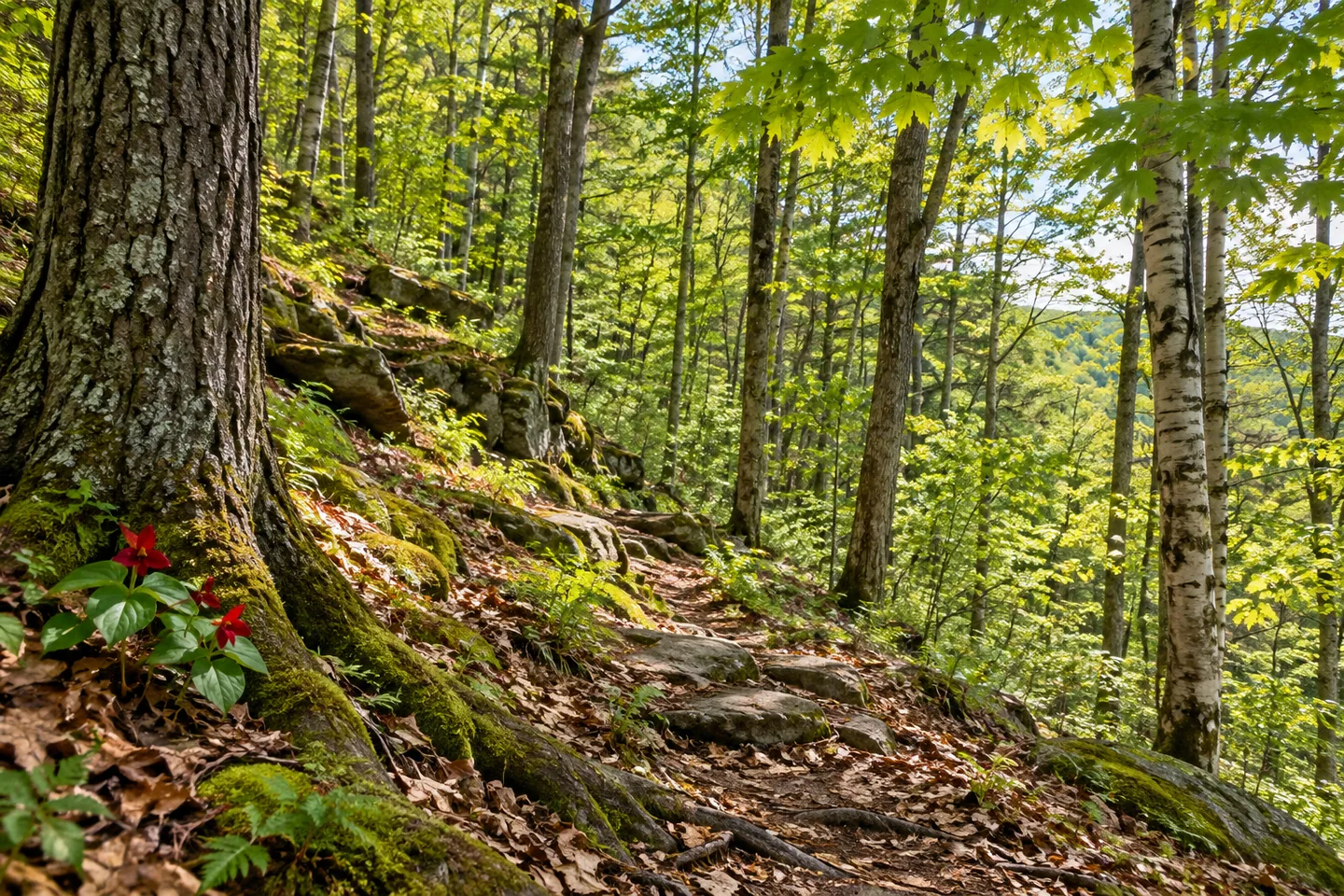
Wolf Hollow Wildlife Management Area is a small woodland where the scale deserves attention before the visit begins. Its 52 acres lie in Andes, Delaware County, on a moderately to steeply sloping hillside. The state acquired the parcel in 1905. Wildlife habitat and wildlife-dependent recreation guide its use, so a day here is best approached as a focused outing within a compact area, with consideration for other people already using it.
The upland tree cover includes red oak, red and sugar maple, beech, birch, ash and black cherry. Those species give a walk plenty to notice through tree forms, bark and foliage. Compare what is actually visible rather than expecting a particular animal to appear. Deer, turkeys, squirrels and songbirds are among the wildlife described by DEC, but habitat information is more useful than a promise of sightings beside your chosen path.
DEC asks walkers to remain on designated trails to protect plant communities. Follow the current map and signs instead of spreading an outing across the entire hillside. Because the property is small, the agency notes that more than a few simultaneous users can create conflicts. Keep plans flexible, respect other lawful activities and avoid treating limited space as an invitation to seek a new informal parking place or route.
The 2023–2032 habitat management plan adds a specific reason to think about tree age. It proposes creating young forest while retaining most of the woodland as mature forest. The goal is a mix of habitat, including cover useful to wild turkey and white-tailed deer. These are planning objectives, not evidence that every proposed treatment has been completed or that target animals will be present on a visit.
That distinction can make observation more interesting. Larger trees and younger growth show different forms and textures even before a visitor knows every species name. A broad woodland photograph can be paired with a closer study of trunks or leaves, leaving vegetation undisturbed. The forest's management purpose supplies context, while the actual scene should determine the image.
The arrival arrangement requires care. A small parking area sits off a dead-end road, and the approach is shared with a private landowner. DEC deliberately limits parking space to help prevent overuse. Consult the current official map for the approach, keep shared access clear and do not assume that arriving at a particular hour guarantees a space. The small parcel and shared road are practical parts of planning the visit.
Wildlife-management areas have their own activity rules. Check current WMA guidance and posted restrictions for the activity you intend, rather than applying assumptions from a larger state forest or campground. Follow Leave No Trace, keep to the designated routes and respect neighboring property. DEC also recommends appropriate outdoor-safety practices and considering a guide when woodland experience is limited.
Delaware Wild Forest, Dry Brook Ridge Wild Forest and Murphy Hill State Forest are listed as nearby public-land options. Plan them as separate outings with their own maps and access arrangements. Wolf Hollow's character comes from its smaller scale: a hillside of upland trees, a long history of public ownership and present habitat-management questions that reward a careful, considerate visit.
Fun facts
- Wolf Hollow WMA covers 52 acres in Andes, Delaware County.
- The state acquired the parcel in 1905.
- The terrain is a moderate to steep upland hillside.
- Its tree cover includes oak, maples, beech, birch, ash and black cherry.
- The 2023–2032 plan proposes young-forest creation alongside retained mature woodland.
Before you go
- Stay on designated trails to protect plant communities, following DEC guidance.
- Keep plans flexible because parking and the property’s capacity are limited.
- Use the current official map for the dead-end approach shared with a private owner.
- Follow current WMA rules and posted restrictions for your intended activity.
- Observe vegetation and wildlife without disturbing habitat or neighboring property.
Capture
- Compare the forms and textures of documented upland tree species from designated routes.
- Pair a wider hillside-woodland composition with a close bark or foliage detail.
- If wildlife actually appears, observe from a respectful distance rather than depending on a promised sighting.
 Plattekill State Forest
 Dill Brook Community Forest
 Spicer Creek Wildlife Management Area
Social
Wolf Hollow WMA covers 52 acres in Andes, Delaware County. Its small scale calls for a considerate plan and respect for other lawful users. #Cre8Travel
The state acquired Wolf Hollow in 1905. The parcel’s upland woodland continues to serve wildlife habitat and wildlife-dependent recreation. #Cre8Travel
Red oak, maples, beech, birch, ash and black cherry appear in Wolf Hollow’s tree-cover description. Let actual woodland details guide your attention. #Cre8Travel
Wolf Hollow’s terrain is moderately to steeply sloping. Use the current map and remain on designated trails to protect plant communities. #Cre8Travel
The 2023–2032 plan proposes creating young forest while retaining most woodland as mature cover. Management goals are not a guarantee of completed works. #Cre8Travel
Wolf Hollow’s small parking area and shared private-road approach deserve care. Keep access clear and do not assume spare parking. #Cre8Travel
A habitat species list is not a sightings schedule. At Wolf Hollow, tree form and woodland texture can carry a photograph on their own. #Cre8Travel
Would you describe Wolf Hollow through a wider hillside frame or a close tree detail? Give a small landscape patient attention. #Cre8Travel
Hashtags