 Cre8Travel
CRE8TRAVEL · NEW YORK PLACES
Saranac Lakes Wild Forest
Saranac Lakes Wild Forest: Interpreting Woodland and Water
Discover
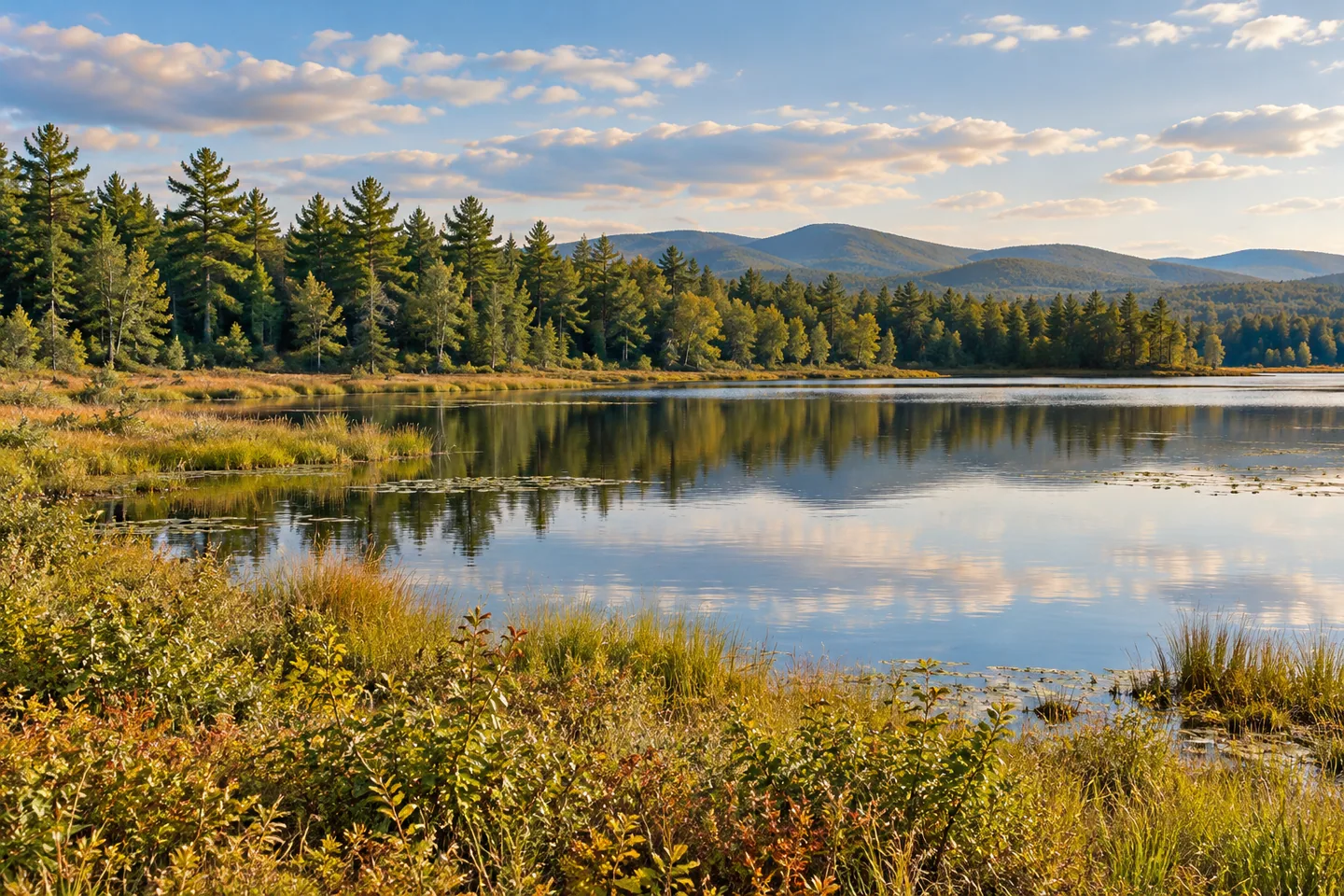
Saranac Lakes Wild Forest is a water-rich Adirondack landscape, with lakes, ponds and rivers giving its many parcels a strong shared identity. The unit contains 144 water bodies and more than 80 miles of hiking trails, but a visit can remain modest in scale. Its interpretive walks offer a particularly rewarding introduction, connecting present woodland with the history of forest management. Choose one approach and let the details along it give the outing its shape.
Fernow Forest Trail supplies a concise learning focus. It extends half a mile from its parking area, with less than 20 feet of ascent. Numbered stations correspond with a brochure available at the register, describing early efforts at professional forest management in the United States. That arrangement gives the walk a clear purpose beyond simply reaching the end. Stop at the stations and compare the information with the woodland around them, looking at trees as both a living setting and part of a conservation history.
The Hoyt-Peroni Nature Trail offers another approach to interpretation. Its one-mile loop passes through a pine plantation and includes panels explaining the site's history. The first tenth of a mile is built to accessible standards and reaches a small primitive picnic area. Beyond that section, a narrower path continues over slightly rolling ground before an old roadbed leads back toward the start. These different surfaces make the actual section of the route important when planning the visit.
The Bloomingdale Bog Trail gives a wetland landscape a different historical line. Its 3.8-mile course follows an abandoned railroad bed between two parking areas, providing a wide, level route with largely open views of the wetland complex. The old rail corridor continues north into another forest unit. Within Saranac Lakes Wild Forest, its appeal lies in the meeting of a former transport route with a setting where water and low vegetation create a much more open view than the surrounding woods.
Longer pond walks add another scale. From the Deer Pond parking area, the direct route to the pond is 2.5 miles, while the full loop is 7.8 miles. Parts follow smooth, level old roads, with other sections taking the form of a traditional foot trail. The choice between a destination walk and a larger circuit is therefore worth making before setting out. A single named pond can belong to several possible journeys, each with a different return plan.
Other shorter connections reach West Pine Pond and Rock Pond from Floodwood Road. The West Pine route extends half a mile over relatively level ground, while Rock Pond Trail is 0.9 mile long. These approaches show how the larger forest can be explored through separate visits, with a small water destination giving each walk a distinct focus. Patient observation of woodland and water can be worthwhile even when a hoped-for wildlife encounter does not occur.
Check the current official maps and notices before travelling, since the unit includes many separate parcels and a mixture of public and private water margins. Select the approach that fits the day, keeping its actual distance and surface in view. Saranac Lakes Wild Forest offers several kinds of discovery at that scale: a station explaining forestry history, a plantation linked to a site's past, a railbed through wetlands, or a wooded route that ends beside a pond.
Fun facts
- Saranac Lakes Wild Forest contains 144 water bodies.
- Fernow Forest has a half-mile interpretive trail about early professional forestry.
- The Hoyt-Peroni loop passes through a pine plantation.
- Bloomingdale Bog Trail follows an abandoned railroad bed.
Before you go
- Choose a particular parcel and starting area before selecting the route.
- Consult the actual surface and accessible-section details for Hoyt-Peroni.
- Decide between the direct Deer Pond approach and the longer loop before setting out.
Capture
- At suitable public access, use the contrast between wetland openness and the tree line for a wider composition.
- Compare the spacing and forms of plantation trees with other woodland encountered on the selected route.
- Use soft light to preserve detail in shaded trunks and brighter water while remaining on established public access.
 Nine Mile State Forest
 Debar Mountain Wild Forest
 Wilmington Wild Forest
Social
Saranac Lakes Wild Forest brings together woodland, wetlands and many inland waters. #Cre8Travel
Fernow Forest Trail introduces early professional forestry through numbered stations.
Hoyt-Peroni adds a pine plantation and site-history panels.
Bloomingdale Bog follows an abandoned railroad bed.
Deer Pond offers a direct approach and a much longer loop.
Shorter routes also reach West Pine Pond and Rock Pond.
Choose one mapped parcel and give its landscape time.
Would you begin with forestry history or a woodland pond?
Hashtags