 Cre8Travel
CRE8TRAVEL · NEW YORK PLACES
Furnace Creek State Forest
Furnace Creek State Forest: A Closer Look
Discover
Furnace Creek State Forest belongs to a larger public woodland without losing its own identity. Its 1,395 acres connect with Fall Brook and Big Brook state forests in northwestern Oneida County. Together with other properties, they form the five-forest 46 Corners network spanning more than 13,000 acres. Keep those scales separate: the network is the wider context, while the routes and land inside Furnace Creek remain the basis for a local visit.
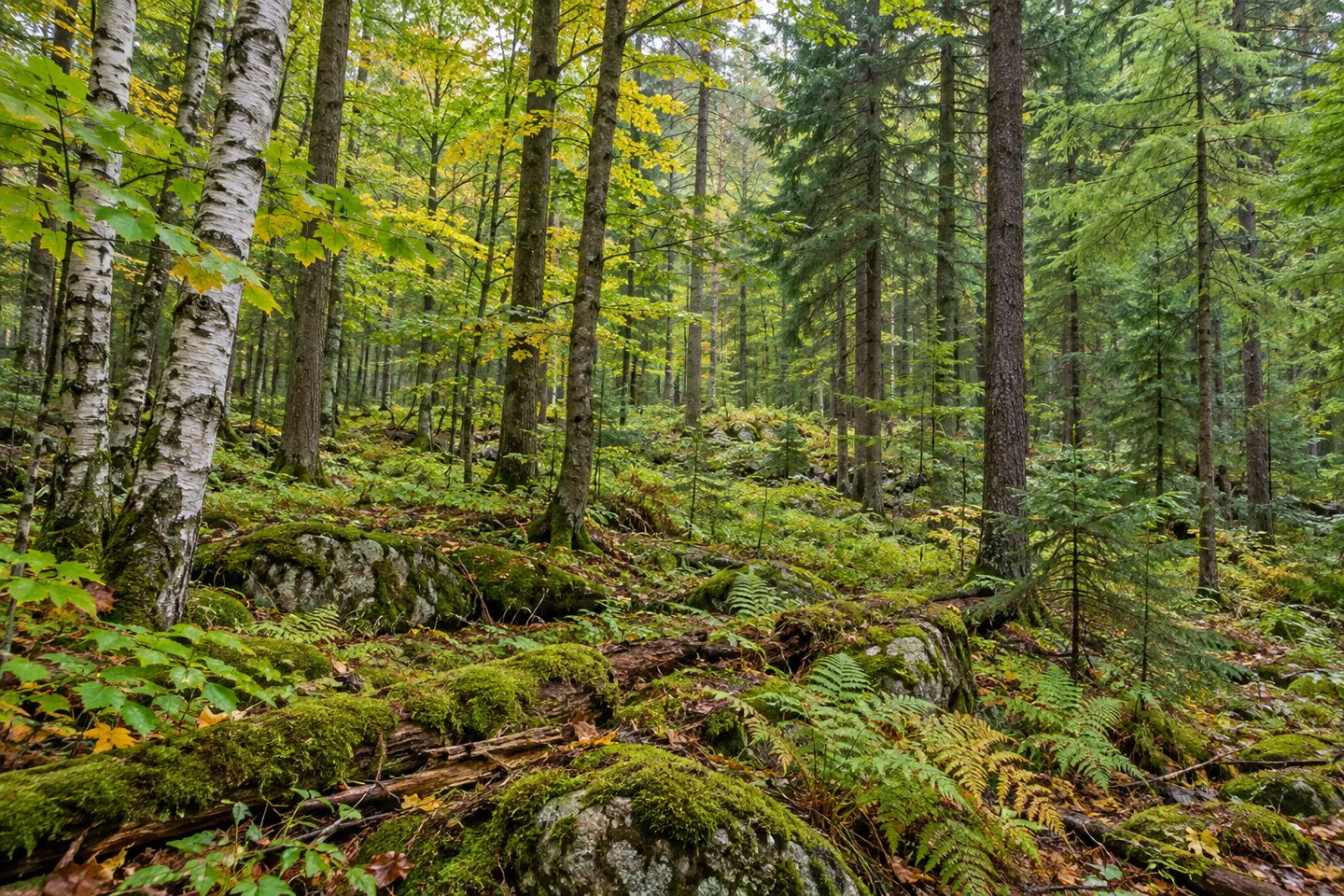
The property lies in Florence and Annsville, with hilly ground, streams and swamps among its features. The New York State Department of Environmental Conservation (DEC) describes rolling woodland with both plantations and natural forest. A visit can focus on those contrasts rather than looking for one attraction suggested by the name. Furnace Creek is a geographical name here, not a promise of a historic furnace or industrial ruins within the woods.
White and red pine, Japanese and European larch, Norway spruce, balsam fir and white spruce form the plantation mixture in DEC's account. Natural forest includes hemlock, black cherry, red and sugar maple, yellow birch, American beech and white ash. Where visible from an appropriate route, look at changes in tree form and texture. The mixture offers a way to read the forest without assuming every named species occurs beside one access point.
Water adds three specific names: Cobb Brook, Furnace Creek and Florence Creek. All are protected trout streams flowing through the property. A pond off Sheehan Road supports warm-water fish, adding a different kind of waterbody to the picture. Those descriptions explain part of the landscape; they do not establish a circuit linking every stream and pond or a guarantee of fish visible from the bank.
For walking access, the property has 1.3 miles of paved and unpaved forest roads. There are no marked or maintained foot trails. Choose the approach and return from the map and present conditions, without treating the much larger 46 Corners acreage as one prepared visitor route. The distinction between a connected public-land network and a connected walking itinerary is especially useful in a region with several neighboring state forests.
DEC's approach from Camden uses Wolcott Hill Road and Sheehan Road. Match the road reference to the part of the property you intend to visit before setting out. Streams and wet ground are reasons to keep actual access in mind rather than making a photograph depend on reaching a specific bank. Tree textures, a woodland line or water visible from a suitable position can provide a subject without an invented viewpoint.
The land is managed for water quality, recreation, habitat and timber, with posted rules and Leave No Trace guidance applying to visits. Let the local scale shape the outing: one section of road and a considered look at the surrounding forest may be more useful than trying to collect every named feature. Furnace Creek offers a particular combination of protected streams, planted and natural woodland, and membership in a larger public-land mosaic, without needing to turn that mosaic into a continuous trail.
Fun facts
- Furnace Creek State Forest covers 1,395 acres in northwestern Oneida County.
- It belongs to a five-forest 46 Corners network of more than 13,000 acres.
- Cobb Brook, Furnace Creek and Florence Creek are protected trout streams through the property.
- There are 1.3 miles of paved and unpaved access roads, with no marked or maintained foot trails.
- A pond off Sheehan Road supports warm-water fish.
Before you go
- Keep the local forest acreage distinct from the wider 46 Corners network.
- Use a map to choose a road-based outing rather than assuming maintained foot trails.
- Match Sheehan Road access to the chosen part of the property.
- Do not infer an industrial ruin or a connected waterside circuit from the place names.
- Follow posted conditions and Leave No Trace guidance.
Capture
- Compare natural forest texture with planted pine, spruce or larch forms where visible along the route.
- Use water as a subject only where suitable public access actually provides the view.
- A woodland composition can convey the place without a literal furnace or an invented historical structure.
 Florence Hill State Forest
 Dry Brook Ridge Wild Forest
 Jackson Hill State Forest
Social
Furnace Creek State Forest covers 1,395 acres in Florence and Annsville, Oneida County. #Cre8Travel
Furnace Creek belongs to the larger five-forest 46 Corners network, which spans more than 13,000 acres. #Cre8Travel
Cobb Brook, Furnace Creek and Florence Creek are protected trout streams crossing the property. #Cre8Travel
Plantations and natural woodland provide different textures within Furnace Creek State Forest. #Cre8Travel
Walking access uses 1.3 miles of paved and unpaved roads; no marked or maintained foot trails are listed. #Cre8Travel
Sheehan Road is a Furnace Creek approach reference and the location of a pond described by DEC. #Cre8Travel
Connected state forests do not automatically form one prepared walking circuit. Match the outing to actual access. #Cre8Travel
At Furnace Creek, would streams or the woodland mixture guide a closer look? #Cre8Travel
Hashtags