 Cre8Travel
CRE8TRAVEL · NEW YORK PLACES
Florence Hill State Forest
Florence Hill State Forest: A Closer Look
Discover
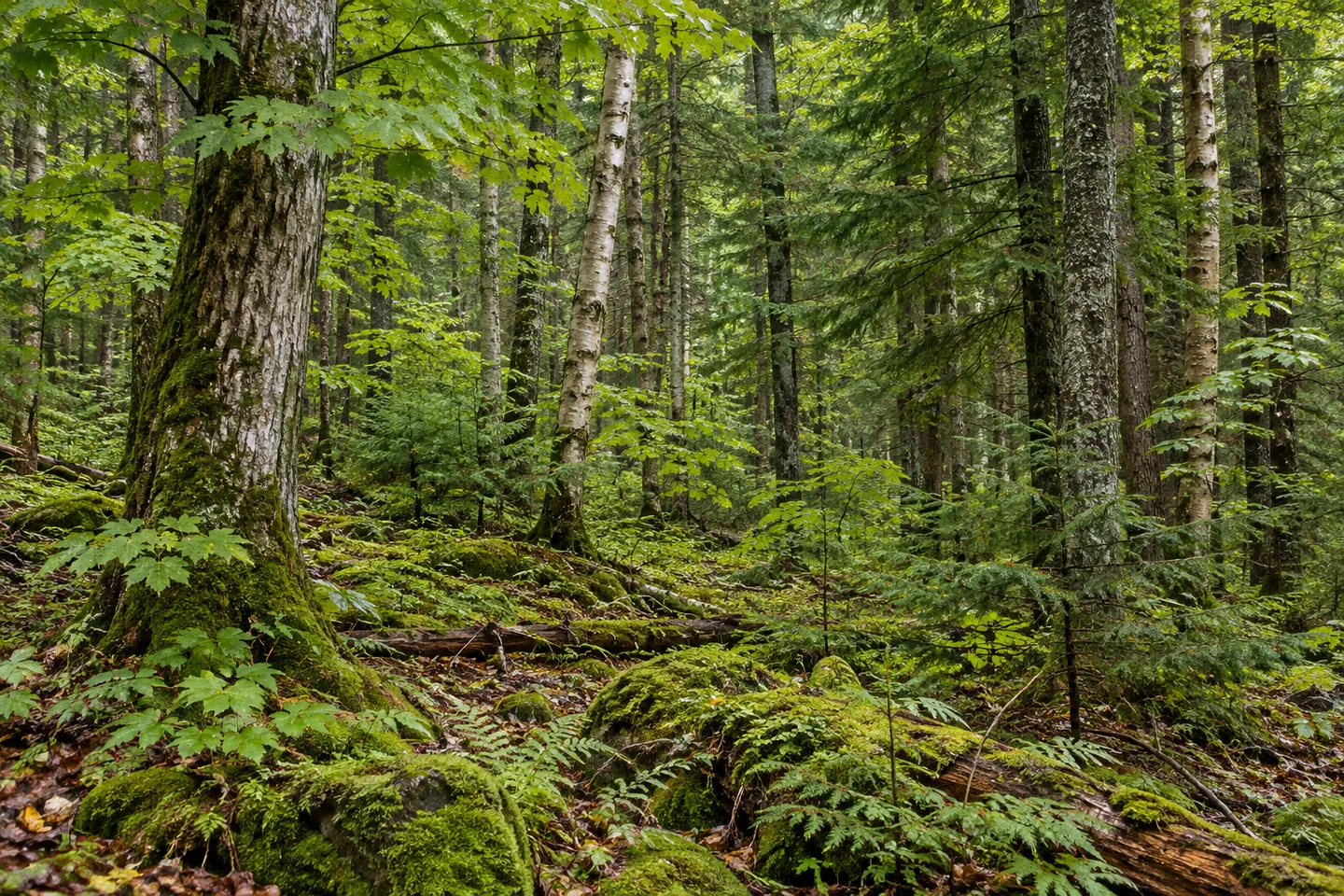
Florence Hill State Forest offers a woodland story with several periods of planting rather than one uniform stand. Across about 1,361 acres in Florence, Oneida County, northern hardwoods, conifer plantations and wetlands form the landscape. Most land was acquired in the late 1930s and early 1940s. The forest that followed those purchases still carries the distinction between natural woodland and trees planted for reforestation.
The New York State Department of Environmental Conservation (DEC) describes planting in the late 1930s, the 1940s and the early 1950s. White, red, Scotch and jack pines were among the species used, alongside Norway and white spruce, white cedar and Japanese larch. Most of those plantations remain part of the forest's appearance. The dates and tree names provide a useful way to look at an outing that might otherwise be described simply as a walk through woods.
Natural forest adds its own mixture, including red and hard maples, black cherry, yellow birch, white ash, beech, hemlock and red spruce. Where visible from the chosen route, compare different tree forms rather than expecting all of those species in one view. A planted stand and mixed woodland can suggest different land-use histories even before an individual tree is identified. That contrast is a subject for observation, not a promise of a particular arrangement beside a road.
There are no formal hiking trails. Old unpaved forest roads provide the walking approach, so choose the section and return from the property map and present conditions. The forest's acreage does not establish an extensive prepared path system or a convenient loop through every landscape type. A modest road-based outing can leave room for close attention without presenting this less developed setting as an effortless visit for every traveler.
Wetlands are part of the wider landscape mixture. If a wetland is visible from an appropriate position, consider its relationship to the surrounding woodland rather than entering it for a better angle. A photograph of changing vegetation texture can be worthwhile without a distant vista. The presence of wet ground adds context to the forest's character, but does not establish a boardwalk, a wildlife hide or a maintained water-edge path.
DEC lists deer, turkeys, hawks, songbirds, chipmunks and squirrels among wildlife that might be seen here. Treat the list as context, rather than a set of sightings included in the outing. Approach planning is equally practical: Florence Hill Road provides the road reference from Camden, with a pull-off beyond the state-forest sign. There are no formal parking areas, so resolve the actual stopping arrangement and check conditions before traveling.
Management follows the 46-Corners Unit Management Plan for water quality, recreation, habitat and timber. Follow posted conditions and Leave No Trace guidance, leaving vegetation undisturbed. For an observation-focused visit, the mixture of natural woodland and several generations of planting can provide a grounded thread from start to finish. Florence Hill's interest lies in those particular layers, with the unpaved-road access kept part of the story rather than replaced by an imagined trail itinerary.
Fun facts
- Florence Hill State Forest covers about 1,361 acres in Florence, Oneida County.
- Most land was acquired in the late 1930s and early 1940s.
- Plantations were established in the late 1930s, 1940s and early 1950s.
- There are no formal hiking trails; old unpaved forest roads provide walking opportunities.
- DEC lists a Florence Hill Road pull-off but no formal parking areas.
Before you go
- Plan around the old forest roads rather than expecting formal walking loops.
- Resolve the Florence Hill Road pull-off approach before visiting.
- Use the property map and check present conditions.
- Observe wetland vegetation from an appropriate existing position.
- Follow posted rules and Leave No Trace guidance.
Capture
- Compare natural woodland forms with plantation patterns visible from the route.
- Use tree and ground textures as subjects without assuming a panoramic viewpoint.
- A wetland-and-woodland contrast can be photographed where visible without entering sensitive vegetation.
 Fish Creek State Forest
 Furnace Creek State Forest
 Dry Brook Ridge Wild Forest
Social
Florence Hill State Forest covers about 1,361 acres in Florence, Oneida County. #Cre8Travel
Late 1930s and early 1940s acquisitions helped establish Florence Hill's public-forest chapter. #Cre8Travel
Several planting periods added pine, spruce, cedar and Japanese larch to Florence Hill. #Cre8Travel
Florence Hill's natural woodland includes maples, cherry, birch, beech and hemlock. #Cre8Travel
No formal hiking trails are listed at Florence Hill; old unpaved forest roads provide walking access. #Cre8Travel
DEC lists no formal parking areas at Florence Hill. Check the Florence Hill Road pull-off approach. #Cre8Travel
Wildlife might be seen at Florence Hill, but woodland interest does not depend on a particular sighting. #Cre8Travel
At Florence Hill, what would you compare first: planted conifer forms or mixed natural woodland? #Cre8Travel
Hashtags