 Cre8Travel
CRE8TRAVEL · NEW YORK PLACES
Fort Tryon Park
Fort Tryon Park: Gardens Above the Hudson
Discover
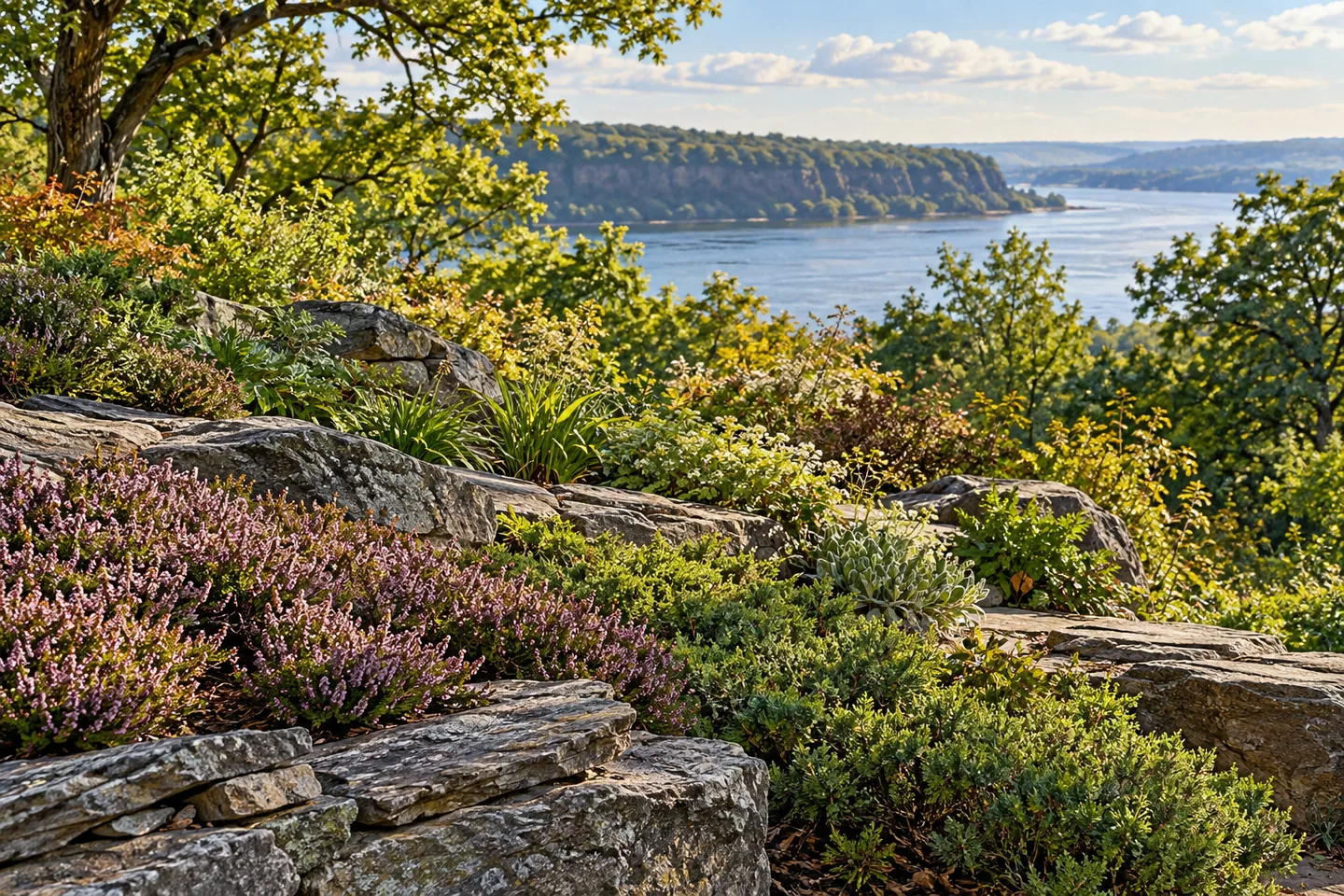
Fort Tryon Park rewards a change of scale. A border of low plants invites a close look; a terrace opens the view across the Hudson River to the Palisades. Between those moments, paths turn around rocky ground and stonework. This upper Manhattan landscape makes room for both a garden visit and a longer walk through the shapes of a carefully composed hillside.
Its public landscape grew from an estate. Cornelius Kingsley Garrison Billings developed his property in the early twentieth century, and John D. Rockefeller Jr. bought it in 1917. Rockefeller later engaged the Olmsted Brothers to turn the site into a public park. Their work began in 1927, and the park opened in 1935. Frederick Law Olmsted Jr. used the difficult terrain as a foundation for promenades, terraces and varied routes.
The result is a landscape with several ways of looking. Stone boundaries and changes of level frame broad views, while winding paths reveal closer scenes gradually. The surviving Billings Arcade adds an earlier layer of construction to the hillside. Its substantial masonry belonged to the estate driveway, then became part of the park's design. Following its relationship to the slope can be as interesting as studying the arches themselves.
The Heather Garden gives the walk a more intimate focus. Its three acres include a long mixed border, where heaths and heathers grow among a much wider collection of plants. Winter flowering heaths and summer flowering heathers bring different rhythms to the planting. Evergreen foliage also changes the picture, adding bronze, copper and silver tones when flowers are less prominent. A garden visit can therefore begin with texture and leaf color as readily as blossom.
Maintaining that variety takes considerable work. The conservancy describes challenging clay soil, exposed wind and hot summer conditions. Gardeners and plant specialists have adapted the planting to this setting over time. The garden's apparent ease is a useful reminder that a public landscape depends on attention to small details: a suitable plant, an open sightline and a border that holds interest beyond a single season.
On the Broadway side, the Alpine Garden offers another response to the rock. Small, low growing plants sit among walls, boulders and the natural Manhattan schist. Some decorative stone came from excavation for the park and the nearby subway. The Olmsted design used the steep slope to create a sequence of paths and planted pockets, bringing the material of the hillside into the garden itself.
Restoration has renewed these landscapes while referring back to historic plans and photographs. Work on the Heather Garden recovered planting and river views; later improvements renewed paths and seating near the arcade. Evergreen planting along the Winter Walk adds another thread to explore. These projects help explain why the park feels both established and actively cared for.
Choose a route with the hillside in mind. Steps and gradients shape the experience, so check the park map if your group needs a particular approach. Stay on public paths and keep planted beds clear. A satisfying visit can pair the Heather Garden's close details with a terrace view, then follow the stonework into a different part of the landscape.
Fun facts
- The public park opened in 1935.
- The Olmsted Brothers began their landscape work here in 1927.
- The Billings Arcade survives from the earlier estate.
- Some Alpine Garden stone came from park and subway excavation.
Before you go
- Pair a close look at the Heather Garden with a Hudson River view.
- Choose an approach that accounts for steps and hillside gradients.
- Follow public paths around the Alpine Garden and leave planted pockets undisturbed.
Capture
- Frame foliage and stonework against a wider river view from a public terrace.
- Look closely at contrasting leaves and low planting; avoid entering beds to obtain a detail.
 Cobble Hill Park
 Randalls Island Park
 Riverside Park South
Social
Fort Tryon Park combines close garden details with long Hudson River views. #Cre8Travel
The Olmsted Brothers shaped this rocky upper Manhattan landscape before its 1935 opening.
The Heather Garden mixes heaths, heathers and many other plants across a long border.
Evergreen foliage adds copper, bronze and silver tones beyond the main flower season.
The Alpine Garden works with natural schist and carefully placed stone.
The Billings Arcade preserves a substantial piece of the earlier estate.
Check the map for an approach that suits your group on the hillside.
Would you begin with a garden detail or a view across the Hudson?
Hashtags