 Cre8Travel
CRE8TRAVEL · NEW YORK PLACES
Cobble Hill Park
Cobble Hill Park: A Small Garden with a Carefully Made Interior
Discover
Cobble Hill Park has the scale of an outdoor room. Paths, planting and ironwork gather within a small Brooklyn space near Verandah Place, offering a place to sit close to the neighborhood's brownstone streets. The park's present appearance feels settled, but its making involved several stages, from a vacant site to a public garden and then a carefully considered redesign.
The Cobble Hill Association's history traces the park to the early 1960s. After earlier buildings had disappeared from the site, different development proposals were considered for the property. Neighborhood residents organized around the idea of a park. During the spring and summer of 1962, they gathered 1,200 signatures and petitioned city agencies to secure public green space.
The land became city property in March 1963. Plans called for a place of passive recreation within a densely built area, and the park was dedicated on July 14, 1965. Its original features included new trees and shrubs, game tables, concrete walls and a sandpit. The design provided a compact place for outdoor use, with the scale of the surrounding block remaining central to its purpose.
By the 1980s, the park needed renewal. The association helped bring about a reconstruction in 1989, replacing much of the earlier steel-panel fencing and concrete with materials chosen to relate more closely to the neighborhood's historic architecture. The change was more than a repair of worn surfaces: it gave the small space a different visual language.
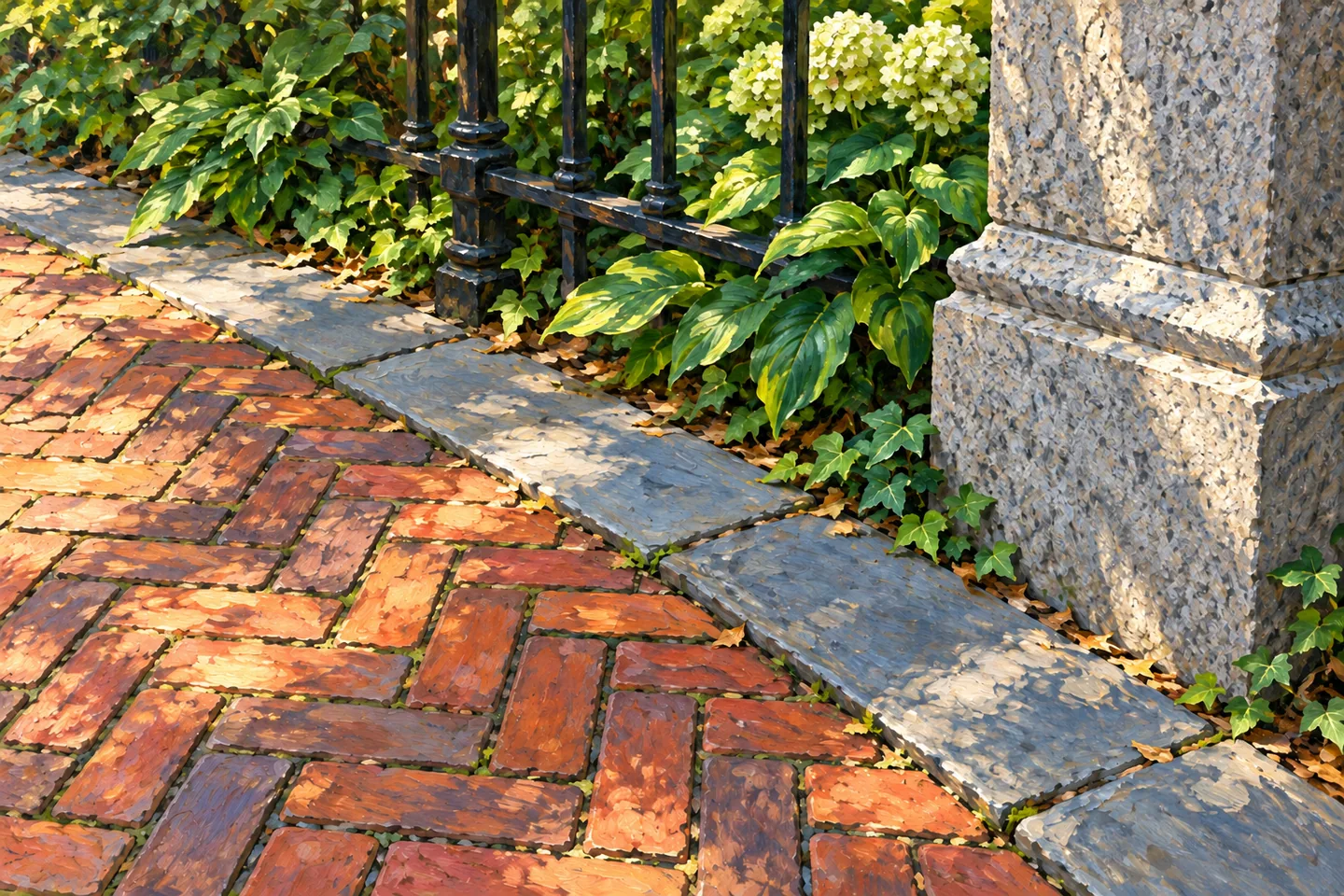
That language can still guide a close look. Bluestone, cast iron and granite entrance columns give different textures and weights to the park's edges. Brick walkways laid in a herringbone pattern make movement through the space part of its design. Together, these materials create a formal arrangement that can be read in small details, from the meeting of paving surfaces to the rhythm of the fence.
The redesign received recognition through the Art Commission's 1988 Annual Award for Excellence in Design and the Parks Council's first Philip Winslow Award for Public Projects in 1990. The dates belong to the design and its recognition around the 1989 reconstruction. They also place the park within a broader story of attention to small public spaces, where a modest site can carry considerable design ambition.
Local care continued after the reconstruction. The association's account describes planting, a summer concert series and shared events in the park. A later historical interview with a neighborhood volunteer recalls tending flowers and keeping the place restful. Those activities help explain a quality that is difficult to capture in an opening date: a garden stays connected to its surroundings through people returning to care for it.
For a visit, allow time to sit as well as walk. Look at how the paths organize planting and how the entrance materials echo the character of the nearby streets. Check the association's current calendar for organized activities, and follow posted park rules around lawns and play areas. A short pause can be enough to appreciate the park's achievement: turning a small piece of a busy neighborhood into a shared space with texture, proportion and room to linger.
Fun facts
- The site became city property in March 1963.
- Cobble Hill Park was dedicated on July 14, 1965.
- The park was reconstructed in 1989.
- The redesign uses bluestone, cast iron, granite columns and herringbone brick paths.
Before you go
- Allow time to sit and notice the materials as well as walking through.
- Check the association’s current calendar for organized events.
- Follow posted rules for lawns, planting and play areas.
Capture
- Look for the meeting of herringbone brick and bluestone from a public path.
- Use the entrance columns and ironwork to frame planting while preserving space for other visitors.
 Carroll Park
 Fort Tryon Park
 Randalls Island Park
Social
Cobble Hill Park creates a small garden room within Brooklyn’s streets. #Cre8Travel
The land became city property in 1963, and the park opened in 1965.
Residents gathered 1,200 signatures for public green space in 1962.
A 1989 reconstruction gave the park a new relationship with its historic surroundings.
Bluestone, cast iron and granite columns add texture to the small landscape.
Herringbone brick paths turn a simple walk into a chance to notice design.
Check current community events or enjoy an ordinary pause on a bench.
Which material detail would make you stop for a closer look?
Hashtags