 Cre8Travel
CRE8TRAVEL · NEW YORK PLACES
College Lodge Forest
College Lodge Forest: Two Drainages and a Student Legacy
Discover
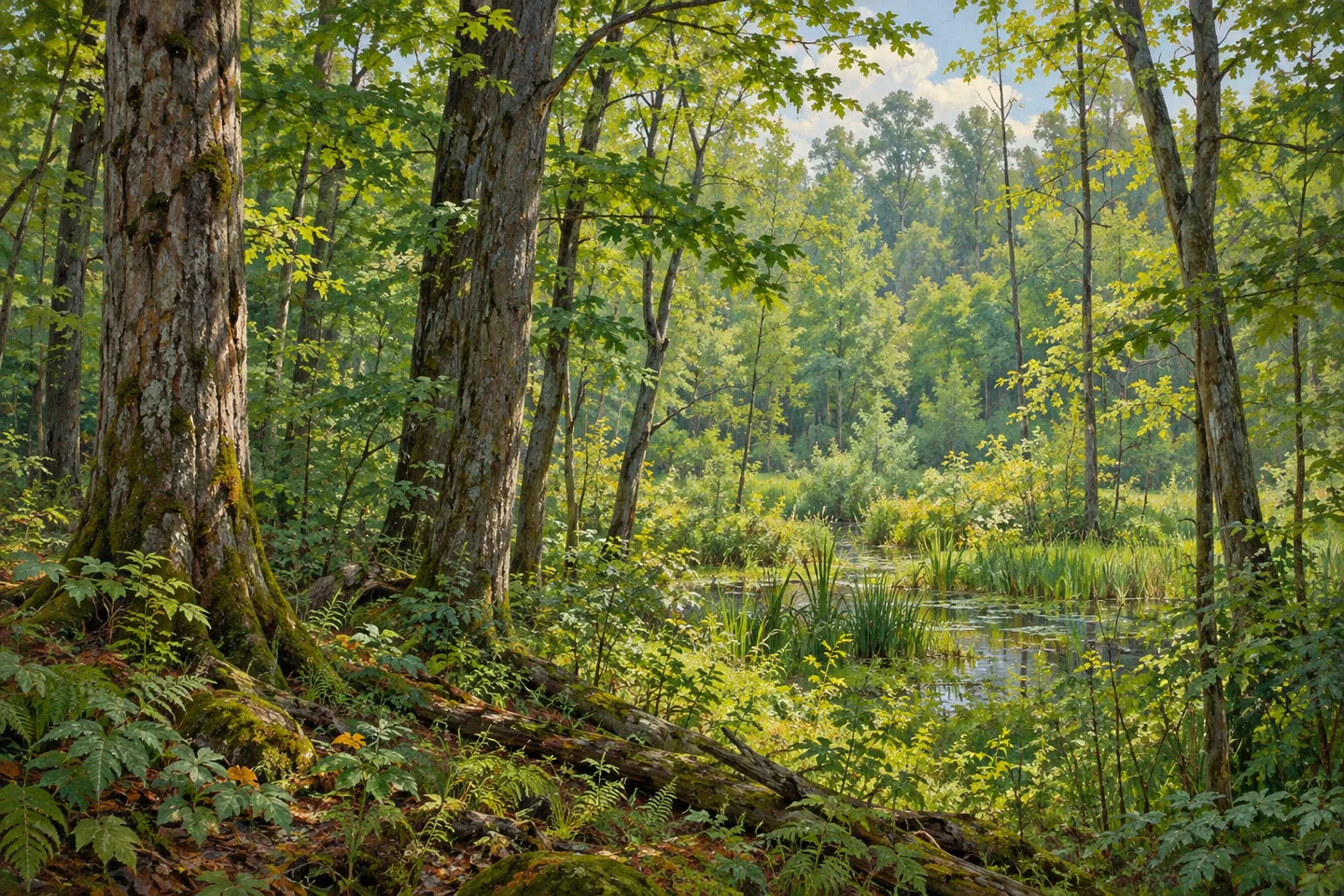
College Lodge Forest connects a student-led land purchase with a landscape that sends water in two very different directions. Near Brocton in Chautauqua County, its 173 protected acres occupy part of the Portage Escarpment above the Lake Erie plain. Old-growth trees, woodland trails and marsh habitat give the property several scales of interest. Its name recalls the lodge, but understanding the forest begins with distinguishing the protected land from the separately owned lodge and its surrounding grounds.
The story began in 1939, when Fredonia college students used their own money to buy the forest as a place to experience nature. Their purchase took place during the Great Depression and established a setting that later served teachers, researchers and students as an outdoor learning resource. The history gives the forest an educational identity rooted in a specific collective decision, rather than merely in its proximity to a college or a building carrying an academic name.
A later conservation chapter began in 2022. Western New York Land Conservancy purchased 173 acres surrounding the lodge from the Faculty Student Association. The association retained ownership and operation of the lodge and the 33 acres around it. These two areas should not be conflated. A forest visit does not automatically include use of the lodge, its interior or its facilities, and the separate ownership helps explain why a trail outing and a lodge event are different kinds of visit.
The property's position on a continental divide adds a less visible dimension. Rain falling on one side drains toward Lake Erie and ultimately the Atlantic Ocean, while water on the other side heads toward the Mississippi River and Gulf of Mexico. It is a useful idea to carry into an ordinary woodland walk: nearby patches of ground can belong to much larger drainage systems. That relationship gives the local terrain a geographical significance beyond the distance covered on foot.
At the heart of the forest is a grove of old-growth trees, described by the conservancy as hundreds of years old. Their presence belongs alongside the site's other habitats, rather than making every tree within the boundary the same age. The property also lies along a migration route for birds. An outing can focus on the structure and variety of habitat without depending on a sighting, a particular song or an assumption that every visit will reveal the same seasonal activity.
The marsh contributes another kind of detail. The conservancy identifies orchids, insect-eating plants and bryozoans among the forest's biological interests. Those are reasons to value the habitat, not instructions to leave a trail or handle plants in search of an example. The documented walking system totals 4.5 miles, with routes named for Muir, Leopold and Darwin. The names reinforce the forest's educational theme while leaving visitors free to choose an outing appropriate to their plans.
Consider bringing one question to the walk rather than a checklist of promised encounters: how does this particular ground connect learning, conservation and water? The student purchase, the 2022 protection agreement and the divide beneath the forest provide different answers. College Lodge Forest is especially engaging when those relationships remain distinct, with the separately owned lodge, the old-growth grove and the wider protected woodland each understood in its proper place.
Fun facts
- Fredonia students purchased the forest in 1939 with their own money.
- Western New York Land Conservancy purchased 173 acres in 2022.
- The Faculty Student Association retained the lodge and 33 surrounding acres.
- Water drains from different parts of the property toward the Lake Erie system and the Mississippi River system.
Before you go
- Keep the 173-acre protected forest distinct from the separately owned lodge and 33-acre grounds.
- Choose from the documented 4.5-mile trail system rather than assuming one fixed circuit.
- Observe marsh plants from the appropriate route without handling them or entering wet habitat.
Capture
- Study the structure of large trees without portraying every part of the property as old-growth.
- Use ordinary woodland layers to suggest the forest’s learning and conservation themes.
- Photograph wetland vegetation from a legitimate route without staging rare plants or wildlife.
 Cold Spring Brook State Forest
 Coon Hollow State Forest
 Diverting Reservoir Trail
Social
College Lodge Forest began with a 1939 purchase funded by Fredonia students. #Cre8Travel
That educational legacy later gained another conservation chapter:173 acres were purchased by Western New York Land Conservancy in 2022.
The lodge and its surrounding 33 acres remain separately owned by the Faculty Student Association. Forest access is not lodge access.
The forest occupies part of the Portage Escarpment above the Lake Erie plain.
It lies on a divide: water drains toward the Lake Erie system on one side and the Mississippi River system on the other.
An old-growth grove is one part of a property that also includes woodland and marsh habitat.
Routes named for Muir, Leopold and Darwin form a 4.5-mile walking system. Choose the outing that fits your plan.
A walk can follow more than a trail. At College Lodge Forest, consider the connections among student initiative, protected land and the water beneath the landscape.
Hashtags