 Cre8Travel
CRE8TRAVEL · NEW YORK PLACES
Buck Hill State Forest
Buck Hill State Forest: A Closer Look
Discover
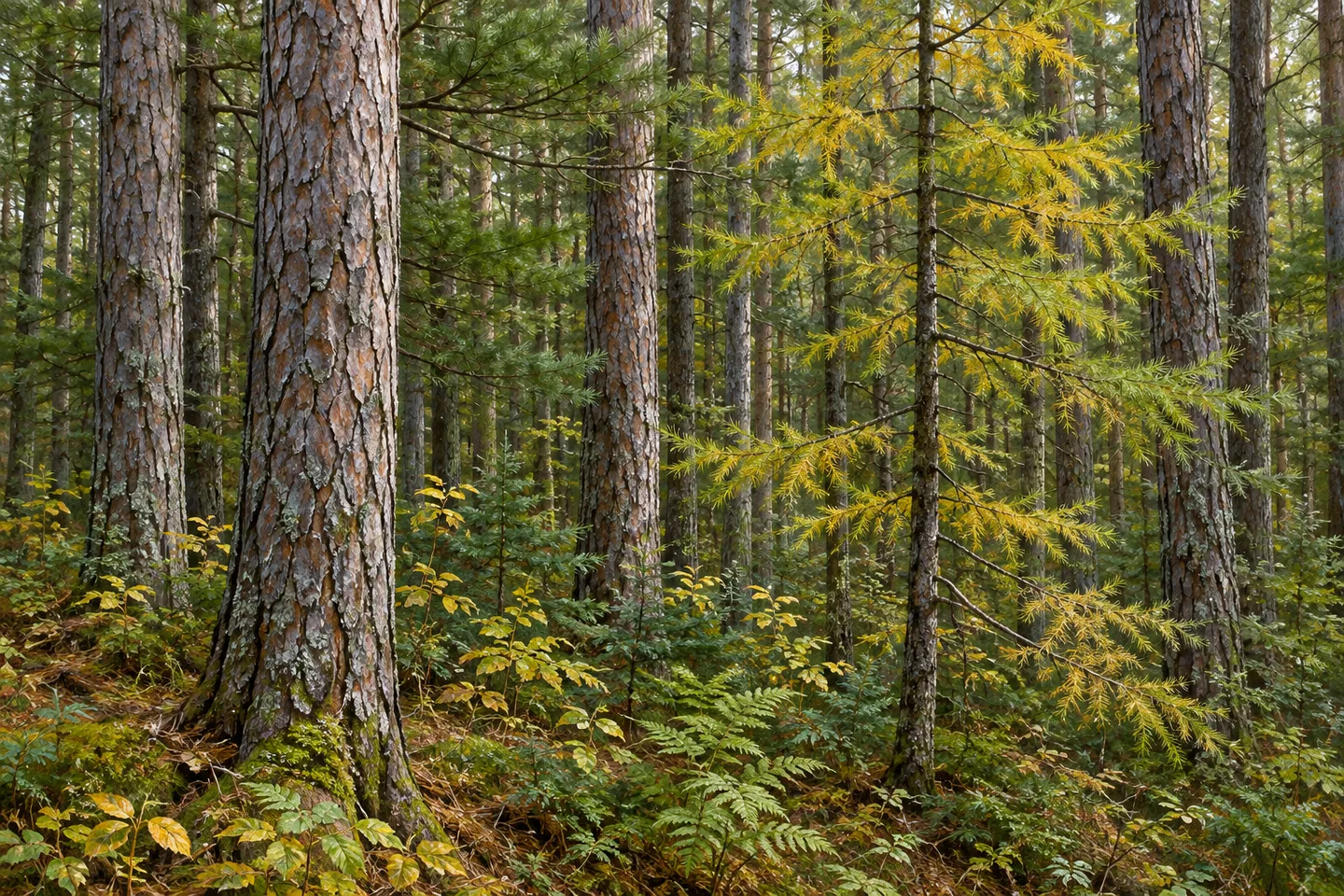
A small seed-production stand gives Buck Hill State Forest a connection to forests beyond its own boundary. In about 23 acres of white pine and larch plantation, cones are gathered for the Saratoga Tree Nursery's seed inventory. That detail adds a different purpose to a woodland visit: some trees here have a role in supplying seed, alongside the larger property's recreation, habitat and timber-management purposes.
Buck Hill covers 1,702 acres in Western, Oneida County. Most of its land was acquired in the 1940s, with further pieces added in the 1960s and the last parcel acquired in 1974. The gradual assembly is part of the forest's history. It is a working public property rather than a woodland whose current boundary and tree mixture appeared all at once, and a visit can keep that longer sequence in mind.
Northern hardwood and hardwood-hemlock forest form much of the tree cover. Maples, white ash, aspen, black cherry, basswood, yellow birch and hemlock are among the species identified by the New York State Department of Environmental Conservation (DEC). Plantations established in the 1940s add white pine, red pine, Norway spruce, white spruce and larch. Looking at the contrast between natural woodland and planted stands gives the outing a subject beyond distance covered. Tree form can be a starting point for looking closely.
The seed-production area is a particularly specific part of that planting story. Its cones are collected for nursery purposes; it should not be presented as a visitor collecting activity or a guaranteed stop on an identified route. Consider instead what the detail says about forest management. A stand can matter not just for the timber growing on it now, but for the seed used to help establish trees elsewhere.
There are no maintained hiking trails. Old skid routes from logging can be used for walking, and 1.66 miles of paved and unpaved roads provide access. Plan a route from the property map with present conditions in mind, rather than expecting a waymarked circuit through every notable stand. The different origins of roads and skid routes are another reminder that a walking surface may have begun with a practical forest-management purpose.
Lansing Kill, a protected trout stream, runs through part of the property, with several tributaries also crossing the forest. Check the map and actual public access before building an outing around a water view. Parking is another limitation: DEC lists no maintained parking areas, with an unmaintained truck-trail reference instead. A named stream and an access road do not by themselves establish a developed trailhead or waterside path.
The Oneida Hills Unit Management Plan provides the framework for the property. Follow posted conditions and Leave No Trace guidance, and leave trees, cones and other forest material undisturbed. A photograph of pine or larch forms, where appropriately visible, can connect with the seed story without entering a special stand. Buck Hill offers a grounded view of a forest serving several purposes, with its modest access and unusually specific nursery connection kept clearly in focus.
Fun facts
- Buck Hill State Forest covers 1,702 acres in Western, Oneida County.
- Most land was acquired in the 1940s, with the final parcel added in 1974.
- There are no maintained hiking trails; roads and old skid routes provide walking access.
- A roughly 23-acre white pine and larch seed-production plantation supplies cones to Saratoga Tree Nursery.
- Lansing Kill and several tributaries cross the property; no maintained parking areas are listed.
Before you go
- Plan with the property map rather than expecting maintained hiking loops.
- Resolve the unmaintained parking approach before visiting.
- Treat the seed plantation as management context, not a visitor collecting opportunity.
- Check actual stream access rather than assuming a waterside path.
- Follow posted rules and leave cones and vegetation undisturbed.
Capture
- Where visible along your appropriate route, use pine or larch forms to interpret the seed-production story.
- Compare natural hardwood-hemlock texture with planted conifers without assuming a designated viewpoint.
- A stream composition should use an actual suitable position rather than a presumed path along Lansing Kill.
 Big Brook State Forest
 Canada Creek State Forest
 Clark Hill State Forest
Social
Buck Hill State Forest covers 1,702 acres in Western, Oneida County. #Cre8Travel
Most Buck Hill land was acquired in the 1940s, with later additions ending in 1974. #Cre8Travel
Buck Hill has no maintained hiking trails; old skid routes and roads provide walking access. #Cre8Travel
A roughly 23-acre white pine and larch seed plantation supplies cones for Saratoga Tree Nursery. #Cre8Travel
The seed stand is part of forestry work, not an invitation for visitors to collect cones. #Cre8Travel
Lansing Kill is a protected trout stream running through part of Buck Hill State Forest. #Cre8Travel
DEC lists no maintained parking areas at Buck Hill. Plan the actual approach before setting out. #Cre8Travel
At Buck Hill, how does knowing about seed production change the way you think about a stand of trees? #Cre8Travel
Hashtags