 Cre8Travel
CRE8TRAVEL · NEW YORK PLACES
Brookfield Railroad State Forest
Brookfield Railroad State Forest: A Closer Look
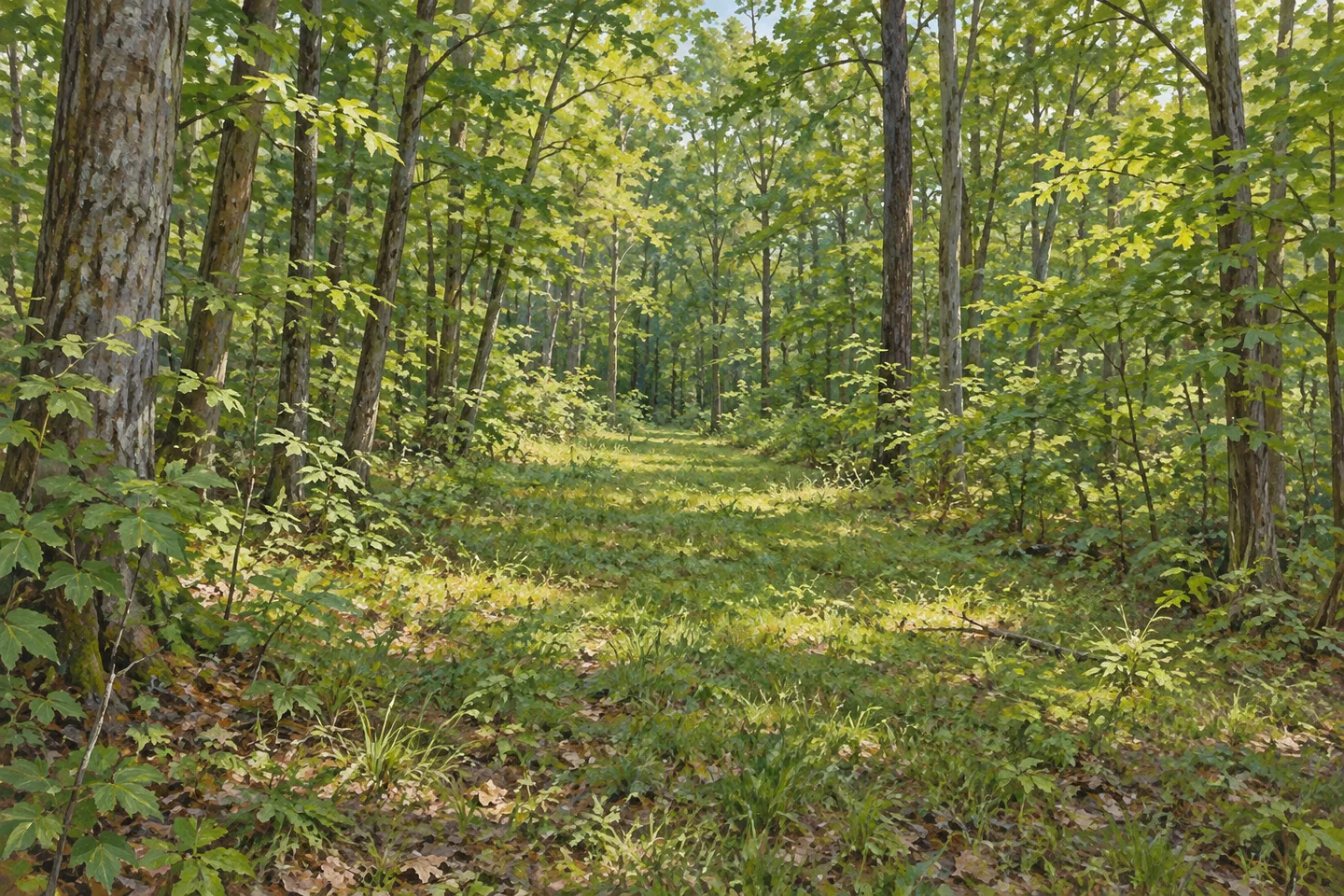
Discover
Brookfield Railroad State Forest carries the name of a railway that never received a rail. The proposed line was intended to connect Brookfield with North Brookfield and the Delaware, Lackawanna and Western Railroad. Construction began in 1886, backed by $100,000 in capital stock, but financial trouble stopped the project before it could become an operating railway. Its unfinished grade remains part of this 848-acre forest's identity.
The project involved more than four miles of rugged terrain with repeated elevation challenges. Workers nearly completed the grade before the scheme failed. That sequence matters: the earthwork is a reminder of preparation for a line, rather than the remains of trains running through these woods. Looking at the forest with that distinction in mind gives its history a specific character. The ambition is visible in a project left unfinished, not in a railway station or abandoned track.
The state purchased the property in the 1930s as part of the reforestation-era acquisition of public land. Today, the New York State Department of Environmental Conservation (DEC) manages it within the Brookfield Unit Management Plan. The move from attempted transport corridor to state forest adds a second chapter to the story. A walk can consider how one landscape has been approached for different purposes without imagining that every trace of those purposes is visible at every turn.
Several multiple-use trails provide walking opportunities. They also belong to the wider Brookfield Trail System, whose main concentration of horse trails and assembly area is in nearby Charles E. Baker State Forest. Keep the individual property and the larger system distinct when choosing a route. Membership in a broad network does not mean all of its facilities are within Brookfield Railroad's boundary or reached from the same parking location.
The old rail grade remains evident in parts of the forest. If it is visible from your appropriate route, pause to consider the work needed to prepare a line across difficult ground. There is no need to invent the sound of a passing train: none ran on this unfinished spur. The interest lies in the contrast between a very definite nineteenth-century intention and the woodland landscape in which the earthwork now survives.
Hibbard Road runs through the heart of the property, and Vidler Road is the parking reference in DEC's visitor information. Use the property and Brookfield system maps together to choose a walking approach and return. Pay attention to current trail designations and posted conditions on a multiple-use network. A historical theme can guide the observations along a route without replacing the practical task of knowing where that route goes.
Follow Leave No Trace guidance and leave any historic features undisturbed. For photographs, a study of the grade's form, where it is actually visible from the route, can be more honest than a reconstructed railway scene. Brookfield Railroad State Forest offers a particularly clear meeting of woodland and an unrealized plan. Let the unfinished line remain unfinished in the story: the grading, the financial failure and the later state-forest chapter are interesting enough without adding tracks, locomotives or invented station ruins.
Fun facts
- Brookfield Railroad State Forest covers 848 acres in Brookfield, Madison County.
- Construction of the planned spur began in 1886 with $100,000 in capital stock.
- Workers nearly completed the grade before financial difficulties halted the project; no rail was laid.
- The state purchased the property in the 1930s.
- It is part of the Brookfield Trail System, with the main horse-trail concentration and assembly area in Charles E. Baker State Forest.
Before you go
- Use both property and Brookfield system maps to plan the route.
- Distinguish this forest's facilities from those in Charles E. Baker State Forest.
- Treat the unfinished grade as a historic feature, not an operating or formerly completed railway.
- Check the Vidler Road parking approach and posted trail designations.
- Leave historic earthworks undisturbed and follow Leave No Trace guidance.
Capture
- Where visible from your appropriate route, frame the grade's form against the surrounding woodland.
- A low, considered view of earthwork and trees can suggest the unfinished project without adding tracks.
- Photograph actual forest details rather than staging a railway history that did not occur.
 Sonyea State Forest
 Charles E. Baker State Forest
 DeRuyter State Forest
Social
Brookfield Railroad State Forest is named for a railway spur that never received a single rail. #Cre8Travel
The Brookfield spur project began in 1886 with $100,000 in capital stock. Financial trouble stopped completion. #Cre8Travel
More than four miles of challenging terrain stood between the Brookfield railway plan and its intended connection. #Cre8Travel
Workers nearly finished the rail grade. Parts remain evident within today's Brookfield Railroad State Forest. #Cre8Travel
The state purchased the 848-acre Brookfield Railroad property in the 1930s. #Cre8Travel
Brookfield Railroad belongs to a larger trail system; most horse trails and the assembly area are in Charles E. Baker State Forest. #Cre8Travel
Hibbard Road runs through Brookfield Railroad State Forest; Vidler Road is the DEC-listed parking reference. #Cre8Travel
What makes an unfinished project memorable? At Brookfield Railroad State Forest, the grade tells the story. #Cre8Travel
Hashtags