 Cre8Travel
CRE8TRAVEL · NEW YORK PLACES
Armstrong Preserve
Armstrong Preserve: Three Trails and a Landscape of Restoration
Discover
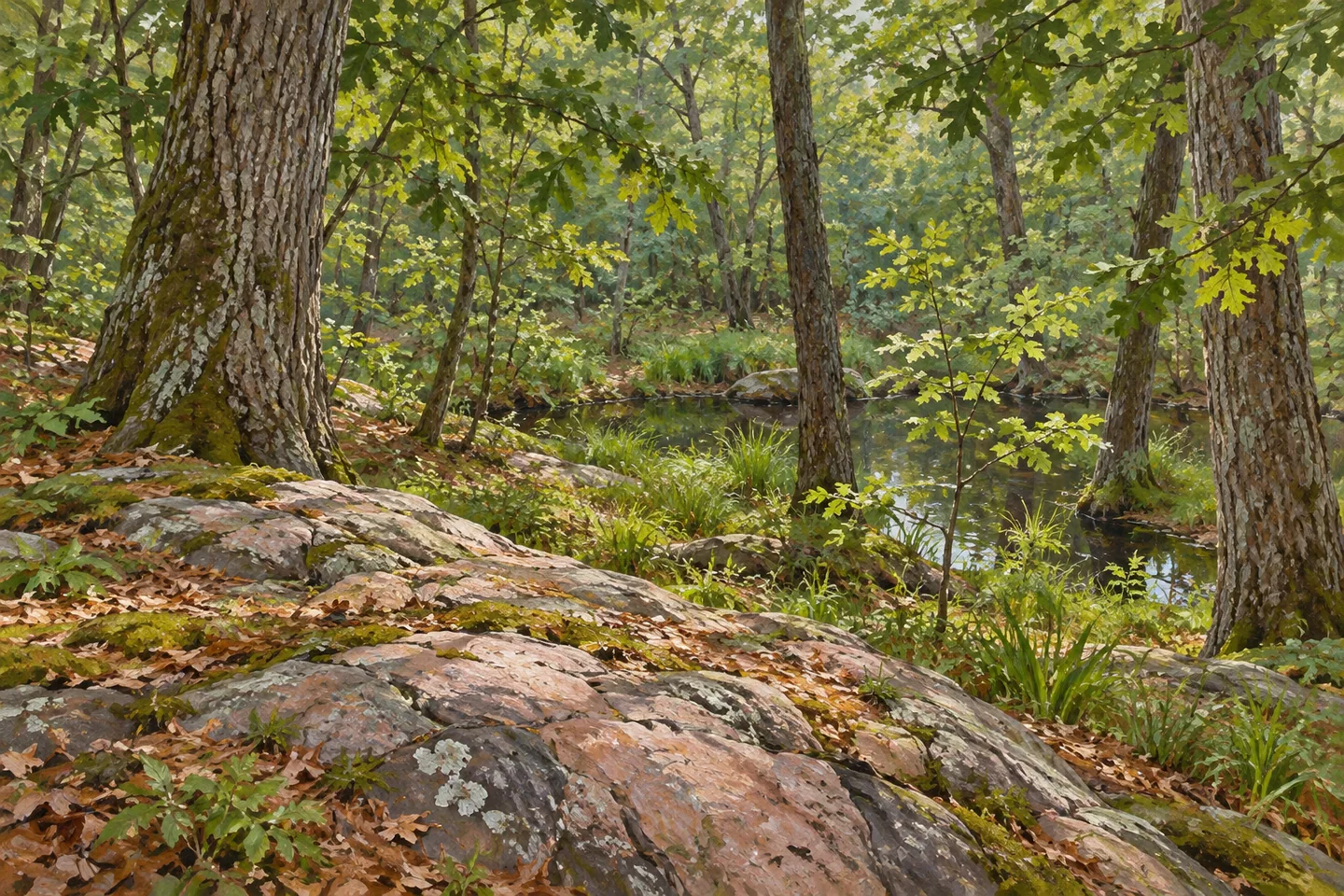
Armstrong Preserve brings a substantial variety of landscapes into 43 acres in Pound Ridge. Three short trails introduce a vernal pool, a demonstration meadow, rock outcrops and woodland under restoration. The trail system totals about 1.5 miles, including a connection to neighboring Richards Preserve. That variety gives a short visit several possible themes, while the history of a former retreat provides another way to understand why this particular ground became protected land.
John Corbin, an editor and playwright, built the Armstrong House in 1912 as a three-season retreat called Crow's Ledge. The property later passed through his family before sisters Betty and Catherine Armstrong purchased it in 1961. Catherine Armstrong bequeathed the house and land to the Pound Ridge Land Conservancy at her death in 1999. The preserve opened in 2004, followed by trail marking and improvement in 2012 and 2013. These stages connect a private retreat with the public woodland setting available today.
The house and its backyard have a different access arrangement from the trails. They open for scheduled events or by appointment, rather than forming an unrestricted part of an ordinary walk. This distinction keeps the history useful without turning it into an invitation to enter the building or gardens. The outdoor trail setting supplies plenty to observe independently, and the official information kiosk provides a starting point for choosing a route.
The yellow trail passes a vernal pool backed by a 40-foot cliff. A viewing bridge, documented since March 2018, offers a particular way to observe this seasonal water habitat. Nearby restoration areas have been planted with native trees, shrubs and wildflowers in place of invasive vegetation. Together, pool and planting areas give the route a clear ecological theme. Watch what is present without assuming visible water, developing frogs or flowers will be the same in every season.
Farther along, a small demonstration meadow has berry-producing shrubs, bird boxes and benches before the route descends into lowland woodland near Cross River Reservoir. The yellow connection eventually crosses the preserve's boundary and leads toward Richards Preserve. Keep that onward route separate from Armstrong's 43 acres. A trail continuing across a boundary does not make all the neighboring land part of the same property or place every connecting route within one small loop.
The white loop highlights rock outcrops and cliffs with pink and gray bands of Fordham gneiss. The blue loop, reached from the white trail, circles an open woodland of mature oaks with sedges beneath. A fenced regeneration area adds an example of continuing forest-care work. These features offer useful comparisons: rock and plant cover, mature trees and new growth, a protected seasonal pool and a deliberately managed meadow. Observe the regeneration area without crossing its fence.
Armstrong's outdoor classrooms and interpretive trail make those relationships central to the visit. Choose a route with the current map, allow time for its particular features and leave the house visit to an authorized event or appointment. The preserve's interest comes from combining an identifiable history with active care for different habitats. It is a place where a modest walk can connect earlier ownership, visible landforms and the ongoing work of helping native plant communities recover.
Fun facts
- Armstrong Preserve covers 43 acres, with three short trails and a connection toward Richards Preserve.
- John Corbin built the house in 1912; Betty and Catherine Armstrong bought the property in 1961.
- Catherine Armstrong’s 1999 bequest preceded the preserve’s 2004 opening and 2012–2013 trail improvements.
- The yellow trail passes a vernal pool, with a viewing bridge documented since March 2018.
Before you go
- Use the current map to distinguish the yellow connection beyond Armstrong’s boundary from its own trails.
- The house and backyard require a scheduled event or appointment.
- Keep out of the fenced regeneration area and observe plants and pool life without disturbance.
Capture
- Compare visible pink-gray rock bands and woodland from the designated route.
- Photograph the vernal pool from appropriate access without assuming water or animals will always be present.
- An illustration should not reproduce an exact bridge, house, named rock formation or copyrighted interpretive display.
 Chautauqua Lake Fish And Wildlife Management Area
 Chestnut Woods State Forest
 Clapper Hollow State Forest
Social
Armstrong Preserve combines several habitats within 43 acres in Pound Ridge. #Cre8Travel
A 1912 country retreat became part of a conservation story after Catherine Armstrong’s 1999 bequest.
The preserve opened in 2004, with trails marked and improved in 2012–2013.
The yellow trail introduces a vernal pool and native-plant restoration areas.
A demonstration meadow and lowland forest offer different landscape settings.
A yellow-trail connection leaves Armstrong’s boundary toward Richards Preserve; keep the two properties distinct.
The blue loop circles mature oaks and a fenced regeneration area, best appreciated without entering the enclosure.
House and backyard visits use scheduled events or appointments. An ordinary trail visit has its own rich set of subjects.
Hashtags