 Cre8Travel
CRE8TRAVEL · MAINE PLACES
Wiscasset Historic District
Wiscasset Historic District: A Village Written Beside the River
Discover
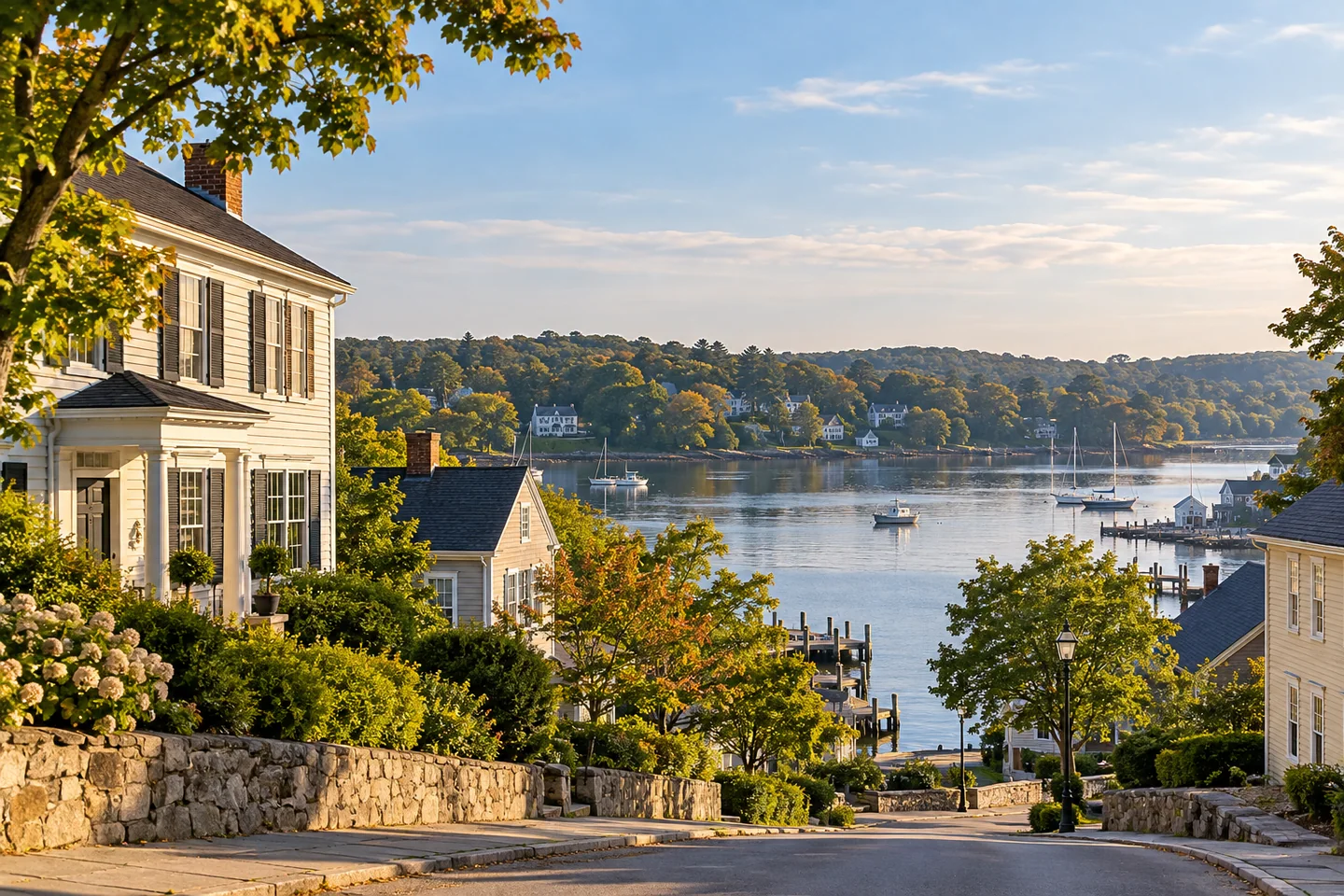
Wiscasset's historic district makes more sense when the river stays in the picture. The handsome houses are not simply a collection of architectural ornaments: they belong to a village shaped by shipping, public business and the Sheepscot waterfront. The National Register record recognizes the historic village and waterfront together, with Federal and Greek Revival architecture among its important features. A walk that alternates between street and water can reveal more than one spent searching for a single “best” house.
The Wiscasset Area Chamber of Commerce traces the village's growth to its deep harbor and its fishing, lumber and shipbuilding economy. In 1800, thirty locally owned square-rigged vessels carried cargo internationally. The prosperity behind that trade helped produce homes, churches and public buildings that still give the village much of its character. The county courts moved to Wiscasset in 1794, adding another layer to the town's role. These are useful connections to carry through a walk: a substantial residence, a courthouse and a working waterfront can be different expressions of the same community's development, rather than unrelated attractions joined only by a visitor map.
Museum in the Streets offers a practical way to explore those connections. The Creative Alliance describes a self-guided route using historic photographs, research and eyewitness accounts. Read a panel, then look back toward the scene around it. Comparing an earlier image with the present streetscape can make a gap, a changed use or an overlooked angle more interesting than a perfectly preserved facade. The Sunken Garden adds a particularly clear example of change: the alliance explains that the Sortwell family gave it to the town after a house on the site had burned. An open space can carry a building's history even when the building itself is gone.
Brittney Nickerson describes just such a change in perception in her firsthand account of the town dock. After spending years returning to the waterfront, she took a Museum in the Streets walk and learned about the schooners Hesper and Luther Little. She initially connected visible wooden posts with the ships, then discovered that her assumption was mistaken. Her experience is a useful invitation to look twice and let interpretation complicate the view. It is one person's response to the waterfront and its storytelling, rather than evidence that an object visible today must be part of a particular ship.
Choose a manageable route from the current tour material, allowing time to compare photographs and streets rather than rushing between every site. The jail, house museums and other institutions have their own arrangements; an exterior walk does not guarantee admission to them. Much of the district remains occupied, so stay on public ways and keep doorsteps and gardens private. Check road crossings carefully when moving between the commercial streets and the waterfront.
For a photographic sequence, begin with the relationship between buildings and the river, then choose a street-level detail that you can identify from a panel. You might finish with the Sunken Garden as a study in absence and reuse. The story does not require photographing every landmark. A few well-chosen frames can show how a port became a village worth reading, and how its people continue to interpret the places they live.
Fun facts
- The district’s National Register listing dates to January 1973.
- The county courts moved to Wiscasset in 1794.
- Museum in the Streets uses historic images and accounts to interpret the village.
Before you go
- Use the current self-guided tour material to choose a manageable route.
- Treat museum interiors as separate visits with their own arrangements.
- Stay on public ways and take care at road crossings between streets and waterfront.
Visitor perspectives
- Brittney Nickerson’s Museum in the Streets walk changed how she understood a familiar waterfront. She learned about two schooners and corrected her initial assumption that nearby posts were their remains.
Capture
- Show the relationship between the village and the river from a public position.
- Pair a streetscape with an identifiable detail discussed on a panel, without reproducing the panel’s text or artwork.
 Topsham Historic District
 Rockport Historic District
 Sheepscot Historic District
Social
Wiscasset’s historic district includes a village and its Sheepscot waterfront.
Homes, public buildings and port activity belong to a connected story.
Thirty locally owned square-rigged vessels carried cargo internationally in 1800.
The county courts arrived in Wiscasset in 1794.
Museum in the Streets invites a comparison between historic photographs and the scene around you.
The Sunken Garden recalls a site changed by fire and a later gift to the town.
Nickerson’s waterfront account is a reminder to question an attractive historical assumption.
What changes a familiar place for you: an old photograph, a map or someone’s story? #Cre8Travel
Hashtags