 Cre8Travel
CRE8TRAVEL · MAINE PLACES
Topsham Historic District
Topsham Historic District: Reading a Working Village
Discover
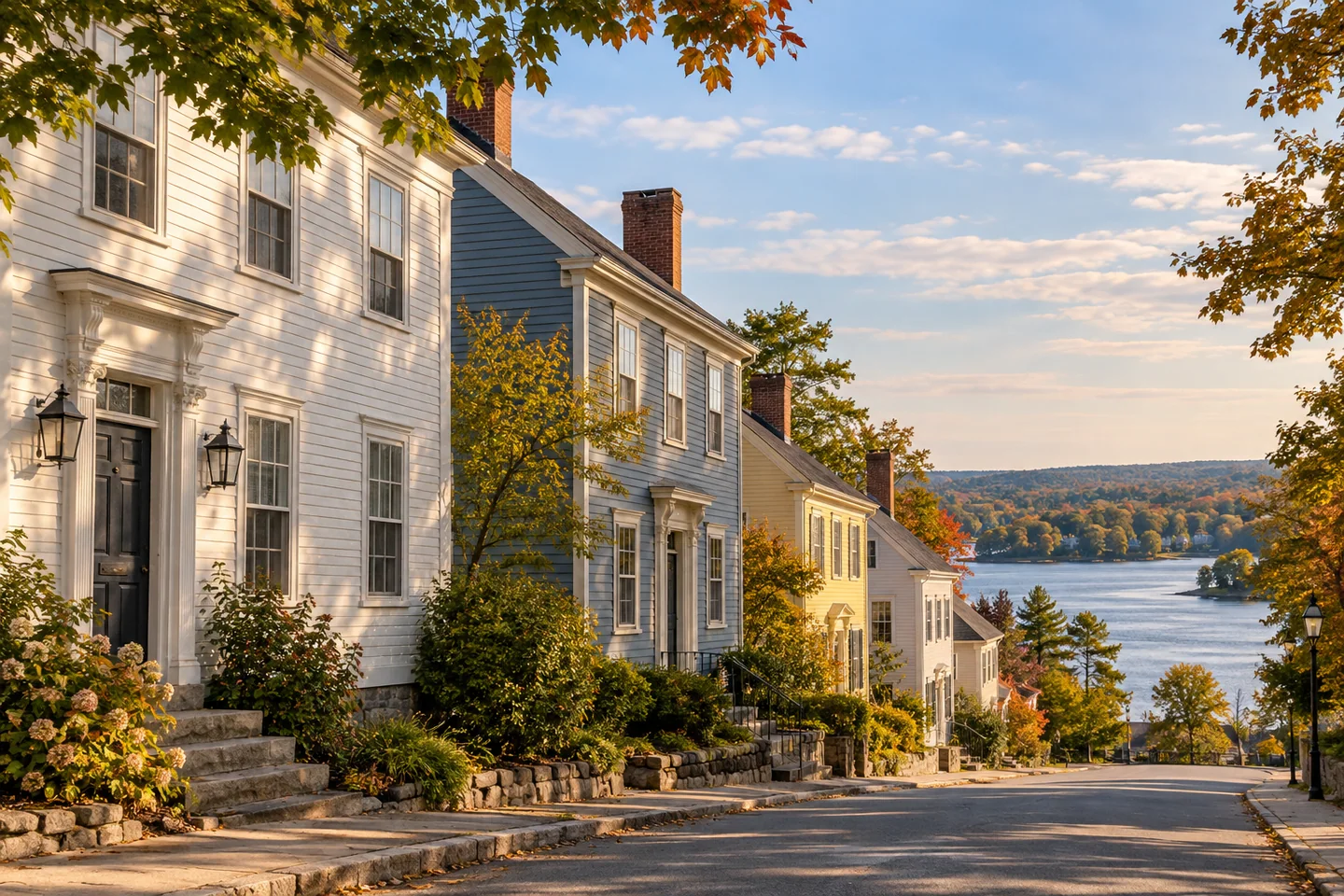
Topsham's historic village rewards a different kind of looking from a grand-house tour. The subject is a whole neighborhood: buildings close enough to suggest how people lived near their work, with repeated architectural patterns that become clearer when compared across a street. Maine Historic Preservation Commission describes a National Register district of fifty-eight wood-framed buildings on seven streets. Federal and Greek Revival designs predominate, and nineteen dwellings predate 1820. The interest lies in the collection, rather than in finding one spectacular facade and moving on.
The Androscoggin River helps explain that collection. The commission links the neighborhood's development to the lumber economy and the need for residents to live near jobs and the town center. Its buildings span roughly a century and a half, allowing the village to reflect change as well as continuity. From the public way, notice the balance of doors and windows and the relationship between neighboring buildings. Looking for a shared rhythm is more rewarding than treating every old-looking feature as evidence of the same date. A building's precise history belongs with its documented address, rather than with a guess based on paint color.
Pejepscot History Center adds another dimension to the town's story. Farming remained important in Topsham, while manufacturing included paper, feldspar, grain, lumber and shingles. That variety prevents the river economy from becoming a one-product tale. The center also points to the continued use of former mill space for contemporary businesses. A historic village is not necessarily a place where time has stopped; older structures can remain useful while their purposes change. The center places this later history on a much longer foundation, recognizing the Abenaki and Wabanaki peoples' connection with these lands and waterways before colonial settlement.
Preservation itself is part of what visitors encounter. The town explains that residents established a local historic district in 1988 and provides a historical walking-tour brochure covering thirty-five buildings, mills and sites. The National Register listing dates to 1978; the two dates describe different preservation actions. Use the town's material to choose a manageable set of streets and identify specific buildings before starting. Historic status does not turn occupied homes into public interiors, so keep the visit on public ways and arrange any separate indoor visit with the relevant operator.
An architectural historian's explanation, reported in The Times Record, offers a particularly useful lens. Scott Hanson noted that floods, fire and time had removed much evidence of industrial and shipbuilding activity, while residential architecture continued to tell the community's story. That observation encourages looking beyond the absent mill or vanished workplace. A house can be evidence of an economy, too: proximity, scale and street pattern reveal choices about daily life that a single surviving machine would not necessarily show.
For photographs, try a sequence rather than one establishing image. Begin with a streetscape that shows relationships between buildings, then select an entrance or window arrangement visible from the public way. Leave private gardens, porches and interiors to their owners. Topsham becomes more interesting when the walk connects ordinary houses with work, change and preservation—without needing each doorway to announce itself as a museum.
Fun facts
- The National Register district includes fifty-eight wood-framed buildings.
- Its National Register listing dates to 1978; the town created a local district in 1988.
- The municipal historical walking-tour brochure covers thirty-five buildings, mills and sites.
Before you go
- Use the municipal tour material to identify buildings by address.
- Remain on public ways unless a property separately permits entry.
- Compare neighboring facades rather than assigning dates from appearance alone.
Capture
- Photograph a group of facades from the public way to show their relationship within the street.
- Choose a visible doorway or window pattern for a closer study without entering private property.
 Head Harbor Preserve
 Wiscasset Historic District
 Rockport Historic District
Social
Topsham’s historic village tells a collective story through neighboring buildings.
The National Register district includes Federal and Greek Revival architecture.
River industry helps explain why people lived close to the town center.
Pejepscot History Center places farming alongside the town’s varied manufacturing history.
Older mill space can support new uses while retaining a link with the past.
National Register recognition and local district creation are different milestones.
The town’s tour material helps connect an address with a documented story.
What makes a streetscape memorable: one landmark, or the relationships between its buildings? #Cre8Travel
Hashtags