 Cre8Travel
CRE8TRAVEL · MAINE PLACES
West Grand Lake
West Grand Lake: A Salmon Landscape
Discover
West Grand Lake's public water-trail approach is above the dam at Grand Lake Stream, reached by Shaw Street from Milford Road. The land trust identifies this entry in its current Maine Trail Finder listing.
The scale of the lake becomes clearer in the state fisheries survey, revised in 1995: more than fourteen thousand acres of water and a maximum depth of a hundred and twenty-eight feet. That report distinguishes several fisheries sharing the basin. Salmon management relied on stocking, while the lake-trout population had increasingly sustained itself through natural reproduction after occasional stocking in the preceding decade. Whitefish and smallmouth bass occupied other parts of the fishing year described then. This is historical management evidence rather than a present catch schedule. It is useful because it replaces the vague idea of a large fishing lake with several different relationships among depth, reproduction, habitat and human intervention. None can be read directly from the surface on a brief visit.
West Grand also belongs to the original geography of Maine's landlocked salmon. The wildlife department's species account identifies the St. Croix, including this lake, as one of four river basins supporting the fish before stocking expanded their range after 1868. That is a statement about basins, not a claim that every later salmon water has the same origin. The same account explains that rainbow smelt are the principal food for these freshwater salmon and that competition for smelt can affect growth. For the visitor, the lake's significance is therefore both historical and ecological. Its reputation is linked to a native population and to the continuing balance between predatory fish and the small prey supporting them.
A 2013 department account describes another connection with the rest of Maine. Hatchery staff collected salmon near the West Grand dam, held them until ready and gathered eggs and milt for fertilization. The fish were released again, while portions from different pairs were used to maintain a broad genetic contribution in the hatchery program. The account explains the process behind fish later stocked elsewhere. It is not an invitation to approach nets, pens or operating equipment, and it does not establish a public demonstration schedule. The interesting point is how activity at the edge of this lake helped shape fisheries far beyond its own shores.
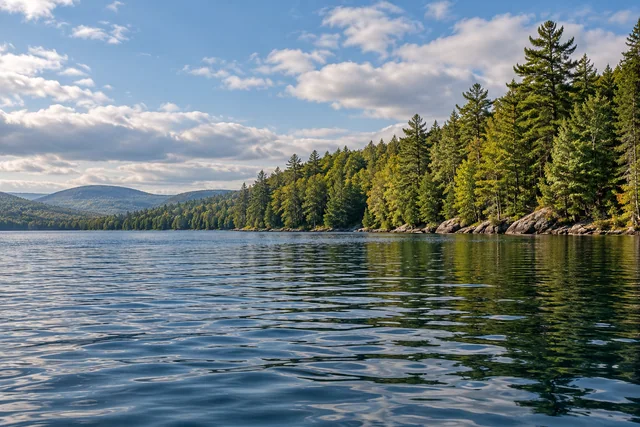
Tim Smith's original May 2007 trip journal follows a canoe journey through Pocumcus, West Grand and Junior lakes with his friend Shawn. He valued traveling beside relatively undeveloped shores and inspected passing campsites while considering future group trips. His enthusiasm is a guide's personal recollection, not a promise of empty water or permission to use a particular historical campsite. The journal is most useful for the way it notices shoreline character during movement. A wooded bank can become the central experience even when the day was planned around fishing. Smith deliberately withheld detailed fishing locations, so the account should not be expanded into a spot-by-spot angling itinerary.
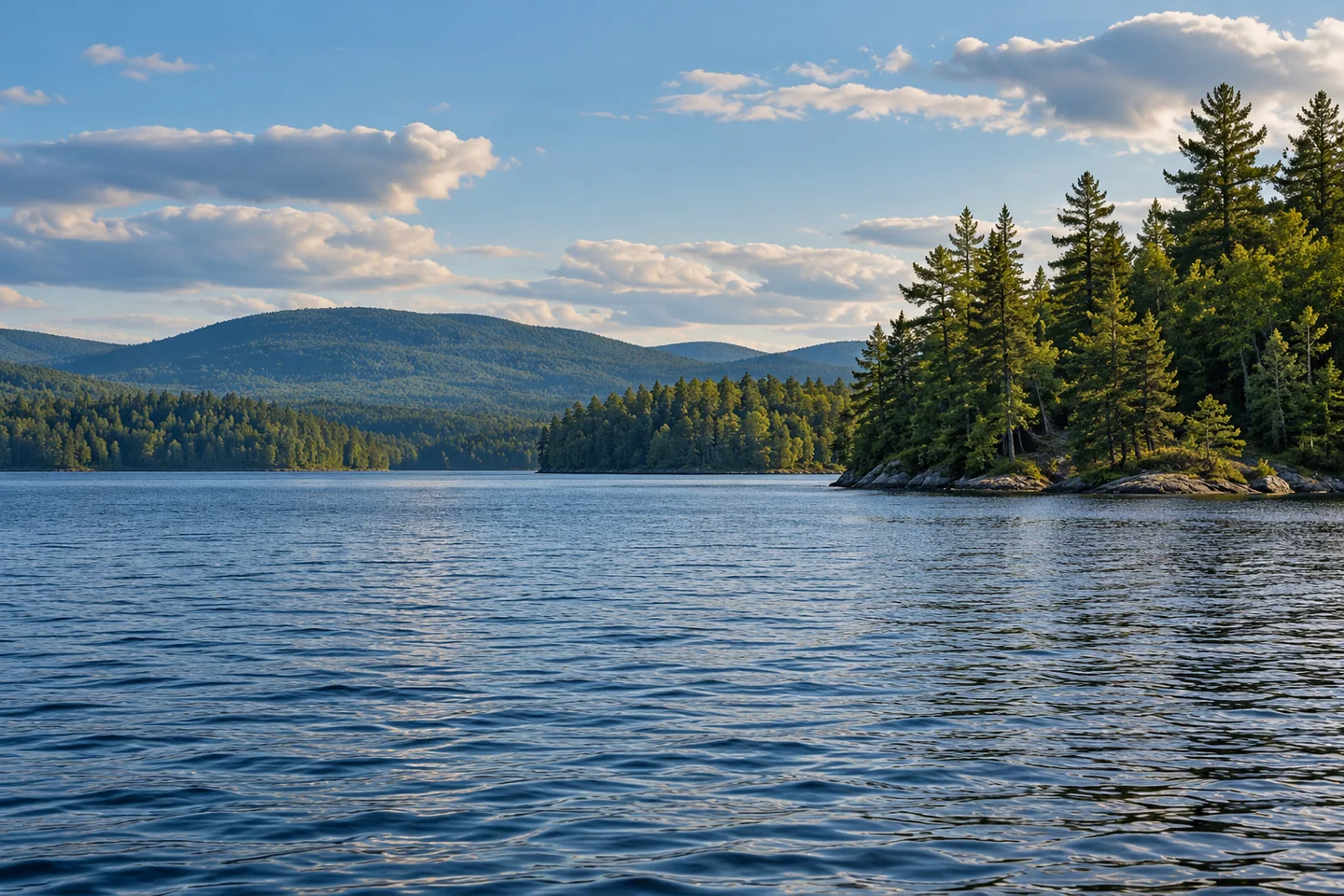
From a stable position, compare a broad water foreground with a tighter study of overlapping wooded points. Let the return plan determine the outing's extent, and stop camera handling before maneuvering the boat.
Fun facts
- West Grand belongs to one of Maine’s four original landlocked-salmon river basins.
- Hatchery staff have collected salmon here for a wider stocking program.
Before you go
- Use the identified launch above the village dam.
- Keep clear of fish-management equipment and operating structures.
Visitor perspectives
- Tim Smith valued relatively undeveloped shores during a multi-lake canoe journey with Shawn, while considering campsites for future group travel.
Capture
- From a stable position, compare a wide water foreground with a tighter arrangement of overlapping wooded points.
 Pocumcus Lake
 Lower Sysladobsis Lake
 Naramissic Farm Bridgton Historical Society
Social
The water-trail launch lies above the village dam.
Historical survey work records a deep, extensive basin.
Different fish populations relied on different management approaches.
West Grand belongs to the salmon’s original Maine range.
Smelt help support the landlocked-salmon food web.
A state account describes gathering salmon eggs for hatcheries.
A 2007 canoe journal appreciated the region’s relatively undeveloped shores.
Overlapping wooded points can give a broad lake photograph depth. #Cre8Travel
Hashtags