 Cre8Travel
CRE8TRAVEL · MAINE PLACES
Naramissic Farm Bridgton Historical Society
Narramissic: A Farmhouse Read through Family Memory
Discover
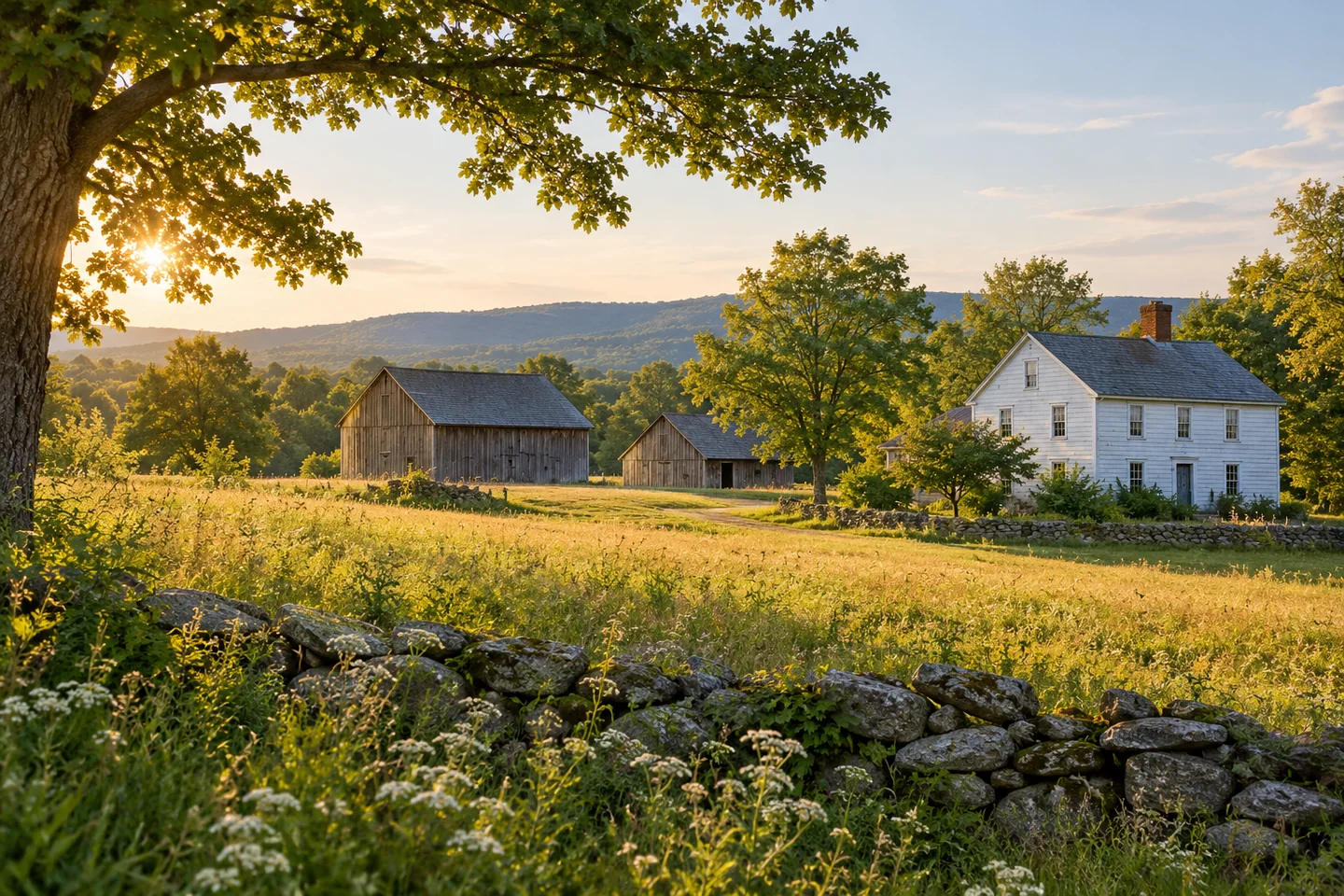
Narramissic, the Peabody-Fitch Farm in South Bridgton, offers a historic-house visit separate from both the surrounding Peabody-Fitch Woods and the historical society's downtown museum. Arrange access to the farm buildings directly with Bridgton Historical Society rather than assuming an outdoor walk includes an interior tour. The society interprets the house with many possessions associated with the families who lived there. Begin with a question about a household: what can a surviving object reveal, and what needs a written account or a guide's explanation to become meaningful?
The house and its associated structures do not represent one unchanging moment. The society describes William Peabody's 1797 house, later changes by Mary and George Fitch, and the development of the barn and blacksmith shop. Family furniture provides a connection with that built setting, while Edwin Peabody Fitch's memoir, Ninety Years of Living, records growing up here in the 1840s and 1850s. An interpreted room and a recollection offer different kinds of evidence. Ask how the museum uses them together, and which details depend on a remembered account rather than an object that has remained in place.
A tax-assessment record preserved by the society on Maine Memory Network adds another household and another source. It identifies the property with Margaret Monroe of Providence, whose family used it as a seasonal home before her bequest to the historical society. The record's description also points to a memoir by her daughter, Margaret Normann. Placing those later memories beside Edwin Fitch's gives the house a longer human span. A property can retain old furniture and architecture while becoming a different kind of home for another generation, with new routines and attachments layered onto the earlier farm.
The setting also helps explain the buildings' historical purpose. Maine Preservation describes the farm at the meeting of two former town roads, now used as trails, and within a landscape of open fields rather than a dense village center. Its account connects preservation with maintaining a hill farm's increasingly uncommon open setting. Consider how a barn, a house, and a workshop function in relation to one another before following any separate trail. The broader scene can illuminate work and movement around the household without making a woodland route the main purpose of this visit.
Photographer Matthew Richards offers an individual perspective in his July 2025 account. After years of returning to the property, he described noticing changes in its paths, parking, and a field edge allowed to grow, while continuing to enjoy the history and views. His account shows that return visits need not depend on the site remaining visually identical. The photograph you make records one moment within a cared-for landscape. Treat his observations as a particular visit, rather than a guarantee about the current route or condition of a field.
During an arranged visit, give an interpreted object time before moving to the next room. Ask before photographing interiors, and keep workshops or equipment outside any plan for handling unless staff explicitly invite participation. A useful image might relate a furnishing to the room around it, or show permitted exterior relationships among buildings. Avoid staging an invented nineteenth-century activity. Leave with one question to pursue in a memoir or the society's records. Narramissic is rewarding when household memory, material evidence, and the changing use of a farm remain in conversation.
Fun facts
- Edwin Peabody Fitch’s memoir recalls growing up at the farm in the 1840s and 1850s.
- Later occupant Margaret Monroe’s daughter also wrote about memories of the house.
- The farmhouse, barn, and blacksmith shop represent related parts of a working property.
Before you go
- Arrange farm-building access separately from a walk in Peabody-Fitch Woods.
- Ask how family objects and written memories contribute different evidence.
- Request permission before interior photography or handling equipment.
Visitor perspectives
- Matthew Richards’s July 2025 photography account describes years of returning to Narramissic, noticing changes in paths and the field edge while continuing to value the history and views. He found that repeated visits still offered something different to notice.
Capture
- If permitted, place a family furnishing within its interpreted room context.
- Use authorized exterior positions to show how the farm buildings relate to each other.
 Lower Sysladobsis Lake
 John Ford Statue
 Joshua L. Chamberlain
Social
Narramissic’s historic farm buildings offer a different visit from the surrounding woods.
A family memoir adds remembered daily life to surviving objects.
A later household left a second strand of written memory.
A tax record becomes useful when its dates and descriptions are read carefully.
The farm’s open setting helps explain the relationship among its buildings.
Matthew Richards’s 2025 account found something different to notice on returning.
Arrange the building visit, then let interpretation guide the photograph.
What tells you more about a home: an object, a remembered story, or the comparison between them?
Hashtags