 Cre8Travel
CRE8TRAVEL · MAINE PLACES
Todd Wildlife Sanctuary
Todd Wildlife Sanctuary: Mainland Paths and Hog Island
Discover
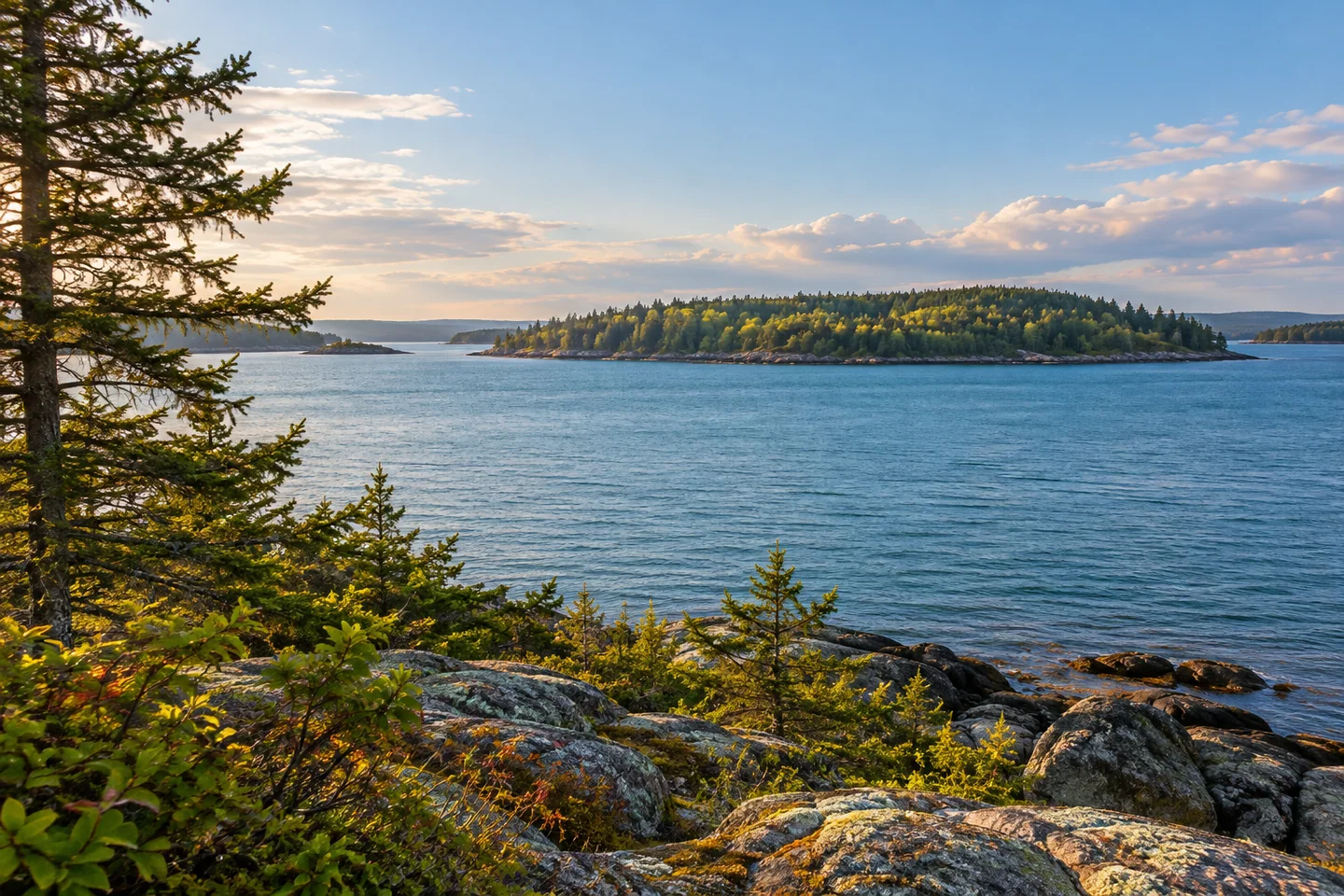
Todd Wildlife Sanctuary offers two related but very different ways into Muscongus Bay. Audubon manages a 30-acre mainland parcel in Bremen and 330-acre Hog Island a quarter-mile offshore. Together they protect habitat for woodland birds, shore birds and native plants, while supporting an educational tradition that reaches beyond the coast. The mainland address is 12 Audubon Road. You can begin with a land-based visit without treating the island crossing as a necessary extra. Look across the channel and the sanctuary becomes a useful reminder that a protected landscape can have a water gap in the middle.
For a mainland walk, the Maine Birding Trail describes a self-guided route through meadow, forest and shore, with views toward the Medomak River and Muscongus Bay. Its interest lies in that sequence of habitats rather than a promise of one rare bird. The guide specifically characterizes the sanctuary as a place to enjoy common woodland species. That is a useful invitation to slow down: watch how a bird uses an edge or moves between layers of vegetation instead of racing through a checklist. Changing backgrounds can make an ordinary observation more revealing than another distant silhouette that never quite becomes identifiable.
The island's educational story grew from a family retreat. Audubon's history of its artist residency describes Mabel Loomis Todd and astronomer David Todd discovering Hog Island in 1908 and creating a summer compound. After Mabel's death, their daughter Millicent Todd Bingham acquired the remaining island land. An agreement with Audubon followed in 1935, and the camp and sanctuary opened in 1936. Friends of Hog Island began an extensive restoration of the Main Lodge and Writer's Cabin in 2012, renewing a creative retreat alongside the conservation mission. That connection between attention, art and learning remains an appealing way to think about the place: drawing or writing can be another method of looking closely.
A visit to Hog Island requires a separate marine plan. Audubon welcomes the public on approximately six miles of island trails, but there is no public boat launch at the mainland sanctuary. Its current guidance identifies visitor moorings and a southern guest dock, and asks visitors to respect active programs and residential buildings. Do not enter or peer into those buildings without invitation. Pets and bicycles are not permitted on the island. The island can therefore offer a longer exploration, but it is not a walk-on extension reached by following the next mainland path.
Teacher Hannah Ring's account for York County Audubon shows what an organized camp experience can add. Attending on an educator scholarship, she described learning with other teachers, investigating small pond creatures on the mainland and following island trails through coastal scenery and a milkweed meadow. She returned home with ideas for helping her own pupils observe nature. Her enthusiasm belongs to a particular residential program, rather than a package automatically included in a day visit. Still, the underlying idea travels well: spend time noticing something small, ask a better question about it, and bring that curiosity away with you.
Fun facts
- The sanctuary includes mainland land and offshore Hog Island.
- The camp and sanctuary opened in 1936.
Before you go
- Choose a mainland walk or arrange the island approach separately; there is no mainland public boat launch.
- Respect active island programs and the privacy of residential buildings.
Visitor perspectives
- Educator Hannah Ring described a rewarding scholarship camp, including mainland pond exploration, island walking and ideas to share with her pupils. Her report concerns a residential educational program, rather than a general day visit.
Capture
- Use a broad water view to separate the mainland foreground from the offshore island.
- For a small nature study, sketch an observed shape beside a photograph rather than moving the subject.
 Vanceboro Historical Society
 Huckins Beach and Morrison Cove
 Beauchamp Point and Rockport Shore Preserves
Social
Todd Wildlife Sanctuary links a Bremen mainland parcel with offshore Hog Island.
Meadow, forest and shoreline make a mainland walk a study in changing habitat.
The Maine Birding Trail recommends attention to common woodland birds here.
A family retreat became a conservation and educational landscape.
Hog Island’s trail system is open to visitors arriving with an appropriate marine plan.
Teacher Hannah Ring’s scholarship account connects coastal observations with ideas for her pupils.
Camp buildings deserve privacy even when the surrounding trails welcome visitors.
What would you put in a nature journal: a quick sketch or a careful description? #Cre8Travel
Hashtags