 Cre8Travel
CRE8TRAVEL · MAINE PLACES
Thomas Reed Memorial
Thomas Brackett Reed: A Monument to Parliamentary Power
Discover
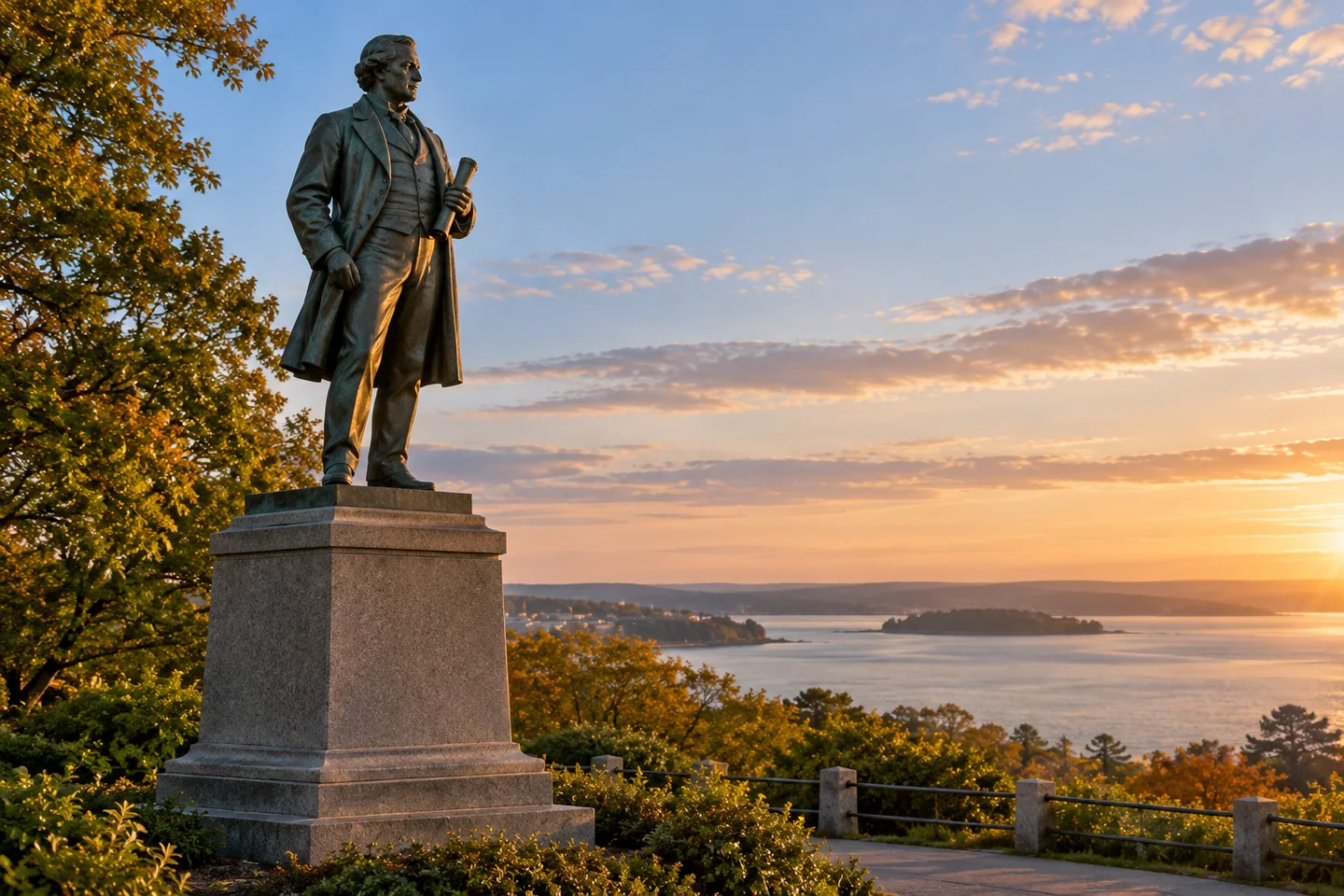
The Thomas Brackett Reed statue on Portland's Western Promenade offers a different reason to pause from the park's western outlook. Make the monument itself your subject: a bronze figure, a granite pedestal, and the choices through which a political career became public memory. Portland's Public Art Committee identifies Burr Churchill Miller as the sculptor, with the bronze cast in 1908 and the dedication held in 1910. That distinction separates the making of an artwork from the civic ceremony that introduced it. Begin with the whole figure before moving closer to read its setting and interpretation.
Reed holds a scroll in his left hand, an attribute that suits a career involving speeches, law, and parliamentary procedure. The committee describes the figure as resting rather than caught in an emphatic action. Compare that restraint with the height and solidity of the monument's base. The result need not be read as a reenactment of one particular speech. A portrait monument can compress years of work into a gesture and a material presence, leaving the visitor to ask what kinds of authority the composition conveys.
One episode makes the political history easier to understand. The U.S. House historian describes Reed's 1890 challenge to the disappearing quorum. Members could obstruct business by remaining physically present while refusing to respond or vote, preventing the necessary attendance from being recorded. Reed counted those members as present. The change became part of the broader procedural overhaul associated with his name. It helps explain why descriptions of him combine admiration for effective leadership with arguments over the power of a majority and the ability of a minority to delay action.
The monument also documents how Portland wanted him remembered. At the unveiling, Samuel W. McCall emphasized that voluntary contributions, rather than a public tax levy, had paid for the tribute. His printed address tied the location to Reed's childhood and long connection with the city. Read that as a commemorative argument offered by an admirer, rather than a neutral summary of an entire career. A dedication speech can tell you as much about the people raising a monument and the values they wish to display as it does about its subject.
Later interpretation adds another layer. A University of Maine archive photograph documents the plaque's summary of Reed's education, wartime service, and elected offices. The title of statesman and the familiar nickname Czar appear within the same memorial language. Consider the tension between those descriptions after learning about the quorum dispute. There is no need to settle a nineteenth-century political argument during a park visit, but the words make the figure more specific than an anonymous official elevated above a lawn.
NHjo's individual Tripadvisor account of a March 2019 visit describes looking up Reed's history and appreciating the statue's setting. That sequence is a practical model for your own stop: notice the object, learn something concrete, then look again. For a photograph, compare a broad frame that explains the pedestal and placement with a closer study of the figure's gesture from an established public route. Do not climb the base or block passing walkers. The reward is a connection between an accessible city artwork and the rules through which political decisions were made.
Fun facts
- Burr Churchill Miller’s bronze was cast in 1908 and dedicated in 1910.
- Reed challenged the disappearing quorum in the House of Representatives in 1890.
- The memorial’s later plaque combines a career summary with the nickname Czar.
Before you go
- View the full figure and pedestal before moving closer to read the interpretation.
- Compare commemorative praise with a specific episode from Reed’s political career.
- Use established public routes and keep the monument base clear of climbing.
Visitor perspectives
- NHjo’s March 2019 Tripadvisor account describes researching Reed’s political history after noticing the monument. The reviewer appreciated the imposing statue and its setting, an individual response that combines a visual stop with further curiosity.
Capture
- Frame figure and pedestal together to show how scale shapes the monument.
- Use a safe angle to study the scroll and resting pose without climbing or obstructing walkers.
 Lady Pepperell House Museum
 Henry Wadsworth Longfellow Monument
 The Maine Lobsterman
Social
Portland’s Reed statue turns parliamentary history into a public-art stop.
The bronze was made before the ceremony that dedicated it.
A scroll and a restrained pose suggest authority without staging a speech.
Reed’s 1890 quorum decision changed how the House could conduct business.
A dedication address shows how admirers wanted a political life remembered.
An archival photograph records the memorial’s later interpretive plaque.
NHjo’s 2019 visit combined looking at the statue with researching its subject.
What changes when you learn the argument behind a monument’s familiar nickname?
Hashtags