 Cre8Travel
CRE8TRAVEL · MAINE PLACES
The Maine Lobsterman
The Maine Lobsterman: Work, Casting, and a Missing Dog
Discover
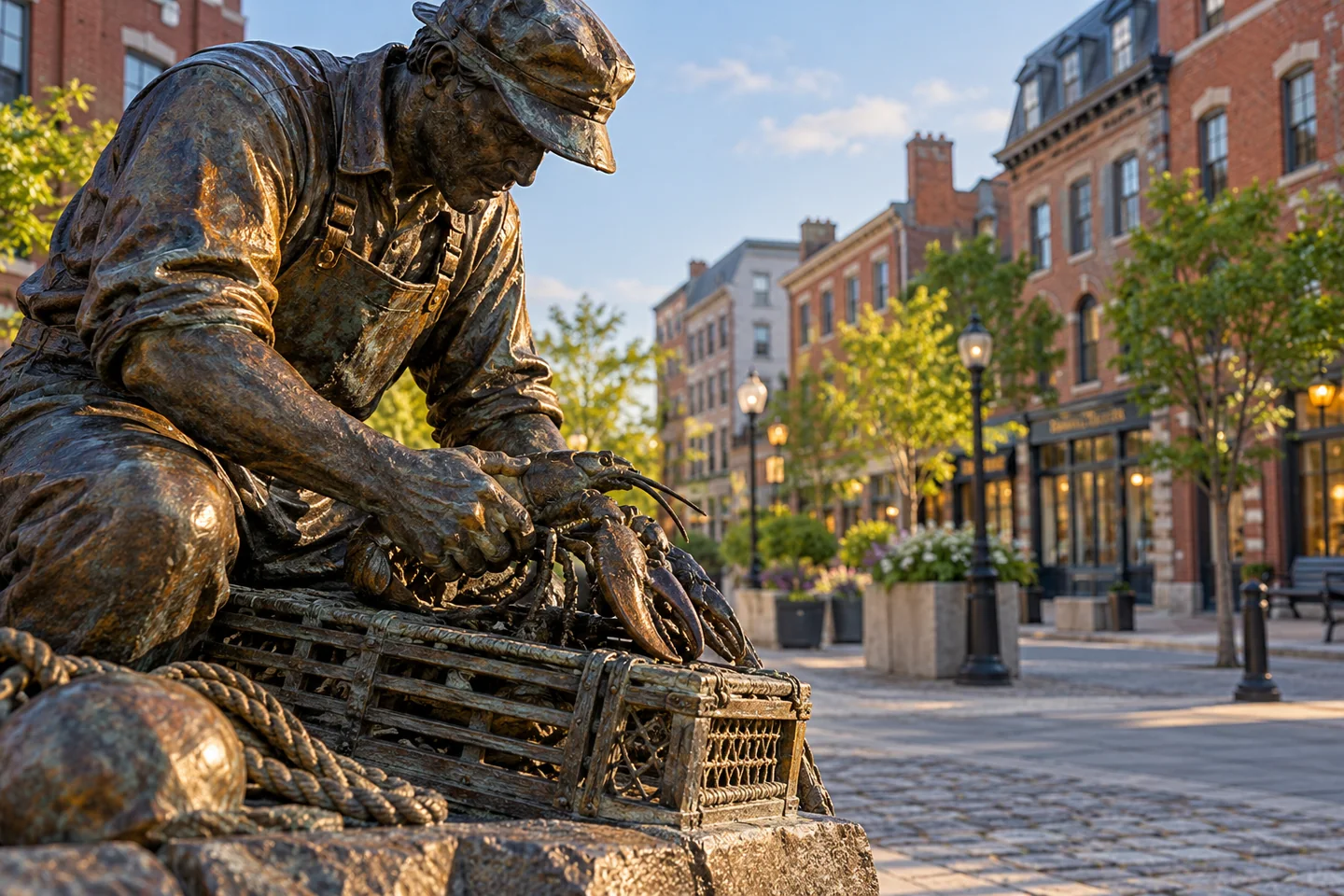
The Maine Lobsterman stands at Middle and Temple streets in Portland, bringing the work of the coast into a downtown pedestrian setting. Begin with the hands and the animal rather than treating the figure as a generic symbol of Maine. A close look can turn a quick photograph into a small inquiry about work, artistic choices, and how a public sculpture survives. Stay on the surrounding public walking surface, give other visitors space, and look without climbing onto the base or placing objects on the bronze.
Victor Kahill’s model was Bailey Island fisherman H. Elroy Snoody Johnson. The historical account describes the kneeling pose as artistic license for a task commonly performed standing. That difference is worth noticing. The statue communicates physical skill through a deliberately composed pose; it is a portrait of labor rather than a practical demonstration to copy. Look at how the lowered body directs attention toward the hands.
A narrative printed in the 1979 Congressional Record recalls a bronze-painted plaster model prepared for the 1939 World's Fair and later damaged during years of display and storage. The story distinguishes appearance from substance. A visitor looking only at the final object might miss the long interval between an artist's model and a durable outdoor casting. Consider how much of a sculpture's history remains invisible in its finished surface: unsuccessful plans, changes of location, and periods when its survival was uncertain. The kneeling worker's composed appearance is not evidence of an uncomplicated passage into public space.
A 1974 legislative draft offers a different kind of evidence about that passage. It records that Theodora Kahill had conveyed the statue to the state and proposes formal acceptance, followed by authorization for Portland to obtain a bronze replica. The document separates ownership of an original from permission to produce a public version. Read it as a stage in the process, rather than the finished sculpture's installation record. Portland's Public Art Committee dates the local bronze cast to 1975 and the dedication to 1977. Art reaches a city street through administrative decisions as well as the work of a sculptor.
Johnson's dog Bruin, a frequent companion on lobster trips, is absent from the sculpture. The historical narrative also recounts a lobster license issued to the dog at the unveiling. Enjoy that as part of the statue's local storytelling, without expecting a second canine figure at the base. A memorial can preserve a companion's story even when the artist leaves that companion outside the composition.
An individual Tripadvisor account by MaineMountainOwl, describing a June 2021 visit, admired the artistry while finding the inland city setting unexpected for a fishing subject. That mixed response offers a useful question for your own stop: does the location remove the work from its context, or bring maritime labor into the everyday life of the city? Try one image centered on the gesture and another showing the surrounding streets. Keep both frames honest about where you are. The figure's interest lies in the relationship between a real worker, an artist's interpretation, and the long process that brought the sculpture here.
Fun facts
- Bailey Island fisherman H. Elroy Snoody Johnson modeled for Victor Kahill.
- The World’s Fair model was bronze-painted plaster before later bronze versions were produced.
- Portland’s bronze version dates to 1975, with its dedication following in 1977.
Before you go
- Study the figure’s hands and posture before making a photograph.
- Distinguish the original model from the later bronze casting and dedication.
- Keep the base clear of climbing and leave room on the surrounding public walkway.
Visitor perspectives
- MaineMountainOwl’s June 2021 Tripadvisor account admired the Maine Lobsterman’s artistry and was glad to have found it. The reviewer also found its location away from the waterfront unexpected, giving the visit a thoughtful reservation alongside appreciation.
Capture
- Relate the figure’s hands to the lobster in a composition from a safe public position.
- Make a wider frame that acknowledges the downtown streets around this maritime subject.
 Henry Wadsworth Longfellow Monument
 Our Lady of Victories
 The Good of the Hive Mural, Bangor
Social
The Maine Lobsterman brings a coastal occupation into downtown Portland.
Victor Kahill’s model was a real Bailey Island fisherman.
The kneeling pose is an artistic choice, rather than an everyday working instruction.
The World’s Fair model looked bronze before it became the basis for bronze casts.
A 1974 legislative draft distinguished an original sculpture from a proposed bronze replica.
Bruin the dog has a place in the story without a figure in the sculpture.
MaineMountainOwl’s 2021 account admired the art while questioning its inland setting.
Does a working-waterfront subject mean something different when it stands on a city street?
Hashtags