 Cre8Travel
CRE8TRAVEL · MAINE PLACES
Henry Wadsworth Longfellow Monument
Longfellow in Bronze: A Poet at Portland’s Street Corner
Discover
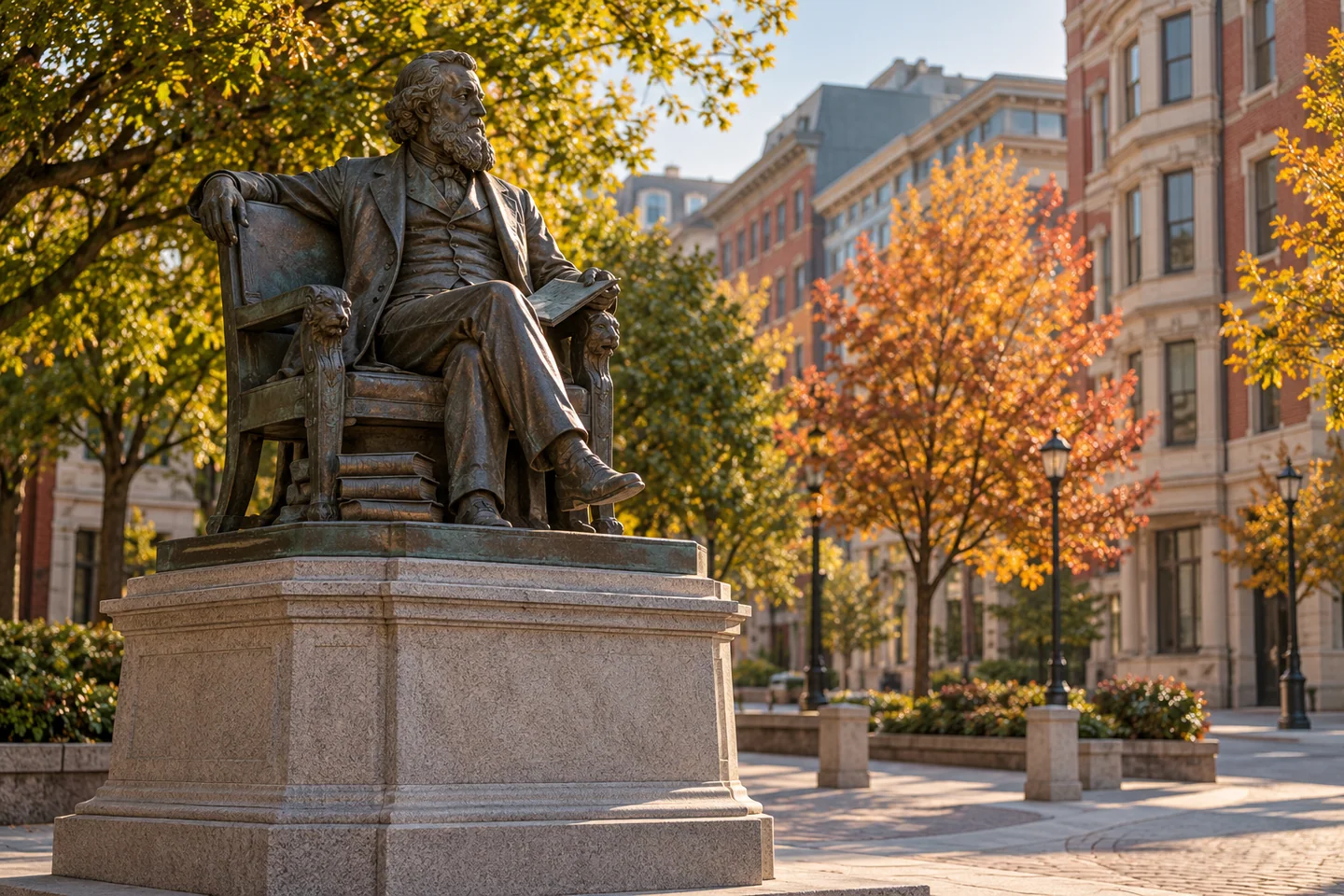
The Henry Wadsworth Longfellow monument stands at Congress and State streets in Portland, giving a busy city corner a seated poet to look toward. This is a public sculpture stop, separate from a visit to the Wadsworth-Longfellow House. Begin from the pedestrian space and look at how the bronze figure and granite pedestal work together. A monument can be familiar enough to pass without attention, but a few deliberate observations reveal more than simply identifying the person whose name is on the base.
The National Register nomination describes Longfellow in later life, seated in a chair with lion-headed arms. A manuscript rests in his left hand, his right arm reaches along the chair back, and books sit below the seat. These objects give the portrait a working vocabulary: reading, writing, thought, and a place to sit. Notice how a relaxed arrangement can still convey public importance. The figure does not need to stand in an orator's pose to occupy the corner with assurance. Compare the direction of the head with the position of the hands before choosing a photograph.
The work has two distinct design contributions. Franklin Simmons created the bronze portrait, while Portland architect Francis Fassett designed the granite pedestal. The city's Public Art Committee records the role of the Longfellow Statue Association in raising funds, including small coins contributed by children around New England. Donors' names were placed in a sealed container within the base. That background changes the scale of the story: beneath an imposing public figure lies a record of many modest acts of participation. Leave the container to history; there is nothing for a visitor to open or retrieve.
At the 1888 unveiling, music and speeches made the memorial's arrival a civic occasion. The National Register account preserves association president Charles F. Libby's hope that the statue would encourage future generations to honor the poet and worthy endeavor. Treat that as the aspiration of the people commissioning a memorial, rather than an instruction about how every visitor must respond. You might bring affection for a poem, curiosity about public sculpture, or questions about how a city chooses its cultural representatives. The monument can support more than one kind of attention.
The surrounding pedestrian setting has its own history. According to the Public Art Committee, State Street originally passed on both sides of the statue. Changes in the 1970s created pedestrian space on the east, and further redesign followed in 2005. A seated bronze may appear still while the city's circulation shifts around it. Notice that relationship from the established walking area, keeping crossings and the movement of other people in mind. The present street arrangement is part of the experience, rather than an inconvenience to crop out of every view.
NHjo's January 2023 Tripadvisor account describes a landmark they continued to enjoy while repeatedly walking or driving past. The account mentions decorations from that particular holiday period, which need not be present for another visit to feel worthwhile. Try a broad photograph showing the figure within its corner setting and a closer composition relating manuscript, chair, and books from a safe public position. Avoid climbing the pedestal or adding props. The rewarding question is how this apparently restful figure turns a street intersection into a place of literary memory.
Fun facts
- Franklin Simmons created the portrait; Francis Fassett designed its granite pedestal.
- Children’s small coin donations helped fund the monument.
- The public dedication took place in 1888.
Before you go
- Use the established pedestrian space and cross streets with attention to traffic.
- Compare figure and pedestal as related work by different designers.
- Observe the sculpture without climbing the base or adding objects.
Visitor perspectives
- NHjo’s January 2023 Tripadvisor account calls the Longfellow monument a landmark they continued to enjoy while passing on foot or by car. The review’s holiday decorations describe that visit, rather than something every visitor should expect.
Capture
- Relate the seated figure to the surrounding street from a safe public position.
- Study manuscript, chair, and books together without climbing to reach a detail.
 Thomas Reed Memorial
 The Maine Lobsterman
 Our Lady of Victories
Social
A seated poet gives Longfellow Square a distinct public presence.
The manuscript and books make writing part of the portrait.
Simmons designed the figure; Fassett designed the pedestal.
Small donations helped turn admiration for a poet into a public monument.
The dedication combined sculpture with music and speeches.
Changes to the surrounding streets created more space for pedestrians.
NHjo’s 2023 account found pleasure in repeated encounters with a familiar landmark.
What could a familiar statue reveal if you paused for a second look?
Hashtags