 Cre8Travel
CRE8TRAVEL · MAINE PLACES
Spindleworks
Spindleworks: Meet Art in the Making
Discover
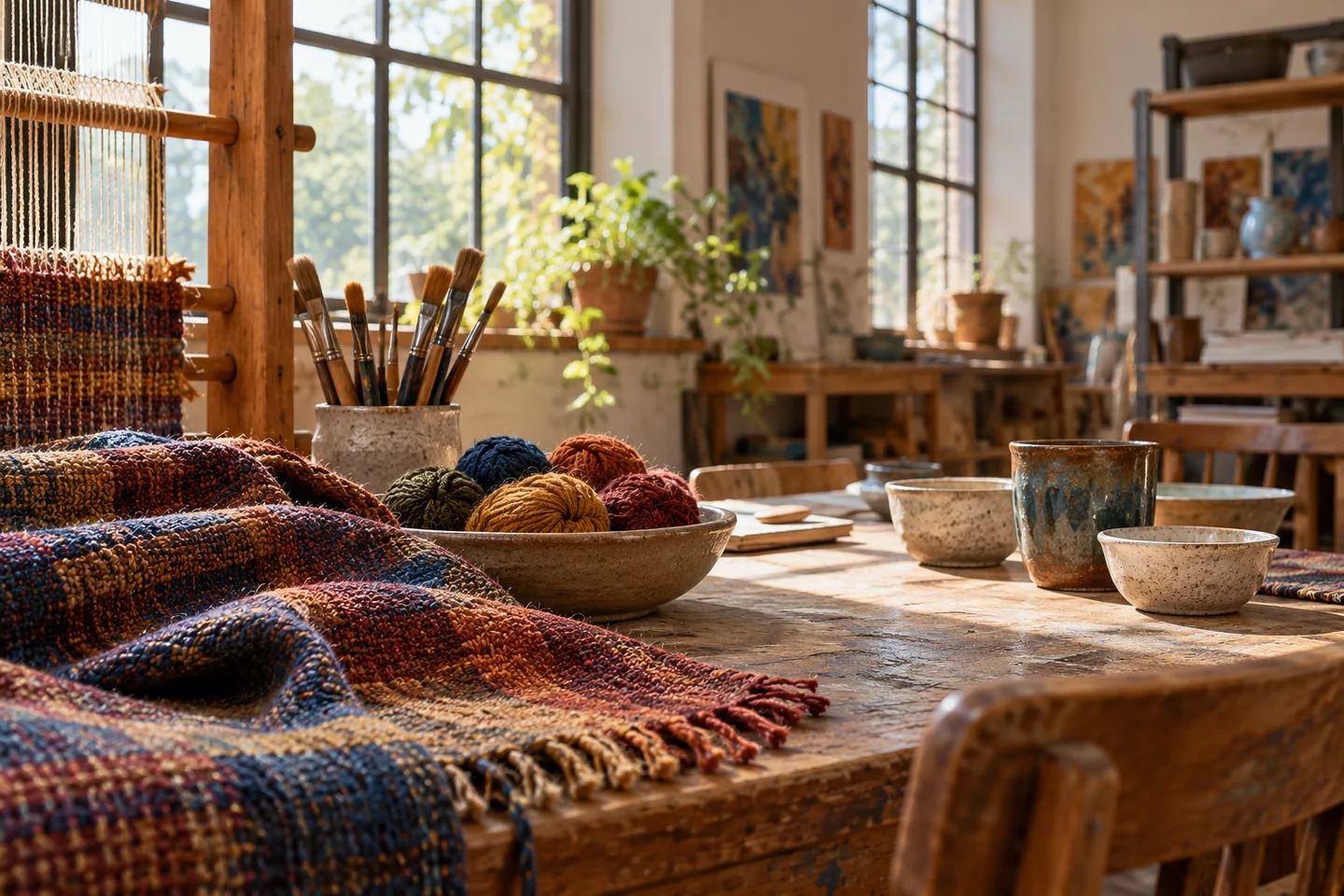
Spindleworks in Brunswick is a working art center where a gallery visit can bring you close to the process of making. Its Lincoln Street building contains studios, changing displays, and a store, with artists working in paint, clay, wood, photography, and textiles. Plan around the center's current public and studio arrangements, which serve different purposes. The gallery offers work to look at, while a working session involves people concentrating on their own projects. Approach both with the interest and courtesy you would bring to any artist's studio.
The center's history begins with Nan Ross, a weaver, writer, and educator who introduced a small group to spinning, dyeing, and other textile skills. Some of the first participants had experienced life in an institution, and Ross wanted their work to be seen and respected as art. That purpose continues in an approach built around finding an individual creative voice rather than teaching everyone one prescribed style. A visit becomes richer when you look for the differences between artists instead of treating the whole studio as one aesthetic.
Genevieve Williamson's original account returns here with her husband and enjoys an artist-guided look around the studios. Arriving early gives them time for a thorough visit, including the ceramics area, and she is particularly pleased to meet an artist whose work she collects. The account captures a personal connection that a finished object alone might not convey. Such encounters depend on the people and activity present on the day, so let conversations develop naturally rather than expecting a scheduled demonstration from every artist at work.
Bowdoin College Museum of Art's account of Spindleworks recalls its first home in a former rope factory. Textile equipment suited that beginning, but the range of expression soon expanded into drawing, photography, printmaking, poetry, movement, and film. That background is useful when looking at the current studio's variety. A woven surface and a drawing need not resemble each other to belong to the same creative community. Different materials can offer different ways to communicate an idea, tell a story, or find pleasure in repeated work.
Filmmaker William Kunitz describes another way of getting to know this community. After discovering Spindleworks through volunteering, he spent two years making a documentary about its artists. Bowdoin's account of that project emphasizes creativity and abilities, rather than defining the work through disability. Bring that emphasis into your own visit. Notice choices of line, color, texture, subject, and construction, and ask about the work itself when an artist welcomes conversation. The studio's social purpose and the ambition of the artwork can both deserve serious attention.
Practical consideration supports that kind of visit. Spindleworks asks guests to avoid scented products, and its accessibility information distinguishes the ramp and downstairs gallery access from the limitations of its restroom. Contact the center about your own requirements before traveling. Give people space to work, ask before photographing anyone, and follow the current guidance for viewing or purchasing art. The strongest memory may be a particular object or a conversation about how it was made, with the larger idea of an inclusive creative community becoming clear through that individual encounter.
Before you go
- Let conversations develop at the pace welcomed by the artist.
Visitor perspectives
- Williamson enjoys an artist-guided return visit and meeting an artist whose work she collects.
Capture
- Ask permission before photographing people or their work.
 Eartha
 Alfred Historic District
 Sanford Mills Historic District
Social
Spindleworks combines studios, changing displays, and a gallery store.
Its approach encourages each artist to develop an individual creative voice.
Williamson particularly enjoys meeting an artist whose work she collects.
The studio’s textile beginnings expanded into many forms of expression.
A filmmaker’s account emphasizes creativity and artistic ability.
One object can invite a much longer conversation.
Look for the choices that make an artwork distinctive.
A working studio deserves time, curiosity, and courtesy.
Hashtags