 Cre8Travel
CRE8TRAVEL · MAINE PLACES
Alfred Historic District
Alfred Historic District: Begin at the Village Green
Discover
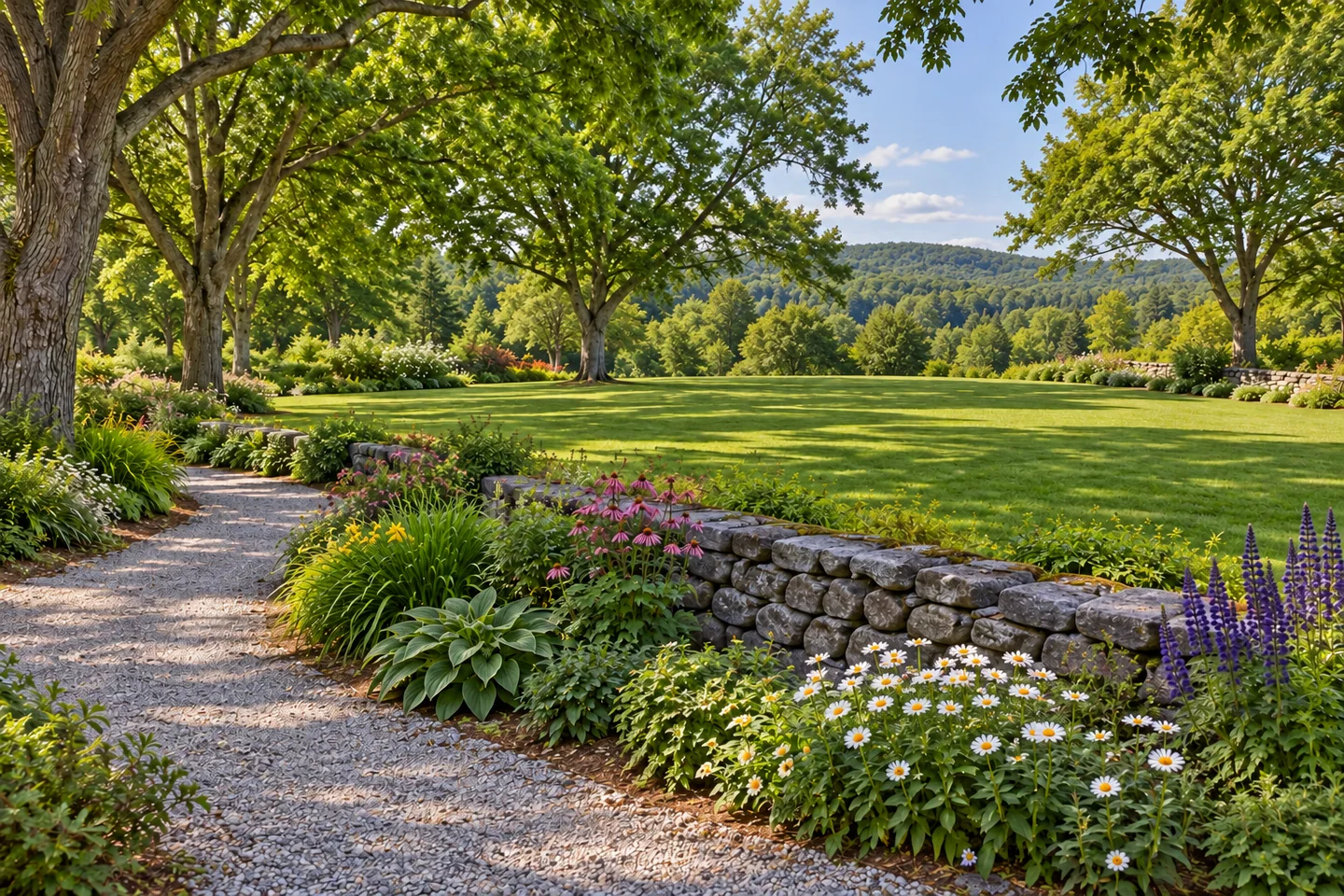
Alfred Historic District is easiest to understand from the village green. Two roads meet at an acute angle, leaving the triangular piece of ground that became the common. The Cultural Landscape Foundation connects the surrounding buildings with Alfred's role as county seat: lawyers needed homes, courthouse visitors needed lodgings, and the growing village needed shops and civic services. Start with that relationship between roads, open space, and buildings. A public-street walk can show how an apparently picturesque village developed around very practical needs.
The National Register inventory gives the walk architectural variety. Federal houses stand beside buildings with Greek Revival details and later Italianate changes. The town hall belongs to the nineteenth-century Italianate group, while the Parish Church adds a Greek Revival presence near the green. Look for changes in roofline, window proportions, and door surrounds rather than expecting every structure to match. The district's coherence comes from buildings continuing to share a village setting, with different periods contributing to the same streets.
Tripadvisor contributor Maurene_K describes pausing after other village stops to study the town hall. Its tall windows, relatively low roof, and brackets particularly attract her attention, and she compares the surrounding area to the setting of a nineteenth-century film. That response suggests a useful pace for the visit. A building passed while driving can become much more interesting when there is time to look at one part of its facade. Keep the observation on public ground and let a short pause become a deliberate part of the walk.
The courthouse carries a more dramatic story than a quiet exterior might suggest. York County's historical account recalls the fire that destroyed its wooden central section in 1933, while brick wings and secured vaults helped protect important records. The town hall temporarily accommodated court business as rebuilding proceeded. A neighboring congregation later donated a replacement bell for the courthouse cupola. Knowing that connection adds meaning to the relationship between the two civic buildings: their history includes mutual assistance, damage, and reconstruction as well as formal public functions.
The green itself also reflects work over time. Elms and lawn were introduced during nineteenth-century improvements, and William Conant donated a fountain and watering trough on a granite base. Other trees later replaced elms lost to disease, and a veterans' monument added another commemorative purpose. Look at the planting and objects together with the buildings, rather than treating the open space as an empty foreground. Its use and appearance have changed while its role as the village's shared center has remained legible.
One especially revealing residential example is the Beehive, whose joined sections represent several building periods. Elsewhere, former shops, taverns, and homes of local professionals record different ways of earning a living near the county seat. This is a district of occupied buildings, so historic importance does not imply public entry. Choose safe crossings, leave doorways and residential grounds clear, and confirm separate arrangements for any institution you wish to enter. The street scene can provide a complete architectural outing without requiring access inside private homes.
Before you go
- Keep the route on public ground and leave residential entrances clear.
Visitor perspectives
- Maurene_K enjoys pausing in the village to study the town hall, particularly its windows and bracketed roof.
Capture
- Compare buildings from a comfortable public viewpoint rather than stepping into a private yard.
 Spindleworks
 Sanford Mills Historic District
 The Butterfly & Insect Museum
Social
Alfred’s triangular green developed where two roads met.
Several architectural periods contribute to one village setting.
Maurene_K especially enjoys studying the town hall’s brackets and windows.
A courthouse fire links the village’s civic buildings through a story of assistance.
Trees, a fountain, and a memorial help make the common more than empty foreground.
A short architectural pause can change how a familiar street is seen.
Look for relationships between buildings before collecting dates.
Historic significance can be appreciated while respecting everyday privacy.
Hashtags