 Cre8Travel
CRE8TRAVEL · MAINE PLACES
Salmon Falls (West) Historic District
Salmon Falls: A Village Story on Two Riverbanks
Discover
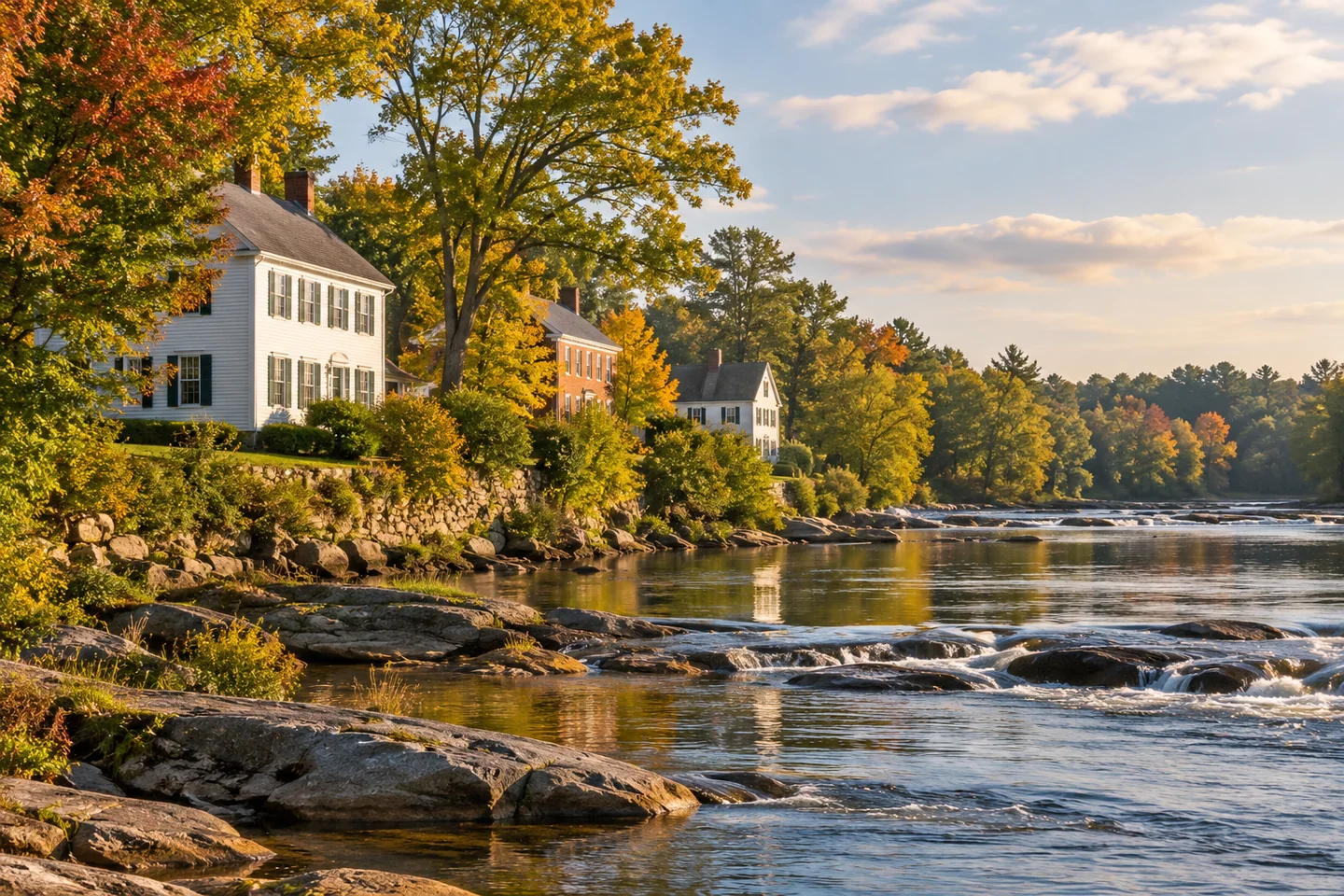
Salmon Falls has a village story on both banks of the Saco River, with historic houses in Hollis and Buxton recording a community once supported by farming, trade, and modest industry. On the west bank, the preservation commission describes Federal-era homes associated with merchants and other local professionals. Consider the buildings as parts of a neighborhood rather than isolated monuments. Plan legal stopping places and public viewpoints for each part of the visit, respecting occupied homes and avoiding any assumption that the whole district forms a continuous pedestrian route.
The east-bank district follows Route 117 and Simpson Road, where the architectural story includes an early clapboarded farmhouse and a brick house with a symmetrical front, sidelights, and a fanlight. Greek Revival houses followed as small-scale sawmills and tanneries flourished. Those different materials and entrance details make useful subjects for comparison. The river connected opportunities for farming and manufacture, yet the residential buildings remain an especially visible part of that history. Look from public ground without treating historic listing as permission to enter a yard.
The village also belongs to the life of author and educator Kate Douglas Wiggin. The University of New England's archival biography describes her childhood here, her later return, and the boarding house that became her summer home, Quillcote. Her connection was practical as well as literary: she supported local community work and founded the Salmon Falls library. That history gives the village another way to be read. A home, a library, and a place of writing can link personal experience with a much wider commitment to education.
The library continues that purpose as a community institution. Its own account describes beamed ceilings, wide pine floors, handcrafted furnishings, and a setting where people exchange ideas as well as books. Confirm current visiting arrangements if you want to include it in the outing; borrowing membership and a traveler's visit are different matters. The building offers a particularly tangible connection between the village's past and its present. Its value is not simply that an author helped establish it, but that reading and gathering remain useful activities there.
Shannon's original Maine's Roots account enjoys an evening visit to the library and finds an atmosphere closer to a comfortable living room than a formal institution. A helpful conversation with its director adds historical context, while the limited opening schedule makes timing important. The account brings the literary connection down to an ordinary human scale: somewhere to sit, browse, talk, and feel welcome. Let that remain one visitor's experience, with the current library setting its own arrangements rather than relying on an older blog's timetable.
The east-bank preservation account links the village's surviving nineteenth-century appearance with the slowing of industrial development later in that century. That context helps explain why a relatively small residential cluster can carry a substantial historical story. Focus on several details that can be appreciated comfortably and legally, then compare them with the west-bank neighborhood. The two sides of Salmon Falls can reward a visit through architecture, reading, and the relationship between community life and the river, without requiring entry into private houses or exploration of former industrial sites.
Before you go
- Plan separate legal stops rather than assuming a continuous pedestrian route.
Visitor perspectives
- Shannon enjoys the library’s comfortable atmosphere and a helpful conversation, while noting that its limited hours require planning.
Capture
- Use public viewpoints and leave private residential grounds undisturbed.
 The Butterfly & Insect Museum
 Stroudwater Historic District
 Cumberland Mills Historic District
Social
West-bank houses record a village once supported by trade and modest industry.
East-bank homes offer details to compare across several architectural periods.
Kate Douglas Wiggin linked her village life with writing and education.
The library continues to connect reading with community gathering.
Shannon enjoys a comfortable library visit while noting the need to check opening times.
A village story can continue through a place people still use.
Choose several meaningful details instead of collecting every address.
A river can connect histories without creating an effortless walking route.
Hashtags