 Cre8Travel
CRE8TRAVEL · MAINE PLACES
Cumberland Mills Historic District
Cumberland Mills: Read a Community around Its Industry
Discover
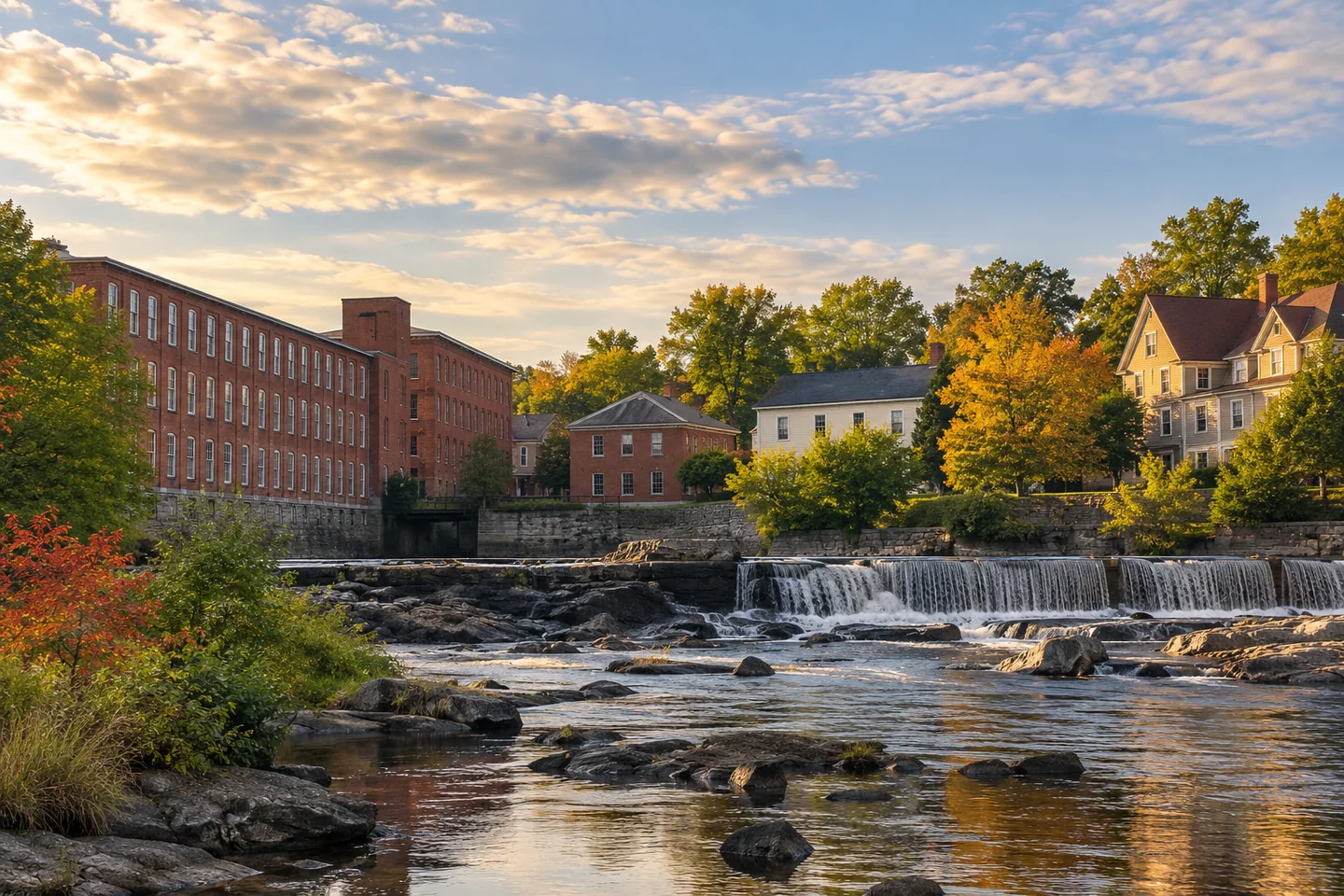
Cumberland Mills Historic District in Westbrook tells a story of industry through more than factory walls. Its National Register account describes a planned community where mill buildings, workers' homes, management residences, and a meeting hall formed related parts of everyday life. A useful visit looks at those relationships from public streets. Notice how different kinds of building express different roles within the same industrial setting, while respecting the privacy of homes and the boundaries of business property. This is an exterior architectural outing rather than permission to enter the mill.
Discover Downtown Westbrook's history-walk description provides a practical way to connect several landmarks. It links the Warren recreation fields' outlook with Main Street, the Warren Block, and the house known as The Elms. The route's use of sidewalks and a bridge shows how the area's history can be approached as a neighborhood landscape. Consult current organizers' information if you want a guided visit, especially one involving an interior. An independently planned outing should remain with public routes and the viewpoints actually available on the day.
The University of Southern Maine's introduction to its S.D. Warren oral-history collection adds the voices of workers and managers to that architectural picture. It describes a company that supported employees through a social safety net, sometimes involving direct appeals to management. Those arrangements could make an employer central to family life beyond a wage packet. When looking at the houses and community buildings, consider how closely work, welfare, and residence were connected. A planned industrial community organized relationships as well as streets and structures.
Architecture provides another reason to look closely. The nomination connects John Calvin Stevens with Queen Anne workers' cottages and more elaborate buildings associated with company leadership. The Warren Block served a community purpose, while residential designs helped distinguish different positions within the enterprise. Compare a modest cottage with the larger buildings without assuming that decoration alone explains the social history. Scale, grouping, and function can be equally revealing. Several buildings considered together make the district easier to understand than a succession of isolated architectural photographs.
The oral-history collection also complicates any purely comfortable picture of the past. Its introduction records difficult working conditions, heat, exhausting shifts, favoritism, and changing labor relations, alongside workers' pride in their skills. Keep both aspects in mind rather than allowing an attractive house or community hall to stand for everyone's experience. Industrial heritage includes achievement and insecurity, with different memories depending on where people worked and what responsibilities they held. The buildings can prompt those questions even when a visitor cannot enter the workplace itself.
An archived mill-and-dam photograph held by Walker Memorial Library offers a useful historical reference. Its description follows the Cumberland Mills name into the S.D. Warren company era, helping connect the familiar names used for the site. Comparing an archival view with a present public streetscape can make change part of the visit. Choose a few clearly identifiable features rather than expecting an old photograph to match every detail today, and let the surrounding community remain visible alongside the industrial landmark.
Before you go
- Use public routes and confirm separate arrangements before any guided interior visit.
Capture
- Compare several buildings from lawful public viewpoints without interrupting work or residents.
 Stroudwater Historic District
 Gorham Campus Historic District
 Lake Auburn
Social
Cumberland Mills connects industrial buildings with homes and community structures.
A local history-walk route links several landmarks along public streets.
Oral histories recall both company support and difficult working conditions.
An archived mill-and-dam view offers a reference for considering change.
A planned community shapes relationships as well as streets.
Let several different memories complicate a picturesque scene.
A modest house can be as revealing as a more elaborate landmark.
A historical view becomes useful when its differences also receive attention.
Hashtags