 Cre8Travel
CRE8TRAVEL · MAINE PLACES
Isaac Farrar Mansion
Isaac Farrar Mansion: Three Names, One Bangor Building
Discover
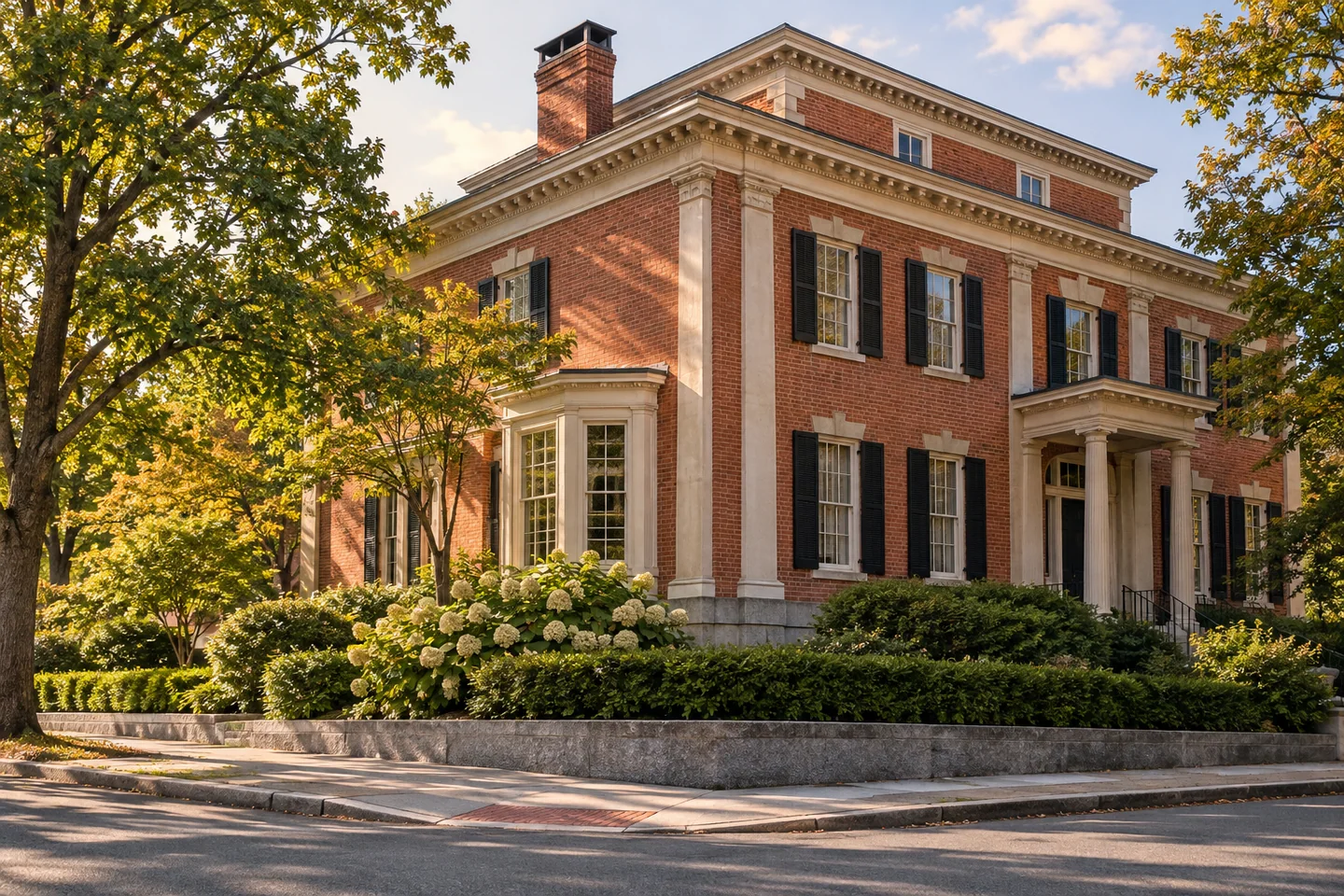
The Isaac Farrar Mansion at Union and Second streets in Bangor is best approached as an architectural exterior stop. Its old museum label should not lead you to expect a walk-in house tour. Current property information identifies the mansion with meeting and office uses within the YMCA campus. Stay on public pedestrian routes, keep entrances clear and arrange any interior visit explicitly with the property operator. The building's succession of names and uses makes an exterior pause worthwhile even without a room-by-room itinerary.
The original National Register nomination explains the Greek Revival composition: brick walls organized by corner columns, a recessed central bay and restrained detailing. It also records changes made by later owner Isaac Merrill, including a forward-shifted entrance, bay windows and an added story. Rather than trying to identify an untouched original, look for the relationship between the building's large shapes and the details that interrupt their symmetry. The documented house was already an accumulation of decisions when preservation researchers described it. That makes alteration part of the story rather than a reason to dismiss what survives.
Richard Upjohn's early career supplies a wider frame. Architectural historian Deborah Thompson, writing the history of St. John's Episcopal Church, places his Bangor work soon after his arrival from England and connects the Farrar and Hill houses with his growing reputation. He later became associated particularly with Gothic Revival churches and helped found the American Institute of Architects. The mansion thus offers a chance to meet a designer outside the architectural image for which he became best known. An early domestic commission can ask different questions about proportion and presence from a church.
Music gave the building another public identity. The Bangor Symphony's own history lists the mansion as Symphony House for the period from 1929 to 1972. The orchestra began earlier, through the organizing work of piano teacher and composer Abbie Garland, who recruited musicians, promoted subscriptions and helped audiences approach unfamiliar music. Remembering that human effort gives the later name substance. A conservatory setting belongs to the daily practice of teaching and rehearsal as well as to performances. The building's musical past should prompt curiosity, not an assumption that a concert or exhibition is available inside today.
The nomination preserves an intermediate chapter too: the University of Maine Law School used the house as a residence from 1911 until 1929, when it was called Stewart Hall. Across those changes, the same domestic shell accommodated different ideas of living and learning. The sequence explains why searching only one name can miss an important part of a property's record. Farrar Mansion, Stewart Hall and Symphony House identify related histories of one building, not three separate attractions to add to a list.
For your visit, choose one broad street view that explains the corner setting and one tighter composition showing how a projecting window meets the wall. Keep both possible from an ordinary public position. If a detail seems inconsistent with the original design, let that become a question for the historical record rather than inventing an explanation. Bangor's mansion rewards attention to reuse: a residence became a place of learning, then a musical address, while retaining a recognizable architectural presence in the city.
Fun facts
- The house was known as Stewart Hall during its law-school residential use.
- The Bangor Symphony identifies it as Symphony House from 1929 to 1972.
Before you go
- Plan an exterior visit from public pedestrian routes.
- Arrange any interior entry directly with the property operator.
- Search the building’s different historic names when reading about it.
Capture
- Compare a broad corner-setting frame with a closer view of a projecting window against the wall, staying on public pedestrian routes.
 Maine Solar System Model
 Colburn House State Historic Site
 Wylie House and Frenchville Historical Society
Social
Farrar Mansion, Stewart Hall and Symphony House are names connected with one Bangor building.
The original nomination documents Greek Revival design and later alterations.
Richard Upjohn’s Bangor work helped establish his architectural career.
The building’s musical identity belongs to a longer story of organizing and teaching.
Law students once used the house as a residence.
A historic museum label does not establish current walk-in tours.
Observe from public routes and arrange interior access separately.
Which tells you more about a building: its first design or the ways it was reused?
Hashtags