 Cre8Travel
CRE8TRAVEL · MAINE PLACES
Colburn House State Historic Site
Colburn House: The Labor behind Arnold’s Expedition
Discover
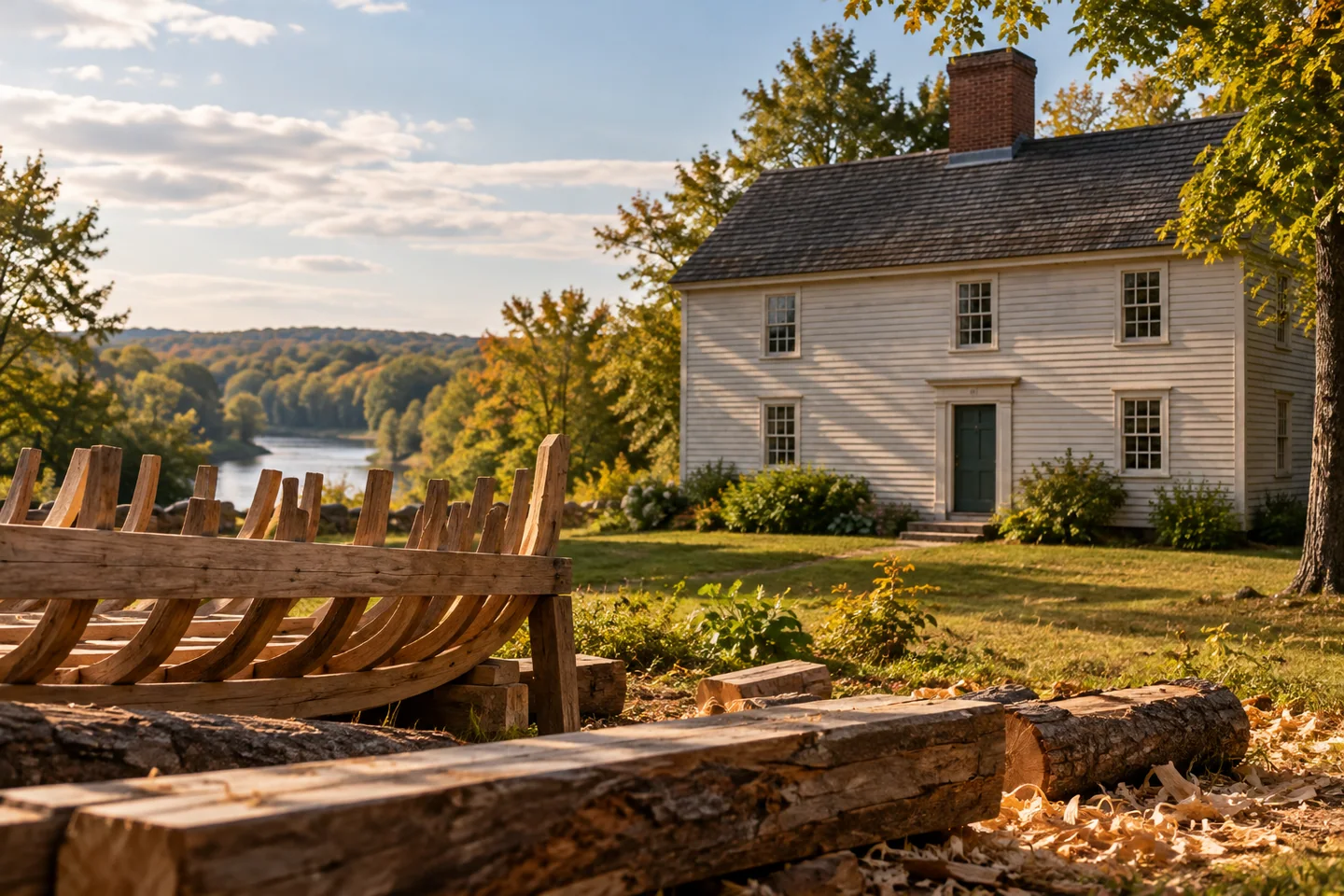
The Colburn House in Pittston is a place to think about the work behind an expedition rather than only its famous commander. Make an exterior-focused plan and contact Maine's Bureau of Parks and Lands about the permitted approach before traveling. Historic designation does not guarantee that the house, barn or carriage house can be entered. Follow current barriers around the property and any work areas. A visit can be worthwhile as a look at the setting, provided its actual availability fits your plans.
Maine's preservation commission describes the 1765 house as a two-story clapboard building with a side-gabled roof and large central chimney. Its front is almost symmetrical, except for the upstairs window slightly offset above the entrance. Reuben Colburn developed a sawmill, brickyard, boatyard and gristmill nearby, making the house part of a productive river landscape. Those industries help explain why military planners sought his assistance. A domestic building and a network of skilled work belonged to the same place, even though a surviving house is easier to photograph than a vanished production system.
The Arnold Expedition Historical Society explains how Colburn helped supply Benedict Arnold's 1775 attempt to reach Quebec through Maine. Craftsmen built boats under intense time pressure while Colburn assembled provisions, maps and reports from scouts. Repair workers accompanied the force. Thinking about those tasks gives the story a practical scale: tools, timber, fasteners, food and knowledge of the route had to be brought together before an army could move. The episode offers a way to connect a seemingly quiet house with the immense effort that preceded a journey.
The society's account of the Kennebec bateau supplies a useful material detail. These flat-bottomed craft had raised, pointed ends, and their design suited carrying loads on shallow rivers. The hurried construction used green wood and a limited supply of nails, contributing to weight and maintenance problems. Consider the contrast between a boat that can be built quickly and one that must survive repeated carrying and difficult water. That question belongs to the documented expedition; it is not an invitation to launch from this property or recreate its route without independent arrangements.
Family life continued beyond that military moment. In a 2013 report, John Hale described the later barn as the work of Colburn's grandson, Gustavus Adolphus Colburn, in 1849. The detail separates the present outbuilding from the larger workshop associated with Reuben's earlier boatbuilding. Old places often contain structures from several generations, and treating everything as belonging to one famous year can flatten their history. Look for the relationship among the buildings while keeping their different dates in mind, rather than imagining a frozen scene from the Revolution.
NHjo's individual August 2023 Tripadvisor account appreciated the site's historical importance and the explanatory placard, while noting that the interior was unavailable during the visit. Use that account as a dated exterior response, not a current condition report. For photographs, work only from an authorized position and relate the house's overall form to one detail of its entrance or window arrangement. The most useful memory may be a question about support: how many kinds of labor have to succeed before the event that receives the headline can begin?
Fun facts
- Reuben Colburn built his house in 1765.
- The later barn dates to 1849 and is associated with Colburn’s grandson.
Before you go
- Confirm the permitted approach and current site availability with the state manager.
- Keep building entry separate from any authorized exterior visit.
- Respect barriers and do not infer a river launch from the expedition’s history.
Visitor perspectives
- NHjo’s August 2023 Tripadvisor account valued the site’s historical importance and explanatory placard during an exterior stop; the reviewer did not tour the interior.
Capture
- From an authorized position, pair the whole house with a detail showing its entrance and offset upper window; keep work areas outside the route.
 Isaac Farrar Mansion
 Wylie House and Frenchville Historical Society
 Frenchville Railroad Station, Water Tank and Caboose
Social
Pittston’s Colburn House connects a domestic setting with the work of supplying an expedition.
The house dates to 1765, while its surviving barn belongs to a later generation.
Maps, provisions and repair skills mattered alongside the boats.
A bateau’s material choices affected the journey it had to survive.
Separate a famous military year from the longer life of a household.
A 2023 visitor appreciated the historical interpretation during an exterior stop.
Confirm site access and any building entry directly with the manager.
What supporting work does a famous journey’s usual story leave out?
Hashtags