 Cre8Travel
CRE8TRAVEL · MAINE PLACES
Hathaway Mill and Creative Center
Hathaway Mill: Industry, Reuse and Objects with Stories
Discover
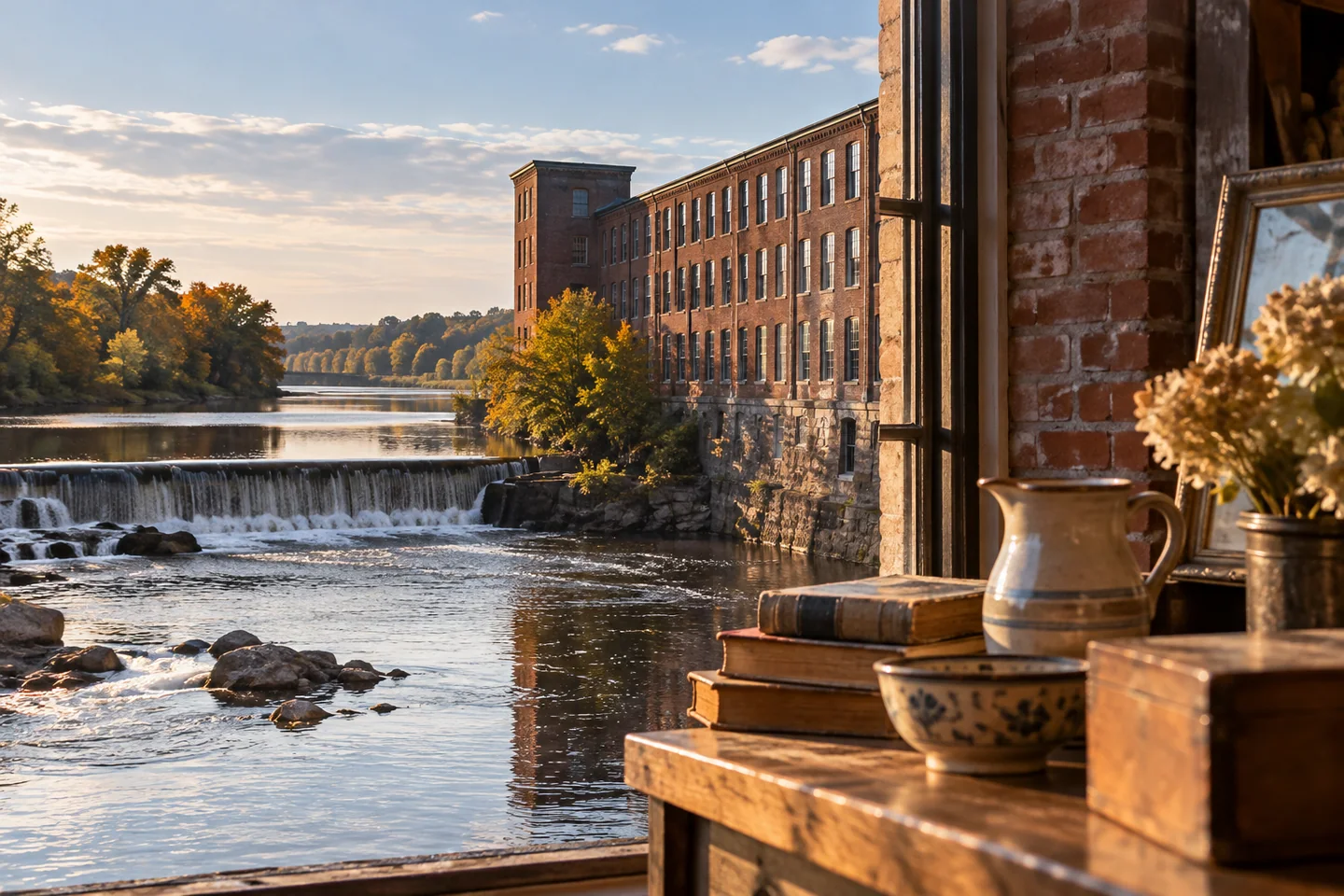
Hathaway Mill in Waterville combines a recognizable industrial building with a visitor activity that fits its present life. At 10 Water Street, Hathaway Mill Antiques occupies part of the converted textile mill beside the Kennebec. Begin with the public shop, confirming its current opening arrangements before traveling. The wider Hathaway Creative Center includes homes and workplaces, so browsing a retail space is not permission to tour residential floors, offices or the entire former mill complex.
The building's history begins with cotton rather than shirts. The site's historical account describes water rights, a dam and the Dunn family's effort to attract manufacturer Amos Lockwood. Production began in the first mill in 1876, and the building now associated with Hathaway followed in 1882. The machinery required a structure able to withstand movement and vibration. That engineering background makes the building more interesting than a picturesque shell: its form belonged to an organized system of water power, equipment and labor.
A second industrial chapter began in 1956, when Hathaway Shirt Company took over the building. The same historical account describes executive offices and shirt production continuing until the facility closed in 2002. The name therefore connects a manufacturing use with an older cotton-mill structure. Keep those periods distinct when reading about the property. An attractive antique object in a current display does not automatically come from either former business, and its connection with local history should be established rather than assumed.
North River Company's current property account describes a conversion combining commercial, medical, retail and residential uses. It records ownership and operation from 2017 and identifies apartments on the upper floors. Adaptive reuse is therefore the central present-day story. The visitor can appreciate a building still accommodating daily activity, while respecting the distinction between the public business being visited and other occupants' space. The old factory has continued to change instead of becoming a frozen reconstruction of one industrial moment.
The antiques operator describes a multi-dealer showroom with furnishings and vintage collectibles. Treat browsing as a chance to look carefully, with a question that gives the visit shape. You might compare how two objects perform a similar household task, or examine how a material changes the impression of a familiar form. Ask staff before handling delicate items and before making photographs inside the shop. A label can start a conversation, but appearance alone does not prove an object's age, maker or provenance.
A dealer's own May 2021 post gives a modest glimpse of work behind such displays. Linda Snyder of Heritage Collectibles describes updating her booth and photographing recently added inventory while balancing another job. This is a seller's firsthand business account, not an independent customer recommendation. It helps explain why an old photograph of a display should not become a promise about what will be available when someone visits now.
Let the outing move between the scale of the building and the scale of individual things. From permitted public ground, an exterior photograph can establish the industrial setting; inside, make a closer image only with permission. The combination gives Hathaway a distinctive appeal: an old manufacturing place where looking at objects and thinking about changing work can enrich the same visit.
Fun facts
- The building now associated with Hathaway followed the first cotton mill in 1882.
- Shirt manufacturing became a later chapter of the site’s history.
Before you go
- Confirm the public shop’s current arrangements before arriving.
- Respect residential and workplace boundaries in the converted building.
- Ask before handling delicate objects or photographing displays.
Capture
- Pair a permitted exterior view with an interior detail only after obtaining the shop’s photography permission.
 George Bucknam Wildlife Management Area
 Olde Federal Building
 Chamberlain Lake
Social
A former mill can hold several working histories within one visit.
Cotton manufacturing preceded the Hathaway shirt-making chapter.
Adaptive reuse keeps an old industrial building part of everyday life.
Objects in a shop need their own provenance, even in a historic setting.
A dealer’s old display photograph does not establish current inventory.
A good browsing question can connect two otherwise unrelated objects.
Respect the homes and offices beyond the public business you visit.
Would you begin with the building’s history or an object that catches your eye?
Hashtags