 Cre8Travel
CRE8TRAVEL · MAINE PLACES
Chamberlain Lake
Chamberlain Lake: Broad Water, Forest Memory and Canoe Country
Discover
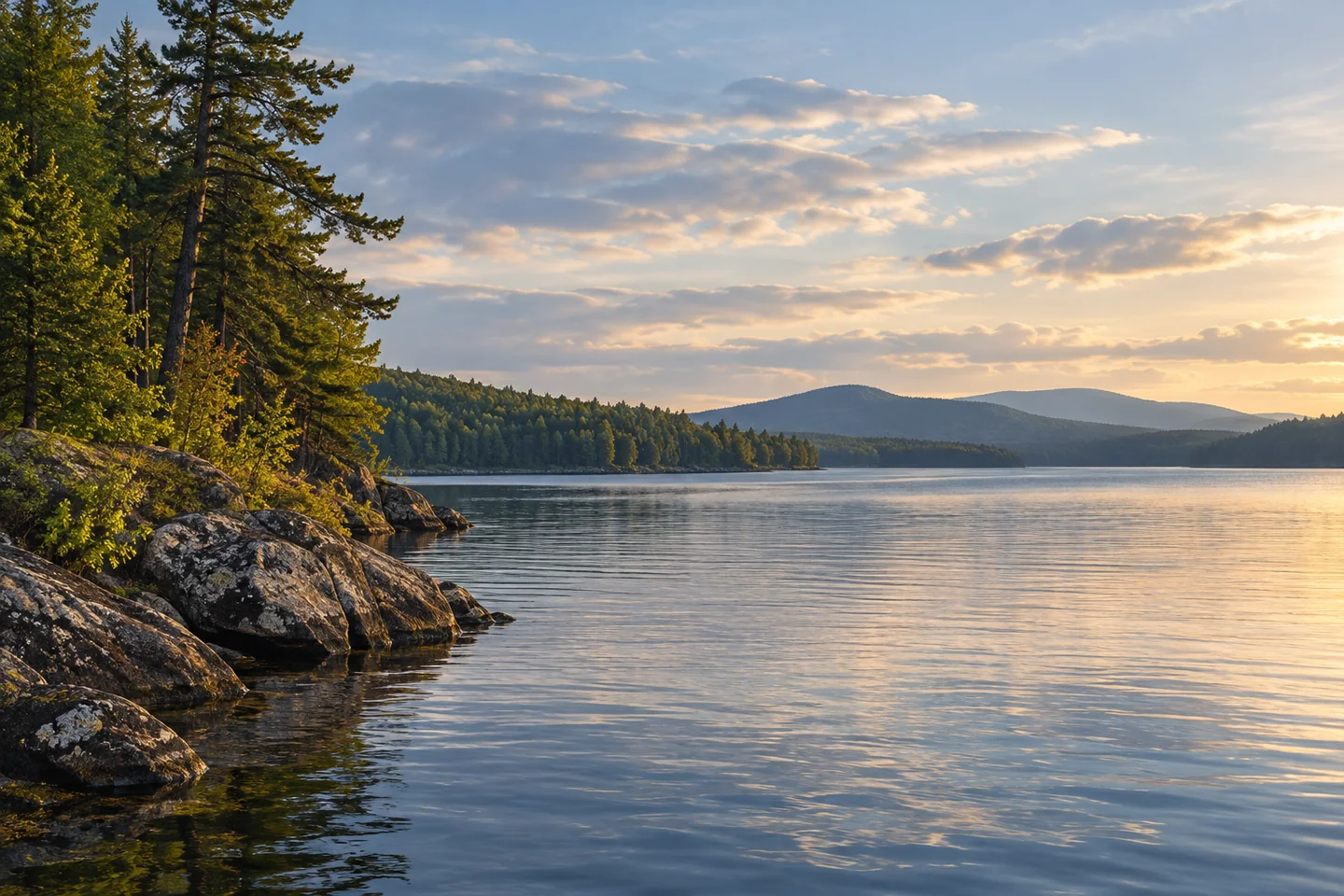
Chamberlain Lake gives an Allagash visit a broad-water beginning. Its long wooded shores are part of northern Maine's canoe country, but the lake also holds stories about fish movement, remote supply farms and forests with a long memory. It can be approached as a destination with its own questions, rather than simply the first stretch to be crossed before reaching somewhere farther north.
Resolve the arrival before imagining the route. The Waterway's guide identifies Chamberlain Bridge as its southern access. Nugent's Camps, on the eastern shore, describes reaching its cabins by boat from that starting area, with boats and guiding among its services. A booked stay and an independent canoe journey require different arrangements. Ask which equipment and transport are included, and plan the return as carefully as the outward trip. Follow the land manager's registration process before beginning a Waterway visit.
Nugent's own history traces the camps to Al and Patty Nugent in 1936. The operator describes their hand-built cabins and a lakeside accommodation tradition that continues today. That account offers a domestic counterpoint to the immense water view: people have made temporary homes beside this lake, with cooking, rest and companionship between outings. Let the camp's present arrangements establish the practical details; the historical story can remain a reason to look more closely at the setting.
The ecological scale extends beneath the surface. A 2018 state fisheries report studied Chamberlain together with connected Round Pond and Telos Lake. Brook trout carrying radio transmitters helped researchers investigate movements, winter refuges and returns to spawning areas. The work reveals a waterbody whose useful habitat changes with place and season. It is more informative than a simple list of species, while still belonging to a dated study rather than a current catch forecast. Contemporary angling plans need contemporary rules.
The neighboring forest provides another layer. Maine Natural Areas Program describes an ecological reserve on Bear Mountain peninsula, with mixed hardwood and conifer stands supporting trees more than two centuries old. Investigators also found evidence of earlier cutting and old fires. From the water, a green shoreline can conceal that complicated past. The reserve's inventory is background for understanding the view, not a trail guide or permission to seek out particular trees away from established access.
An archival collection gives the lake's working past a practical form. Phillips Library preserves Chamberlain Farm accounts, inventories and related canal records. Its finding aid describes the farm established by E. S. Coe and David Pingree in 1846 to supply lumber operations. Hay and produce mattered alongside dams and timber. Thinking about those ordinary necessities makes the remoteness more concrete: sustaining work here required food, animals, equipment and repeated journeys through a challenging landscape.
A July 2026 first-person account by guide Matt Burnett recalls crossing Chamberlain with a youth canoe group. The guides adjusted equipment and decisions to the children and the day's conditions, making flexibility part of the expedition. That is a useful spirit for a smaller visit too. Choose an achievable outing, then give its shore and water enough attention to become memorable. For photographs, try a close wooded edge against the lake's larger reach, keeping a stable position and navigation ahead of the image. Chamberlain's richness comes from scale, history and observation working together.
Fun facts
- An archival collection documents Chamberlain Farm’s supply role from the nineteenth century.
- Radio telemetry helped study trout movements in the connected lake system.
- The Bear Mountain peninsula reserve contains documented old forest stands.
Before you go
- Arrange the appropriate Waterway arrival and registration before setting out.
- Clarify transport and equipment when booking a sporting-camp stay.
- Use historical fisheries work as context and check present rules separately.
- Keep the day’s route within the group’s ability and conditions.
Visitor perspectives
- Guide Matt Burnett’s July 2026 account recalls crossing Chamberlain with a youth group and adapting equipment and decisions to the participants and conditions.
Capture
- From a stable permitted position, set a close wooded edge against the larger lake.
- Let weather and navigation determine when the camera can safely come out.
 Olde Federal Building
 Eagle Lake, Allagash
 Churchill Lake
Social
Chamberlain Lake can be a destination with its own stories.
A sporting-camp stay offers a different plan from an independent canoe expedition.
Behind a wooded shoreline can lie evidence of old cutting, old fires and long-lived trees.
Fish research follows movements that a surface view cannot reveal.
A supply farm’s records make remote life tangible.
Choose an achievable outing and allow room to observe.
Flexible planning belongs in a northern lake visit.
Would you begin with the forest, the working history or the water itself?
Hashtags