 Cre8Travel
CRE8TRAVEL · MAINE PLACES
Olde Federal Building
Olde Federal Building: Stone, Mail and a Changing Augusta
Discover
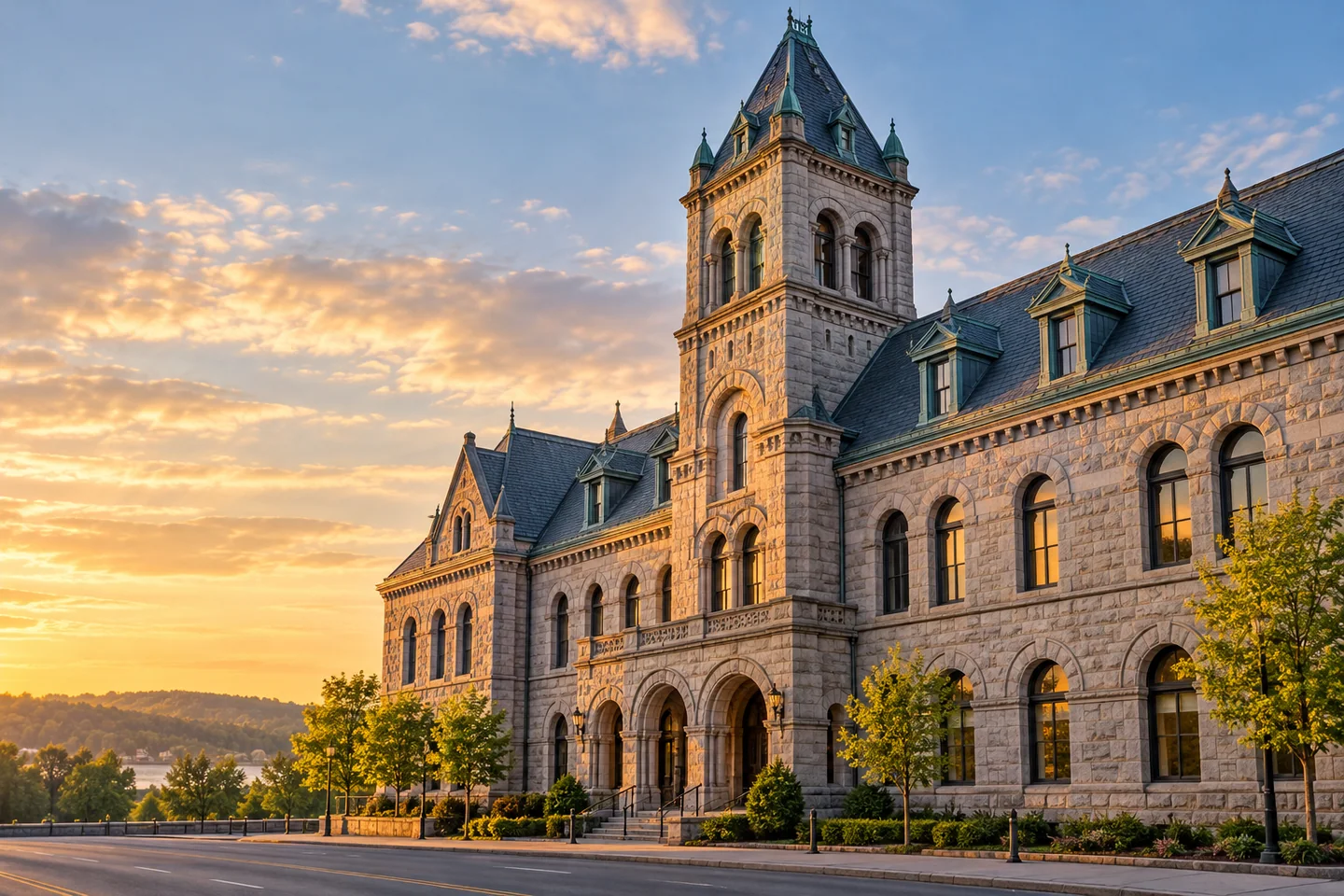
Augusta's Olde Federal Building is a rewarding subject for an architectural pause on Water Street. The former post office and courthouse at number 295 presents a very different face from an ordinary commercial frontage: stone, arches and towers give a practical public building a theatrical presence. Plan an exterior look from lawful public ground. Observe current barriers and street arrangements, and keep interiors, roof areas and private space outside the visit unless a specific public service has been independently confirmed.
The Museum in the Streets interpretation connects the building with Augusta's publishing industry. Its panel identifies Hallowell granite, an opening in 1890 and a design later altered so that a former corner tower became central to the enlarged composition. Thinking about that change makes a familiar photograph more interesting. A building can look deliberately balanced today while preserving evidence of decisions made in different periods. The appearance is something to examine, rather than a reason to assume every part was built at once.
Kennebec Historical Society's archival account provides the human and economic background. Postal operations had moved between several locations before the Great Fire of 1865 destroyed the premises then in use. Later accommodation became crowded as magazine publishing increased the quantity of mail leaving Augusta. The imposing new building therefore answered a working demand as well as an architectural ambition. Imagine the movement of printed material and the labor of sorting it, while keeping that historical scene distinct from whatever activity occupies the building now.
The same account identifies Mifflin E. Bell's design and explains later enlargement through its postcard collection. A north wing followed in 1910–1911 and a south wing in 1941. Comparing dated images can make those stages legible without entering the structure. Use the images for research, respecting their reproduction rights; an old view does not establish a present public viewpoint. The National Park Service's register metadata records the Old Post Office listing in 1974 and recognizes its architectural significance.
A developer's published project description draws attention to the granite exterior, slate roof, copper details, arches, columns and dormers. Those features offer a vocabulary for looking closely. Its redevelopment program is a proposal record, rather than confirmation of completed visitor facilities. Let the historical building itself be enough for this stop. The question of how an old landmark can find another use is interesting without promising a restaurant, hotel experience, rooftop view or interior tour that has not been verified.
For photographs, begin with a wider frame showing how the towers and frontage relate. Then choose a smaller detail that can be seen from the same permitted public position. Keep pedestrian space clear, and allow a different light or obstructed view to change the composition rather than encouraging a step into traffic or a closed area. Looking twice can be more useful than collecting several hurried angles.
The Olde Federal Building rewards this mixture of architectural attention and ordinary working history. A stone landmark becomes more than a striking silhouette when it is connected with publishing, mail handling and expansion. A short pause can leave a visitor with a better question about what makes a city building worth keeping as its uses change.
Fun facts
- The Old Post Office joined the National Register in 1974.
- Archival postcards show the building’s successive enlargements.
Before you go
- Keep the stop to lawful public exterior viewpoints.
- Respect current barriers and pedestrian movement.
- Verify any particular interior service separately before planning to enter.
Capture
- Pair a wider architectural frame with a smaller visible detail from permitted public ground.
 Hathaway Mill and Creative Center
 Chamberlain Lake
 Eagle Lake, Allagash
Social
A former post office can reveal the working history behind an architectural landmark.
Augusta’s publishing activity helped explain the need for more postal space.
A building’s apparent balance may include several periods of construction.
Dated postcards can sharpen the way a visitor looks at a familiar façade.
A preservation listing recognizes significance without establishing public interior access.
A proposed new use is a question to research, rather than a completed visitor experience.
Give other pedestrians room while choosing a photograph.
Which details tell you that a building has changed over time?
Hashtags