 Cre8Travel
CRE8TRAVEL · MAINE PLACES
Lake Auburn
Lake Auburn: Open Water with a Public Responsibility
Discover
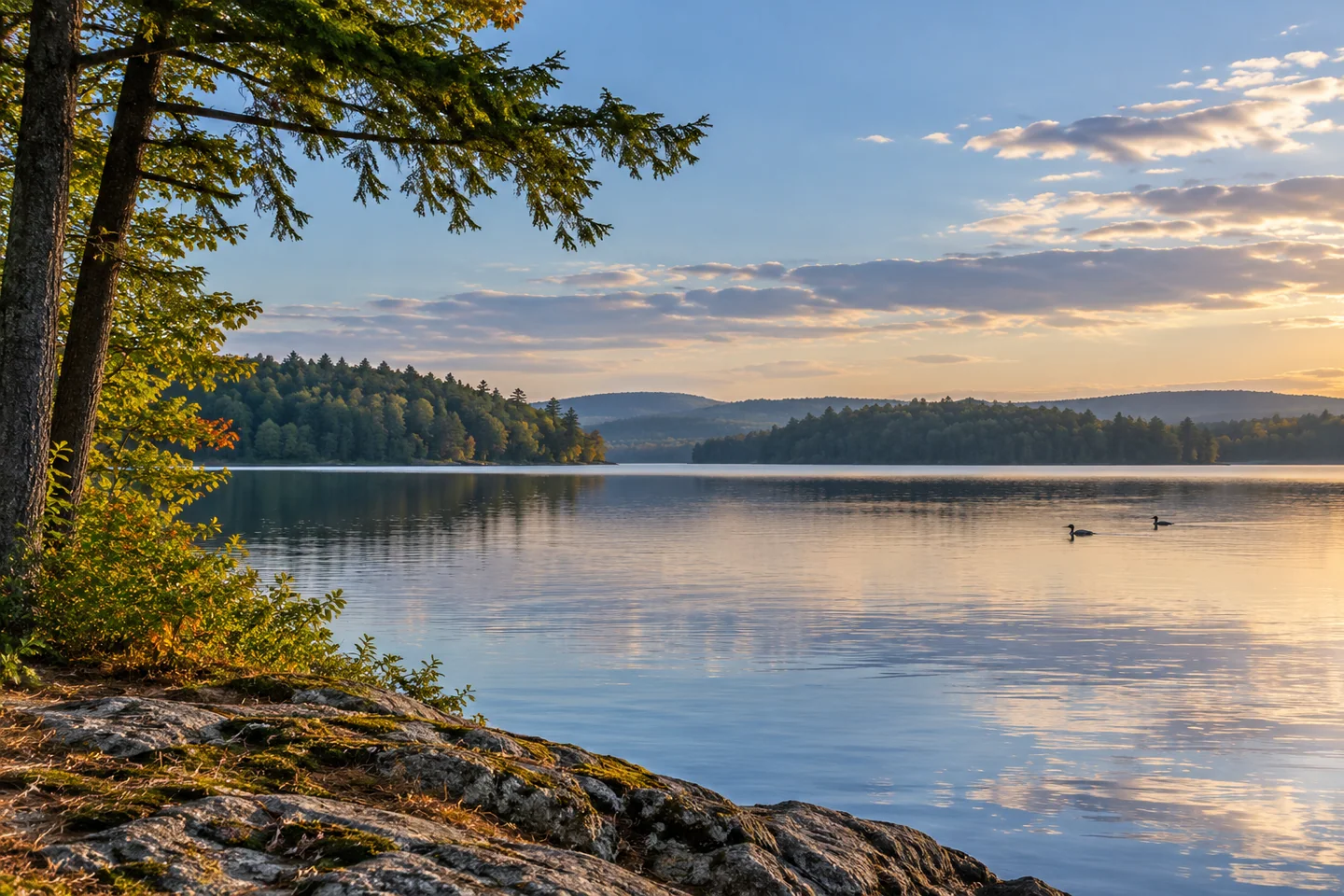
Lake Auburn invites a different kind of lake day because its recreational role sits beside a particularly important public responsibility. The lake supplies drinking water to Auburn and Lewiston, and the watershed commission sets strict conditions for visiting. Human and pet body contact with the lake is prohibited, so this is a place for permitted boating, fishing, and observation rather than swimming. Begin by understanding those boundaries. A rewarding outing here depends on enjoying the water without treating every stretch of shore as an available beach.
The fish beneath that surface have a story worth knowing. Maine's fisheries biologists describe Lake Auburn as a popular salmon fishery, with lake trout also part of their management work. Their account follows the careful measurement of fish, looking at growth, condition, and survival rather than simply counting catches. Those observations help inform decisions about stocking and regulations. For someone looking across the lake, that work adds a less visible dimension: the apparent simplicity of open water rests above a changing ecological system.
The drinking-water partnership also developed over time. The watershed commission's history recalls the cities' earlier reliance on separate sources and their eventual shared use of Lake Auburn. Joint investment expanded from patrols and land protection into water-quality sampling, watershed studies, and treatment infrastructure. The cities maintain separate distribution systems while sharing important protection and treatment responsibilities. That background makes conservation here a practical civic undertaking. The landscape supports daily life well beyond the people who happen to be looking at it from a boat or public viewpoint.
Bird guide Derek Lovitch's original field notes offer a patient way to appreciate the lake. Comparing visits across the seasons, he watches how waterbirds use Lake Auburn alongside nearby Sabattus Pond, with changing conditions affecting where birds gather. A different group outing finds the expected ducks largely elsewhere, although grebes and a distant loon still provide interest. These are specific past experiences rather than a promised species list. Their appeal lies partly in comparison and uncertainty: a quiet visit can still contribute to a longer understanding of a place.
Boaters must use the public Route 4 launch, and the commission restricts both equipment and hours. Canoes and kayaks must meet its minimum length requirement, and inflatable or sit-on-top kayaks are not permitted. Review the full current rules before transporting a craft, including the restricted zone and the requirement to finish within the allowed daylight arrangements. The Basin does not have a public boat launch. Choose an activity that already fits the rules, instead of arriving with equipment that cannot legally enter the water.
The fisheries account also explains why evidence needs to be collected repeatedly. Biologists examine fish when they concentrate around spawning tributaries, using specialized professional methods before releasing them. The resulting information connects individual fish with the health and management of a population over time. You do not need to be an angler to find that relationship interesting. Spend part of the visit considering what cannot be read from a single attractive view: growth, changing conditions, and the work involved in keeping a valued lake functioning.
Before you go
- Review the full current watershed rules before choosing an activity or bringing a craft.
Visitor perspectives
- Lovitch enjoys comparing seasonal waterbird patterns, while one outing finds many expected ducks elsewhere and rewards the group with grebes and a distant loon.
Capture
- Use a permitted stopping place and let distant birds remain undisturbed.
 Gorham Campus Historic District
 Rangeley Lake
 Pierce Pond
Social
Lake Auburn’s drinking-water role shapes how visitors may use the water.
Fisheries monitoring considers growth and condition as well as fish numbers.
The cities share protection and treatment responsibilities while distributing water separately.
Lovitch’s visits combine rewarding observations with outings where expected birds are absent.
An uncertain wildlife sighting can still be part of an interesting day.
A lake view becomes richer when its everyday purpose stays in mind.
Choose an activity that fits the place before choosing equipment.
What happens beneath the surface can matter as much as the view above it.
Hashtags