 Cre8Travel
CRE8TRAVEL · MAINE PLACES
Gorham Campus Historic District
Gorham’s Historic Campus and the Village around It
Discover
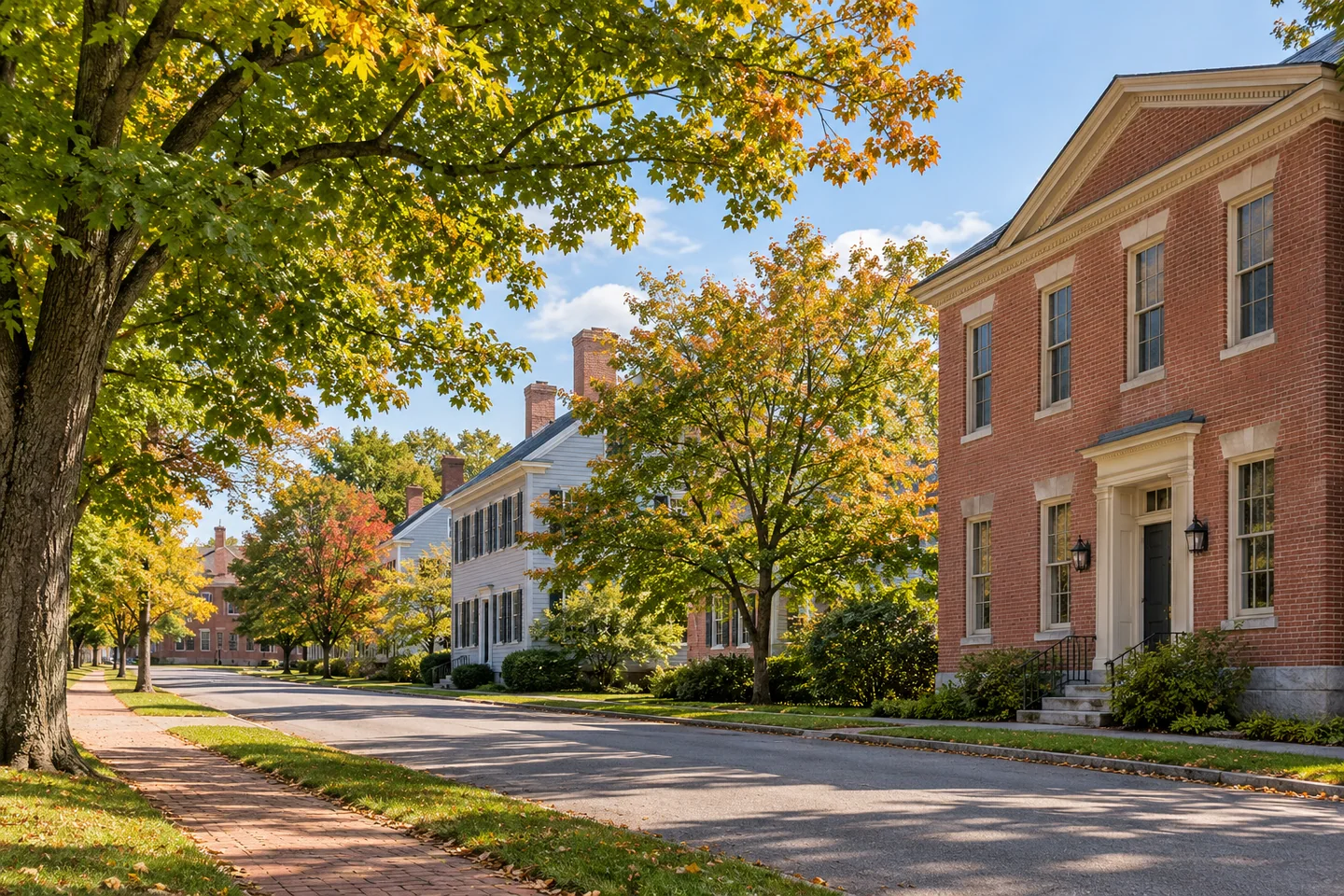
Gorham's historic campus becomes more interesting when it is seen beside the village around it. Greater Portland Landmarks brings the campus, town-center, and South Street historic districts together in its walking-tour resources, connecting education, commerce, and residential growth. Choose a comfortable section rather than feeling obliged to cover every building. Use public streets and the campus's designated visitor routes, following current university directions. The purpose is to read how a town and its educational institutions developed alongside one another, with each area contributing a different part of the picture.
The university's own historical account follows the academy and female seminary into the era of the state normal school, where teachers received professional preparation. Buildings were reused as educational needs changed, and former school premises helped accommodate the new institution. That history makes the campus more than a collection of attractive facades. A building's shape and position may reflect an earlier organization of learning and residence, with later use continuing to give it a role. Look for those layers without expecting every interior to be open.
Shannon's original heritage-visit account moves from the Academy Building to the McLellan House, hoping to understand their former relationship. Trees interrupt the line of sight, so the historical connection cannot simply be read from one convenient viewpoint. The writer also enjoys the house's brickwork and returns for a separately permitted look inside. For a present-day visitor, the useful lesson is to let context add to what can actually be seen. An interesting exterior does not depend on obtaining the same personal access as an earlier blogger.
South Street offers a contrasting residential setting. Maine's preservation commission emphasizes the consistency of materials, building heights, setbacks, and lot sizes, with Federal-era houses carrying symmetrical facades and carefully framed entrances. Look at the relationship between neighboring buildings before selecting an individual doorway or window. The Baxter Memorial Library adds a civic use within the largely residential district. Private houses remain part of people's everyday lives, so appreciate their contributions from the street and keep the route clear of lawns and entrances.
Back near the campus, the university's account of Corthell Hall links the building with public fundraising and the first normal-school students. Its design and later enlargement belong to the institution's growth, while other early buildings record changes in accommodation and study. That combination of local contributions and changing educational practice gives the walk a theme beyond architectural style. Buildings helped people support an institution, and the institution repeatedly adapted the buildings. Both kinds of change can be visible in a place that is still used for learning.
The village-center district adds religious, commercial, and fraternal buildings to the story. Landmarks' account highlights the former Masonic Hall and Lewis McLellan Block, connecting them with the nineteenth-century growth around Main and School Streets. Comparing those public-facing structures with nearby homes and academic buildings makes the larger setting legible. Plan any museum, gallery, or performance visit separately around its current arrangements. The architecture itself can provide a coherent outing, with education, home life, and local business continuing to share the center of Gorham.
Before you go
- Choose a comfortable section and follow current campus visitor directions.
Visitor perspectives
- Shannon enjoys the brickwork and the house’s connection with the academy, although trees block the hoped-for line of sight.
Capture
- Frame buildings from public routes and keep residential windows and entrances private.
 Cumberland Mills Historic District
 Lake Auburn
 Rangeley Lake
Social
Gorham’s walking resources connect campus, village-center, and residential history.
Educational buildings changed use as institutions and student needs developed.
Shannon finds historical connections rewarding even when trees interrupt the view.
South Street’s character depends partly on consistent setbacks and building scale.
A building’s relationship to its neighbors can reveal as much as a facade.
Choose a manageable section instead of racing through every stop.
An exterior can remain rewarding without an interior tour.
A living campus can carry several generations of educational history.
Hashtags