 Cre8Travel
CRE8TRAVEL · MAINE PLACES
Frenchville Railroad Station, Water Tank and Caboose
Frenchville’s Railway Site: Objects, Skills and Survival
Discover
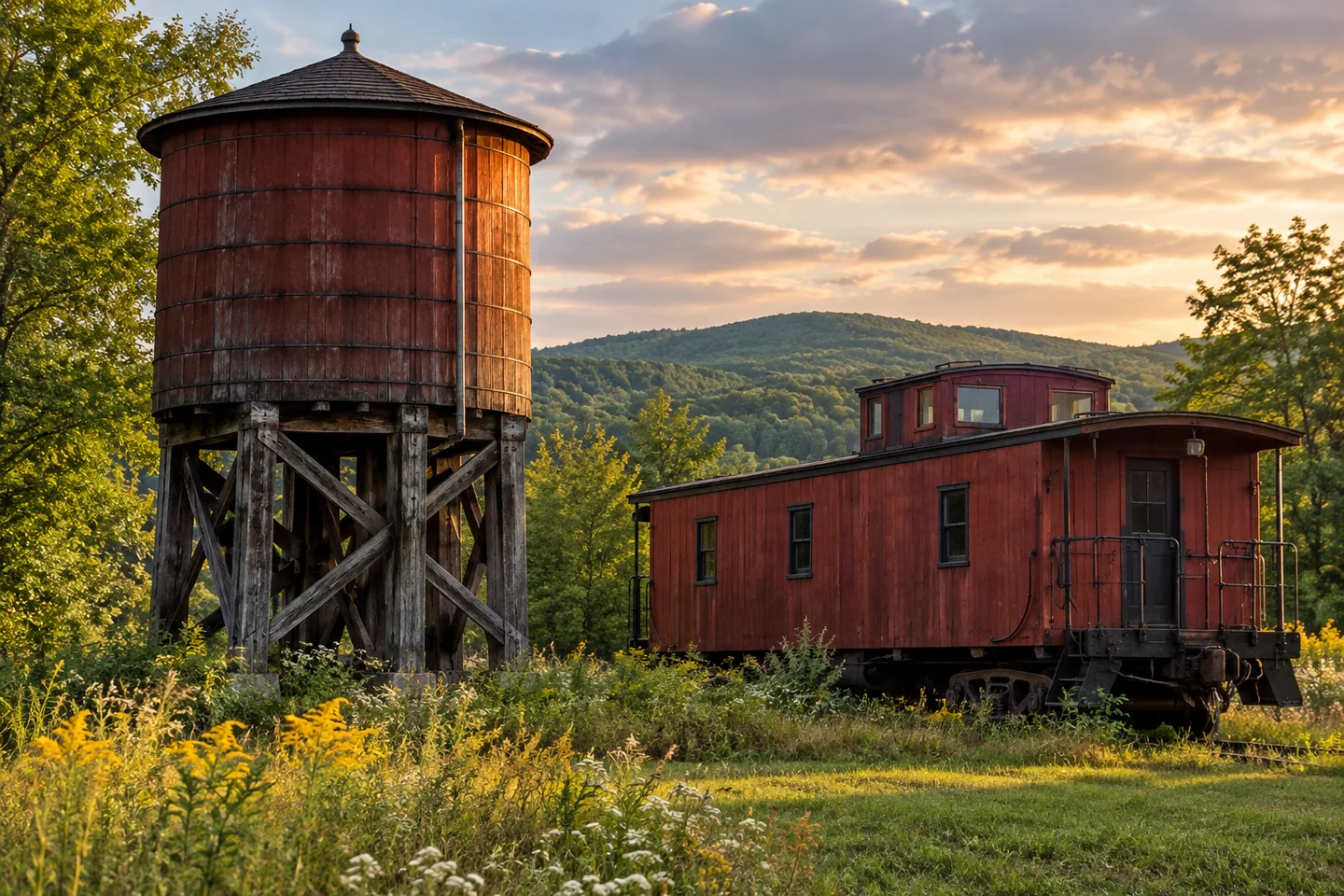
Frenchville's railway heritage makes a compact outdoor subject with several different kinds of survival. The water tank, caboose and station history belong to one attraction, rather than three separate stops to count. The Maine Acadian Heritage Council identifies the historical society as their caretaker. Contact the society about the permitted viewing area and any interior access before traveling. Keep clear of the railway and current work areas, and do not assume that a route visible between objects is a public path. Begin with what can be seen from an authorized position.
The original National Register nomination describes a utilitarian group rather than a monumental station. It records a modest passenger building divided among an agent's office, freight room and waiting room, alongside an elevated redwood tank supported by heavy timber. Those different functions help explain why a small site once needed several forms. Imagine the questions each answered: where to wait, where to handle goods and how to keep a steam engine supplied. The documented original layout is historical evidence, not a claim that every room or structure is now available to inspect.
Railway historians have another record in the Library of Congress's Maine Acadian Cultural Survey collection. Photographer Howard W. Marshall documented the Frenchville water tank and caboose during the 1991 field survey. The finding aid places those views among records of houses, stores and other community settings in the valley. Such a sequence matters because transportation did not exist apart from ordinary life. A preserved railway object can be read beside the homes and businesses it served, while an archival description can guide further research without promising the original photograph is displayed here.
The site's preservation also connects history with contemporary learning. Christopher Bouchard's original May 2026 reporting describes local contractor Jordan Labbe and instructor Carey Michaud bringing technology-center students into a station-rebuilding project. Students were to prepare wall framing, linking classroom skills with a community client. Read that as a documented project and educational intention, not proof that a rebuilt station has opened. The distinction between a surviving original, a stored object and a reconstruction is worth asking about before interpreting any new-looking feature as untouched railway fabric.
Tom and Helen Martin's original July 2022 travel account records a stop at the railway site while exploring St. John Valley heritage. Their narrative moves from one community institution to another, showing how a small railway stop can fit a broader interest in local history. It is an account of that trip, with its access and appearances belonging to that date. Borrow the curiosity rather than its assumptions about what will be open. Settle the present arrangements directly, and allow the stop to remain an exterior observation if that is what the society authorizes.
For photographs, compare the vertical emphasis of the tank with the long horizontal form of the caboose, keeping both within a frame that explains their setting. Stay off tracks and do not climb equipment to improve the angle. A second image can concentrate on a visible material detail from the same permitted area. The interesting story is how practical objects acquire a second life: first serving movement, then helping a community explain what that movement meant. Their continued preservation depends on people and skills as well as on the objects themselves.
Fun facts
- The original nomination describes separate agent, freight and passenger spaces.
- A 1991 cultural field survey documented the water tank and caboose.
Before you go
- Confirm the permitted viewing area and any interior access with the historical society.
- Stay away from tracks and construction or restoration work areas.
- Distinguish original structures from any later reconstruction.
Visitor perspectives
- Tom and Helen Martin’s July 2022 travel account records a Frenchville railway-site stop within a wider exploration of St. John Valley heritage.
Capture
- From an authorized area, contrast the tank’s vertical form with the caboose’s horizontal shape; remain off tracks and equipment.
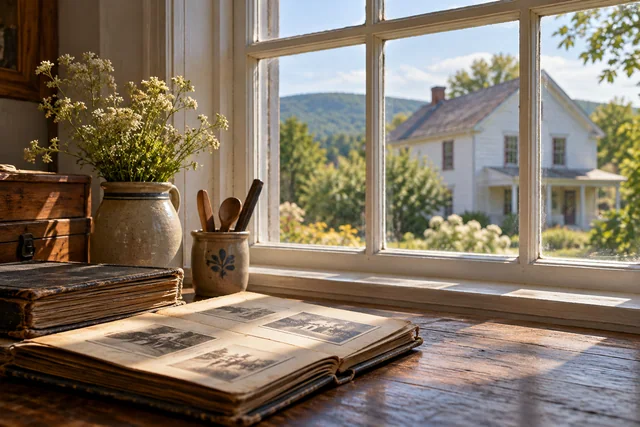 Wylie House and Frenchville Historical Society
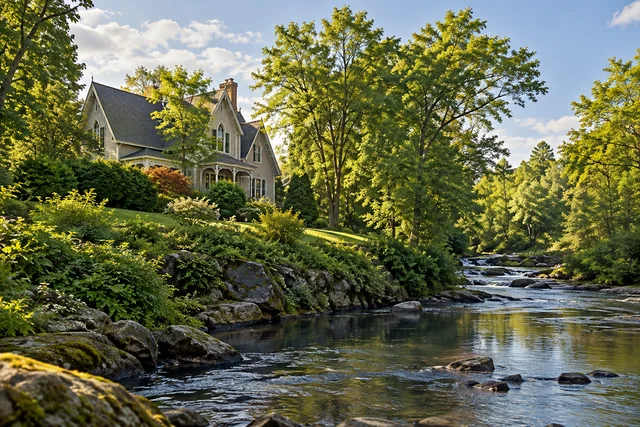 Godfrey–Kellogg House
 Paul Bunyan Statue in Bangor
Social
Frenchville’s tank, caboose and station story belong to one railway-heritage outing.
A small station divided the work of handling passengers, freight and railway administration.
The tank recalls the practical requirements of steam railways.
An archival field survey recorded these objects as part of a living valley.
A rebuilding project can connect preservation with vocational learning.
An old travel account establishes a visit, rather than today’s access arrangements.
Confirm the viewing area and keep clear of tracks and work zones.
What gives old transport equipment its second life: the object or the people preserving it?
Hashtags