 Cre8Travel
CRE8TRAVEL · MAINE PLACES
Branns Mill Pond
Branns Mill Pond: Shallow Water and Close Observation
Discover
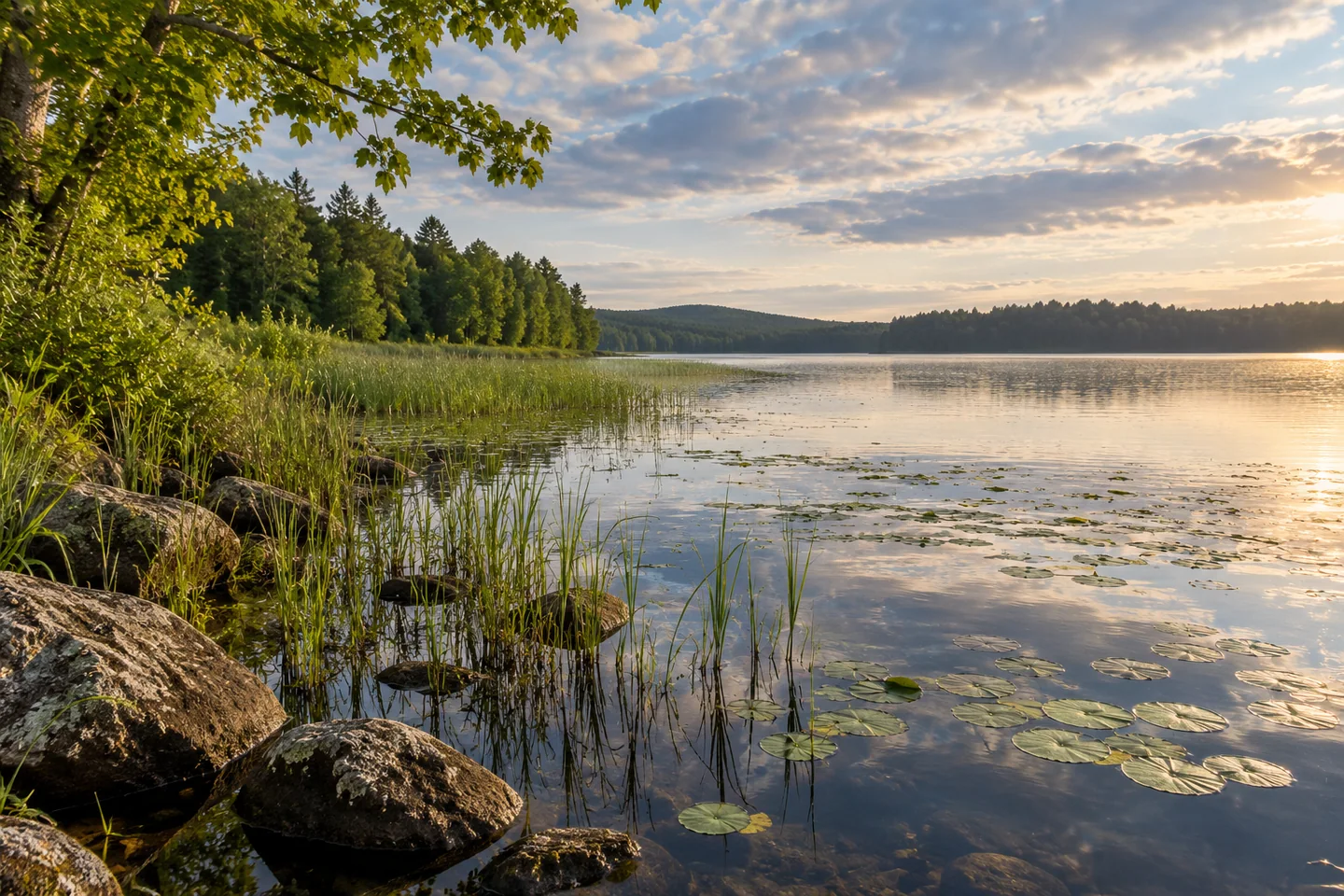
Branns Mill Pond occupies a shallow water landscape shared by Dover-Foxcroft and Garland. The state’s historical fisheries report describes it as a warm pond, with the deeper water concentrated near the outlet. Its recorded maximum depth is 15 feet. That physical character gives an outing a different emphasis from the deep mountain lakes farther north: the margins, shallows and changing relationship between open water and shore deserve much of the attention.
The same report documents changes in the fish community over several decades. White perch were introduced in the 1950s, smallmouth bass became established in the 1980s and largemouth bass followed in the 1990s. Those dates belong to an account revised in 2003, but they help explain the warmwater fishery described there. Read them as a history of a changing pond, using current state information for any actual fishing plan.
Public access has a documented local history as well. Dover-Foxcroft’s comprehensive plan identifies the state-owned concrete launch on Notch Road, built in 2002, and records parking limitations at that site. Use that established entry as the basis for planning, checking its present condition before unloading. Arrive with a loading arrangement that leaves space for others rather than expecting a large waterfront parking area.
The town plan also places the pond within a broader water landscape. It identifies significant aquifers extending along Black Stream and Branns Mill Pond, where precipitation replenishes groundwater through the soil. The pond is therefore part of a landscape containing water both at the surface and below it. That connection adds depth to an apparently simple view across the shore, inviting interest in what the surrounding land contributes to the water.
A Lakes of Maine map makes another useful distinction. It plots many shallow depth readings alongside a deeper pocket reaching 15 feet. The map can help you recognize why broad areas of the pond should not be approached as though they have uniform depth. Use a current navigation plan appropriate to your craft and the day’s conditions, while allowing the overall pattern to shape a more attentive look at the basin.
An original June 2016 account on Happy to be Kayaking in Maine describes a leisurely outing here during a drive toward Greenville. The writer’s party watched for rocks and shallow areas, noticed colorful dragonflies and butterflies, and heard frogs while fish jumped nearby. They had hoped for a moose or eagle but saw neither. The smaller observations still made the stop enjoyable.
The writer also explains that the light wind helped determine their choice to paddle. In less suitable weather they would have chosen a walk instead. That willingness to adapt is a useful lesson to carry forward, without treating their leisurely duration or old parking experience as a present guarantee. Their account is the story of one visit, rewarding partly because they adjusted expectations to what was there.
Choose your own outing around the water you can comfortably explore, with enough time to return and reload without rushing. A pond visit need not produce a rare sighting or cover every corner to feel worthwhile. Close attention to ordinary movement, texture and sound can give a limited route its own completeness.
Fun facts
- The historical fishery survey records a maximum depth of 15 feet.
Before you go
- Check the Notch Road launch and leave its limited space usable.
Visitor perspectives
- The writer enjoyed a leisurely paddle, noticing insects, frogs and fish while watching for shallow water and rocks.
Capture
- Look for small patterns near the water’s margins from your chosen position.
 First Davis Pond
 Shirley Pond
 Douglas Pond
Social
Branns Mill Pond has a documented warmwater fishery history.
The town plan identifies its Notch Road public launch.
Groundwater resources extend along the pond and Black Stream.
Depth mapping shows a basin dominated by shallow readings.
A 2016 visitor enjoyed insects and frogs without the hoped-for larger wildlife.
A limited route can still feel complete.
Leave room for weather to change the plan.
Ordinary details can make a water visit memorable.
Hashtags