 Cre8Travel
CRE8TRAVEL · MAINE PLACES
Douglas Pond
Douglas Pond: Marsh Habitat on the Sebasticook
Discover
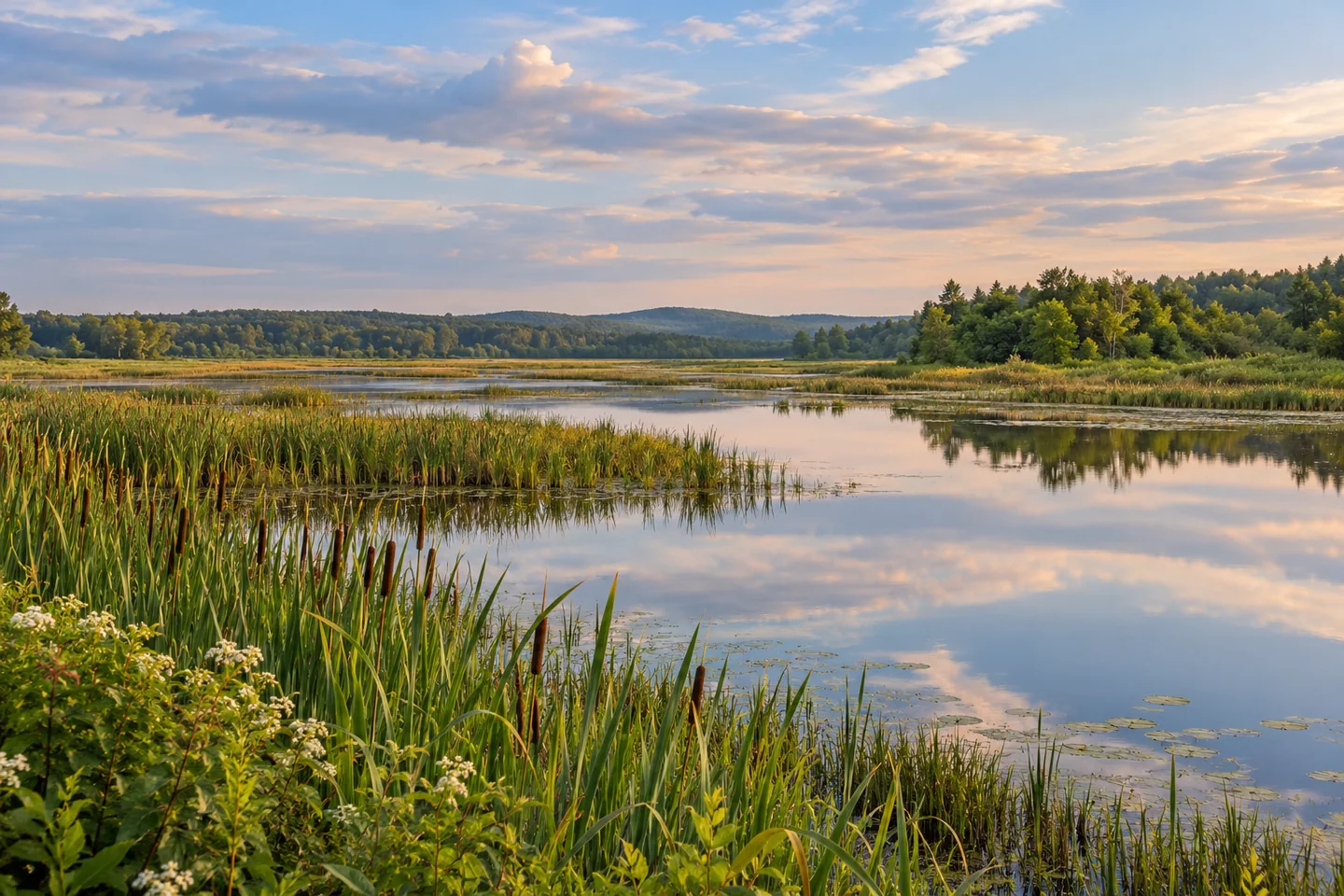
Douglas Pond is a broadening of the Sebasticook River whose marshy edges give a water outing its character. The Maine Natural Areas Program’s ecological profile describes an impounded basin surrounded by extensive cattail marsh. It places the pond alongside nearby Madawaska Bog as an important area for waterfowl and wading birds. The attraction is partly this change of scale, as a river journey opens into a wider wetland landscape.
The profile documents black tern nesting habitat and dense cover used by least bitterns, alongside records of other uncommon wetland animals. Such information gives a reason to observe from a distance and avoid disturbing the vegetation. A sighting is never the measure of a successful visit; understanding the habitat can be rewarding even when its occupants stay out of view.
The same state account acknowledges a history of water-quality problems and waste received from the Hartland tannery.
An attractive marsh view should therefore be accompanied by informed planning. Consult current state and local advice before considering water contact or eating fish, and choose an outing that respects both the habitat and the water’s industrial history.
Doug Spalding’s paddling observations, reported in a 2011 Bangor Daily News feature, explain the approach from Pittsfield. He began beside the Pinnacle Ski Clubhouse on Waverly Avenue, headed upstream and passed beneath the Interstate 95 bridges before the river widened into Douglas Pond. His description gives the arrival an appealing contrast: the infrastructure overhead soon yields to a broader view of marsh and open water.
Spalding suggested looking toward the pond’s boggy side for the outlet from Madawaska Bog. Farther upriver he described late-July cardinal flowers and a landscape with relatively little development. These are dated observations and proposed points of interest, not a promise that every channel will be passable today. Establish a suitable turnaround before setting off, and keep your plan adaptable to current water levels and wind.
Michael Perry’s original June 2015 account gives another perspective on the same water route. His party reached Douglas Pond soon after passing under the highway, accompanied by swallows moving out from beneath the bridge. They explored the grassy eastern margins, hearing red-winged blackbirds around the emerging reeds. The details make the transition into the pond memorable without requiring a journey to the far end of the river.
Perry continued toward Hartland before shallow water prompted a return. Along the river he noticed green marsh swales, leaning maples and the white flowers of red osier dogwood. His full outing took several hours, a useful indication that extending beyond the pond changes the commitment involved. A visitor can choose a shorter plan focused on Douglas itself, leaving the longer continuation for a separate decision made with appropriate preparation.
These accounts invite a close reading of a working river landscape. Begin with a clear entry and return plan, allow time for the transition from channel to pond, and pay attention to the boundaries between water and vegetation. The value of the visit lies in noticing a particular place with its ecological richness and complicated history held together.
Fun facts
- The state ecological profile describes extensive cattail marsh around the pond.
Before you go
- Consult current state and local advice before water contact or consuming fish.
- Plan a turnaround that suits current water levels and wind.
Visitor perspectives
- Michael Perry recalls reaching Douglas Pond beneath the highway, exploring grassy margins and continuing upriver before shallow water prompted a return.
- Doug Spalding describes the Pittsfield approach and points of interest around Douglas Pond in an original newspaper account of his paddling observations.
Capture
- Observe marsh edges from a distance without disturbing vegetation.
 Shirley Pond
 Chandler Lake
 Moosehead Lake
Social
Douglas Pond opens out from a river channel into a marsh landscape.
Spalding describes the approach beneath the highway bridges.
Perry’s 2015 outing noticed swallows and grassy margins.
The longer river continuation changes the time commitment.
Keep the water’s industrial history in the planning.
Choose a turnaround before departure.
A shorter outing can focus attention on one place.
Habitat can be worth studying even without a rare sighting.
Hashtags