 Cre8Travel
CRE8TRAVEL · MAINE PLACES
Albany Town House
Albany Town House: A Community Room after a Town’s Charter Ended
Discover
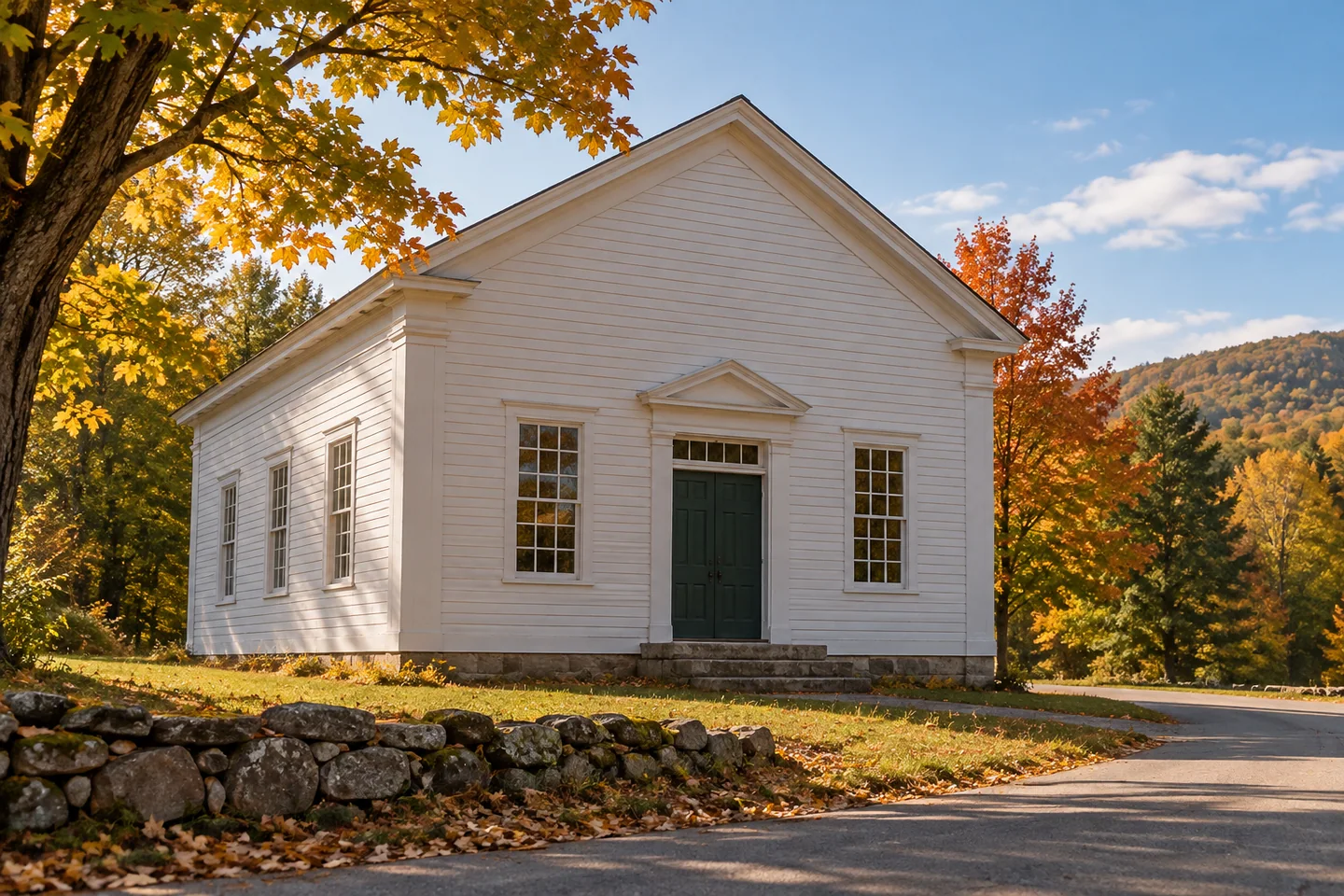
Albany Town House stands at an Oxford County crossroads, a modest building whose importance exceeds its size. Built in 1848 for public meetings, voting, and municipal business, it outlived Albany's existence as an incorporated town. Approach it as an exterior history stop unless you have a confirmed arrangement for a gathering or interior visit. The Albany Improvement Association's information invites inquiries about use of the hall; it does not establish an unattended museum you can enter at will. Settle access and a lawful place to stop before traveling.
The architectural interest is in restraint. The National Register nomination describes a symmetrical front with a central entrance between windows, corner boards, cornice returns, and a subtly peaked door molding. Those limited details suggest Greek Revival design without the elaborate columns of a grand civic building. Look first at the arrangement of openings, then at the few points where trim changes the outline. A simple facade can communicate a public purpose through proportion and order rather than through an abundance of ornament. Keep any closer examination within permitted visitor space.
The institutional story turns on 1937, when Albany relinquished its charter and became an unorganized territory. In 1947 the state transferred the former Town House to the Albany Improvement Association. The hall could therefore continue to support community life even though municipal government had changed. That distinction is the central reason to pause here: a legal structure and a physical gathering place do not have to disappear together. Consider what a shared room can preserve when responsibility for public affairs moves into a different administrative arrangement.
A Waterford historical account describes volunteers restoring the building's tin ceiling, removing wallpaper, and adding a ramp so voting could return. It records a 2009 local celebration of the building's National Register recognition, rather than dating the actual listing to that celebration. The work gives preservation a practical direction. Repairing a ceiling and making an entrance usable can support continued participation, not simply a better-looking exterior. Do not assume that a documented ramp settles every present accessibility question; ask the association about the current approach, thresholds, and interior arrangements for your particular visit.
The association also presents the Town House as a place for meetings, family gatherings, lectures, and other community uses. These uses suggest how a historic building can remain part of ordinary life without becoming a period-room museum. If you attend an authorized gathering, pay attention to how people use a shared room rather than expecting reconstructed scenes of a town meeting. Leave furnishings and equipment as directed. A building's continuing usefulness can be as instructive as a preserved architectural feature, especially when its original governmental role has changed.
For a personal record, photograph the principal facade from a lawful standing position and consider a second composition showing its relationship to the crossroads. Inside, ask before making images and avoid photographing participants without consent. A note about the difference between a town, a township, and the association caring for the hall may prove more useful than another picture of a doorway. The encounter rewards attention to continuity: a small public-facing building can retain a local identity through changes in government, ownership, maintenance, and the reasons neighbors come together.
Fun facts
- The Town House was built in 1848.
- Albany relinquished its municipal charter in 1937.
- The Albany Improvement Association acquired the building in 1947.
Before you go
- Arrange any interior visit with the association before traveling.
- Confirm a lawful stopping place and the approach needed for your visit.
- Distinguish the building’s continued community use from a walk-in museum tour.
Capture
- From permitted space, show the relationship among the front door, windows, and roof outline.
- If authorized indoors, photograph the room without recording participants or reproducing documents.
 Turner Cattle Pound
 Emerson-Wilcox House Museum
 Long Pond
Social
Albany Town House outlasted the town’s municipal charter.
The modest building began serving civic purposes in 1848.
Limited architectural details suggest Greek Revival design.
The hall continued after Albany became an unorganized territory.
The improvement association acquired the building in 1947.
Volunteer restoration supported renewed use as a polling place.
Arrange access to appreciate a shared room that remains useful.
What can a gathering place preserve when a community’s government changes?
Hashtags