 Cre8Travel
CRE8TRAVEL · MAINE PLACES
Emerson-Wilcox House Museum
Emerson–Wilcox House: Looking for the Evidence beneath a York Facade
Discover
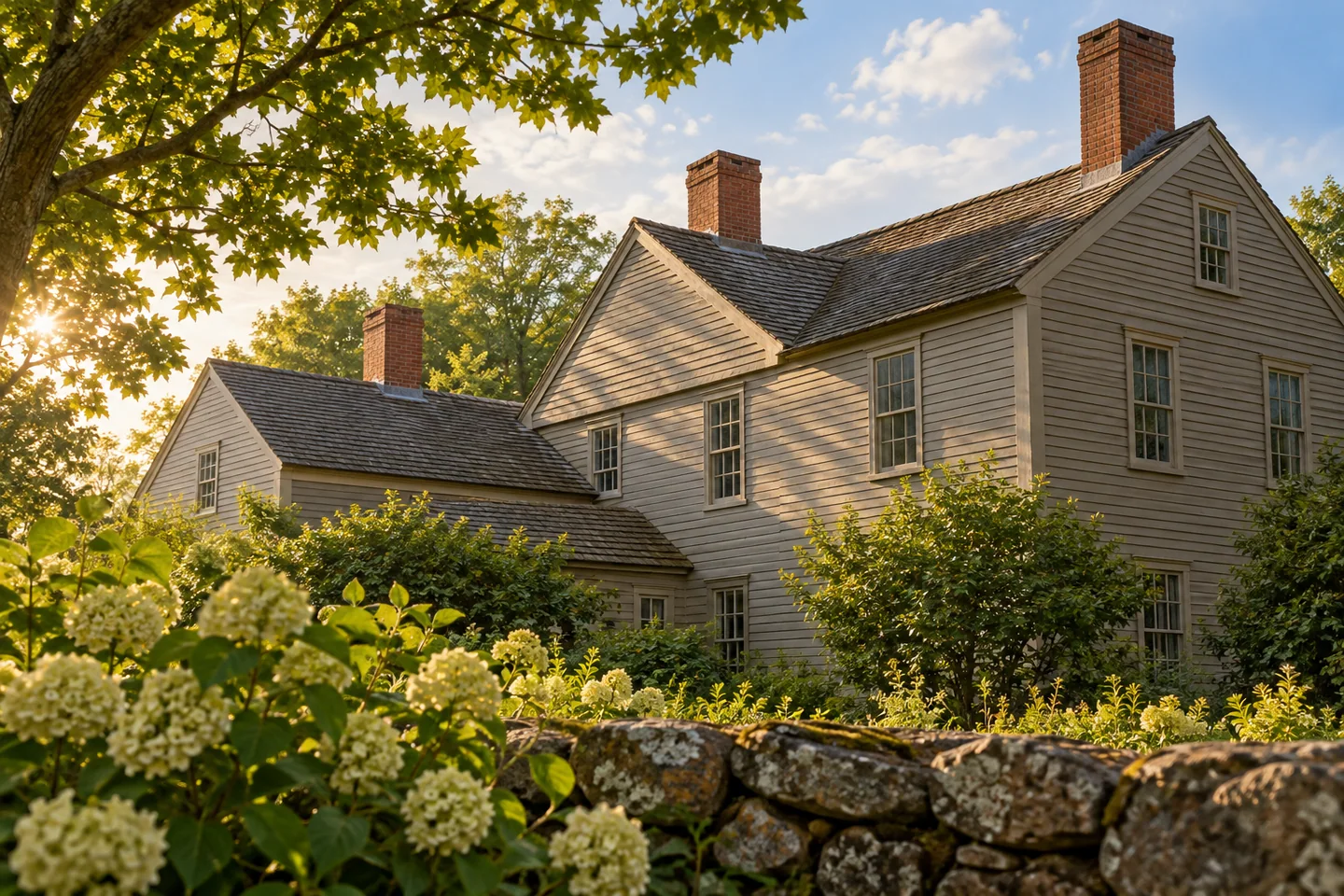
The Emerson–Wilcox House in York rewards an exterior study organized around evidence rather than an expectation of furnished rooms. Old York's admission information restricts ordinary interior access, so confirm any specifically authorized visit directly with the organization. Begin from permitted public pedestrian space and observe the building without treating an open doorway or a historical tour account as permission to enter. Its interest lies partly in the different kinds of records that can explain a house: surviving fabric, documents, excavated fragments, and the accounts of people who interpreted it.
The operator's historical account places the earliest part of the present house around 1735, built by George Ingram, and records Edward Emerson purchasing it in 1756. A ship owner and importer, Emerson is thought to have used part of the Long Parlor as a store. David Wilcox acquired the house in 1817 and later served as a delegate to Maine's constitutional convention. These overlapping commercial, domestic, and civic connections suggest a building used within a community, rather than a self-contained scene frozen at one date. Keep the difference between a documented purchase and a proposed room use clear.
A research paper by Jennifier White offers a revealing way to think about its former furnishings. Emerson's inventory lists cream-colored and green-edged plates but leaves important uncertainties about the ceramics he owned. A solitary teapot does not explain a complete tea service, and a broad color description does not necessarily identify one kind of pottery. Consider what that means for any reconstructed historical room: documentary survival can be uneven, and the absence of an item from a list does not automatically prove its absence from a household.
The same study compares the written inventory with ceramics found around the house. Creamware and green-edged pearlware provided points of comparison, while other recovered types were not clearly represented in the listed household or shop goods. That relationship makes fragments more than decorative relics. An inventory and an excavation can ask different questions of the same site, with each correcting an impression that the other might leave alone. These are published research findings, not a promise that particular sherds or an archaeological trench will be on view during your visit.
Preservation adds another body of evidence. After a vehicle damaged the building in 2021, staff recovered pieces of framing, windows, woodwork, and flooring, while a preservation architect recorded the original positions of damaged elements. The operator's 2023 account describes that careful process. A repair can therefore involve identifying and documenting material before deciding how to put it back together. From outside, avoid trying to diagnose the condition of hidden structural work. Instead, appreciate that the visible building rests on decisions requiring more information than a passing observer can obtain.
A June 2018 Tripadvisor account by L9393NIrobertm recalled a guided tour that began outdoors by distinguishing the additions' different rooflines. The reviewer also noticed differences in ceiling height inside and valued the guide's explanation. That response belongs to an earlier tour experience, while the exterior comparison remains a useful idea for a permitted visit. Photograph the overall arrangement before isolating a detail, and ask before entering or recording any interior. The most lasting souvenir may be a better question about how a room, an inventory entry, or a recovered fragment becomes part of the history told about a house.
Fun facts
- George Ingram built the earliest part of the present house around 1735.
- Research compared Emerson’s household inventory with excavated ceramics.
- Damaged historic building fragments were recorded during the restoration process.
Before you go
- Confirm any specifically authorized interior visit with Old York.
- Study the exterior from public pedestrian space and keep entrances clear.
- Distinguish documentary certainty from proposed uses of a room or object.
Visitor perspectives
- Tripadvisor reviewer L9393NIrobertm, visiting in June 2018, valued a guide who explained the house’s additions, beginning outside with the different rooflines and continuing indoors with differences in ceiling height.
Capture
- Compare the overall roof arrangement with one detail from a permitted viewpoint.
- Photograph interiors or collection material only with explicit authorization.
 Albany Town House
 Long Pond
 Thomas Hill Standpipe
Social
Emerson–Wilcox House can be read through more than its exterior walls.
Its history joins domestic life with commercial activity.
An inventory’s broad description may leave an object’s identity uncertain.
Archaeological fragments can add evidence absent from written lists.
Recording damaged material is part of preserving a historic building.
A 2018 visitor valued explanations of the house’s different additions.
An earlier guided tour does not establish present interior access.
What would you ask first: how a room was used, what an inventory leaves out, or what a fragment can show?
Hashtags