 Cre8Travel
CRE8TRAVEL · NEW YORK PLACES
Seward Park
Seward Park: Gardens and Play on Manhattan’s Lower East Side
Discover
Seward Park brings several generations of neighborhood recreation together on Manhattan's Lower East Side. Play equipment, courts, gardens and promenades occupy a compact public landscape near Essex and Canal Streets. There is no need for an elaborate route to enjoy it. A walk from a busy play area toward a garden or a shaded seat reveals how many different activities can share a small city park.
The site developed from a movement to provide more outdoor recreation in a densely populated neighborhood. In 1899, the Outdoor Recreation League began creating opportunities for play here. The public park officially opened on October 17, 1903. Trees, grass, paths and benches made room for recreation as an ordinary part of neighborhood life, establishing a purpose that still helps explain the arrangement of the park.
Early buildings supported that work. A pavilion built in 1904 included spaces for exercise, meetings and bathing facilities. It was demolished in 1936, and a Park House built in 1941 provided a later home for practical services. The building history is a reminder that a park includes more than the landscape visible from a bench: facilities have to change as the needs of surrounding residents change.
Today's play areas offer different scales of activity. A low climbing structure serves younger children, while larger equipment provides other possibilities for older children. The conservancy describes a water-play area with a mosaic map of the neighborhood at its center, a detail that ties play to the streets outside. Swings occupy the southwestern corner, and courts accommodate basketball, volleyball and badminton. Look at how paths connect these zones rather than treating them as one undifferentiated playground.
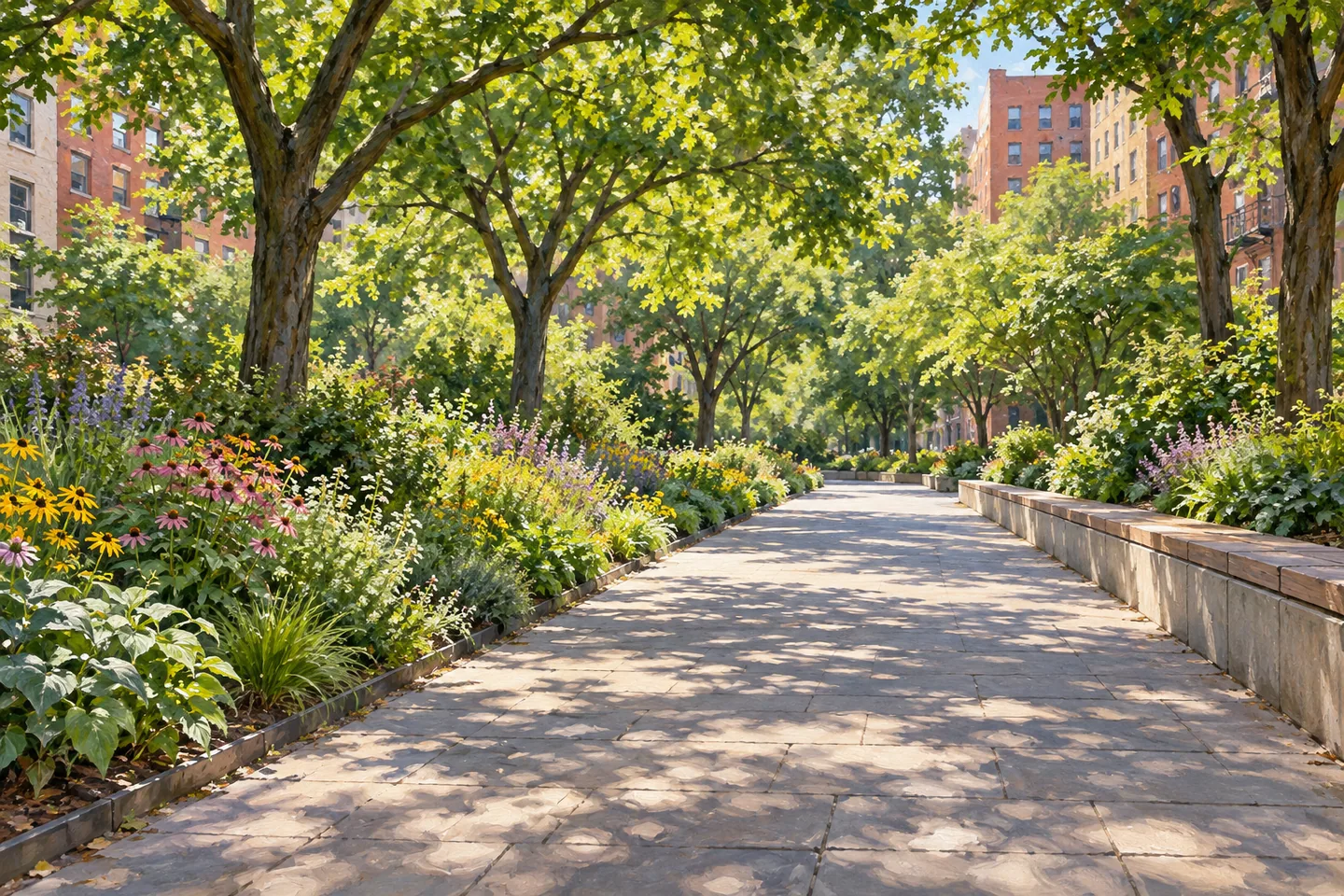
Two promenades give the park a different pace. One follows Essex Street, with the historic Jacob Schiff fountain as a focal point. Another faces the library along ground that was once Jefferson Street. Redesign and repaving through Parks Without Borders renewed these public edges in 2019. Their open lines create places for sitting and looking while connecting the park with its surroundings.
Gardening adds a finer layer of detail. Volunteers tend beds and a more formal garden, while Pollinator Place offers a wilder patch intended to support bees, butterflies and birds. A native bee house provides nesting space. Watching the contrast between carefully edged beds and looser habitat planting can be an engaging activity in itself, especially for visitors interested in how different kinds of garden care produce different results.
Some garden objects also carry a history of reuse. The conservancy describes terracotta fragments from the former Jarmulowsky Bank building being adapted as planters and a birdbath. Architectural material becomes part of an outdoor setting at a much smaller scale. These pieces invite attention to texture and shape, alongside the living material of leaves and flowers.
Choose a visit around the part of the park that interests your group. Families can begin with suitable play equipment; others may prefer the promenades and planted areas. Water play follows seasonal operation, so check current information if it is central to your plans. Leave planting and habitat structures undisturbed, and keep paths available to other visitors. A little time spent moving between play, garden and promenade shows the range within this Lower East Side public space.
Fun facts
- The public park opened on October 17, 1903.
- A Park House was built in 1941.
- One promenade follows ground that was once Jefferson Street.
- Pollinator Place includes a native bee nesting house.
Before you go
- Choose play equipment appropriate to your group.
- Compare the Essex Street and former Jefferson Street promenades.
- Observe Pollinator Place without disturbing nesting structures.
Visitor perspectives
Tripadvisor reviewer Justin W described families using the play areas and adults relaxing under shade trees during an August 2022 visit.
Capture
- Use a promenade to show the relationship between paths, gardens and the surrounding neighborhood.
- Study reused terracotta and planting details from public ground without disturbing wildlife habitat.
 Washington Market Park
 Highland Park (Brooklyn and Queens)
 Canarsie Park
Social
Seward Park is a neighborhood landscape on Manhattan’s Lower East Side. #Cre8Travel
Its public opening dates to October 17, 1903.
Play areas and courts serve different ages and activities.
A mosaic neighborhood map adds a local detail to the water-play area.
Two promenades offer a quieter pace around the active spaces.
Pollinator Place adds habitat planting and a native bee house.
Check seasonal water-play information and leave garden beds undisturbed.
What small detail makes a familiar neighborhood park distinctive?
Hashtags