 Cre8Travel
CRE8TRAVEL · NEW YORK PLACES
Canarsie Park
Canarsie Park: Recreation and a Closer Look at Trees
Discover
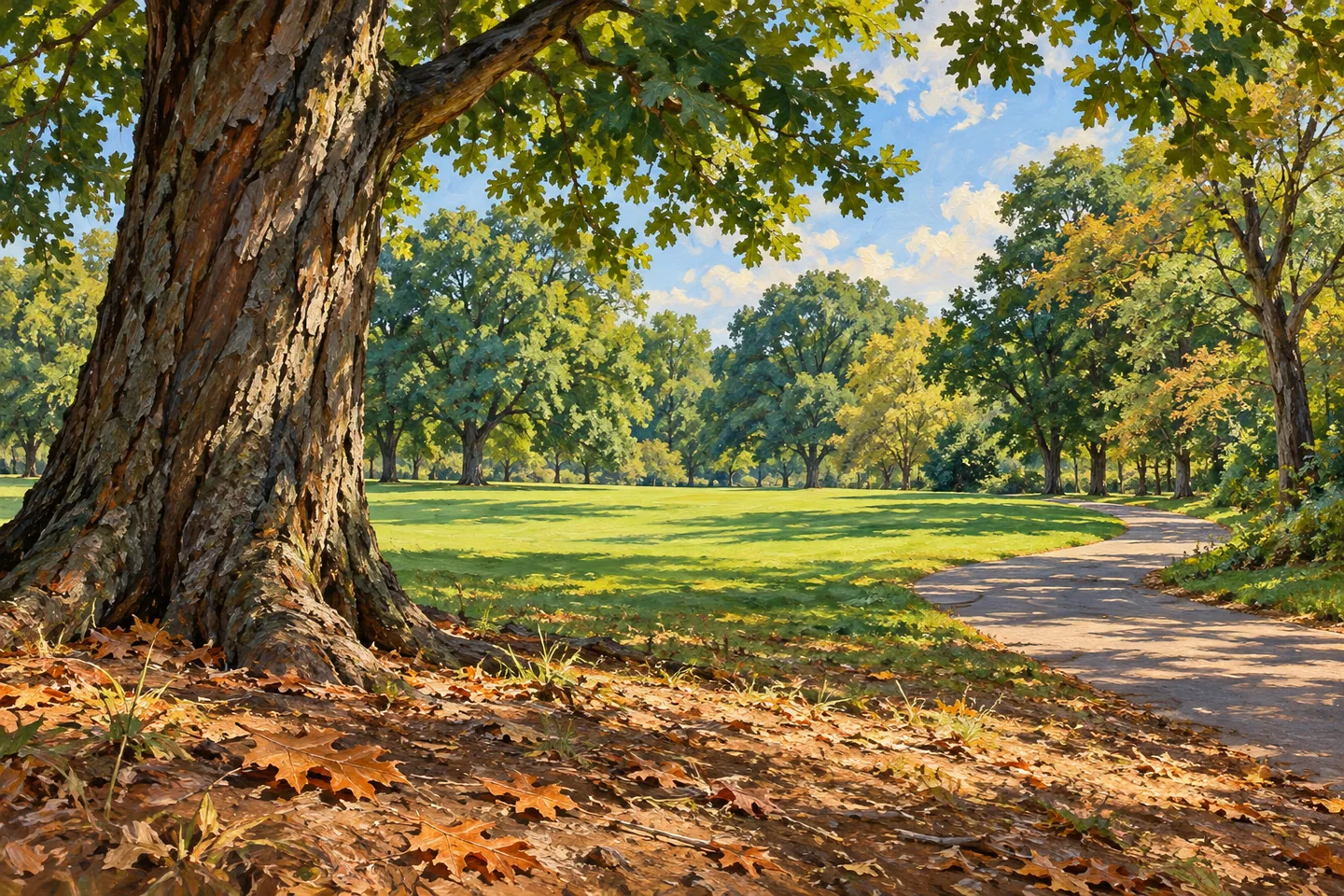
Canarsie Park offers several ways to spend time outdoors in southeastern Brooklyn. Between Seaview Avenue and the Belt Parkway, recreation spaces sit within a larger landscape of trees, wooded ground and natural areas. A visit can begin with a game or a walk, then become something more detailed: a chance to notice the different shapes of leaves, the texture of bark and the way a tree changes the space beneath it.
The public park grew from land acquired by the city in the 1890s. Later additions enlarged the landscape available for recreation. One part of its history is now found elsewhere: the old Schenck house was moved to the Brooklyn Museum. Within the park today, the relationship between open playing areas and more wooded ground is a more useful starting point than looking for a historic building that has left the site.
Sports and exercise are important to the park's everyday role. NYC Parks field research conducted in 2013 documented people using courts, exercise equipment, a cricket pitch and a skate area, as well as exploring quieter ground. The study also identified woods, wetlands and a hill within the broader landscape. These different settings help explain why an unstructured walk can offer a different experience from a visit centered on an activity area.
For a closer look at the planting, NYC H2O provides a tree guide specifically for Canarsie Park. It introduces a useful first question: are the leaves arranged alternately along a twig, or opposite one another? That simple distinction encourages observation before naming. Compare several trees from the path, looking at the overall form as well as an individual leaf. The aim is to notice differences, with the guide helping put words to what you see.
Oaks show how varied one broad group can be. The guide describes willow oak leaves as narrow and lance-like, while pin oak leaves have deep gaps between sharply pointed lobes. Eastern white pine offers a different clue, with soft needles gathered in groups of five. These contrasts can make a small part of the park into an informal identification exercise, using fallen leaves where available and leaving living branches intact.
Bark and seed forms offer another set of details. London planetree bark flakes away in a patchwork of pale olive, brown and gray. Sweetgum has star-shaped leaves and spiked seed balls, while eastern cottonwood produces triangular leaves. The guide also includes holly, linden, elm, locust, redbud and dogwood. Their different outlines give a walk variety even when seasonal flowers or foliage color are absent.
Keep the observation gentle. There is no need to collect plants or leave public paths to look closely. A tree's broad crown can be studied from a distance, and bark is often easier to compare than leaves high above the ground. Families can choose two or three features to find instead of trying to identify every tree in one visit.
Plan around the section you want to use and consult current park information for facilities and paths. Canarsie Pier is a separate destination across the Belt Parkway, so treat it as an additional visit with its own access planning. Within Canarsie Park, allowing time for both open space and small botanical details can turn a familiar outdoor break into a more attentive look at Brooklyn's living landscape.
Fun facts
- The city acquired the original park land in the 1890s.
- NYC H2O publishes a tree guide specifically for Canarsie Park.
- The guide distinguishes alternate and opposite leaf arrangements.
- Eastern white pine needles grow in groups of five.
Before you go
- Use the NYC H2O tree guide to choose a few identification features.
- Compare fallen leaves without cutting or collecting living plants.
- Stay on designated public paths around natural areas.
- Plan Canarsie Pier separately from this park visit.
Capture
- Contrast a tree crown with open recreation ground from an established path.
- Study bark patterns or fallen leaves as close subjects without disturbing planting or habitat.
 Highland Park (Brooklyn and Queens)
 Kissena Park
 Split Rock Mountain Wild Forest
Social
Canarsie Park combines recreation and natural areas in Brooklyn. #Cre8Travel
A visit can shift from a broad playing field to a small detail on a tree.
NYC H2O offers a park-specific tree guide.
Start by comparing alternate and opposite leaf arrangements.
Willow oak and pin oak show how different oak leaves can look.
White pine offers another clue: needles in groups of five.
Follow public paths and leave living plants undisturbed.
Which tree detail do you notice first: leaves, bark or the shape of its crown?
Hashtags