 Cre8Travel
CRE8TRAVEL · NEW YORK PLACES
Highland Park (Brooklyn and Queens)
Highland Park Across Brooklyn and Queens
Discover
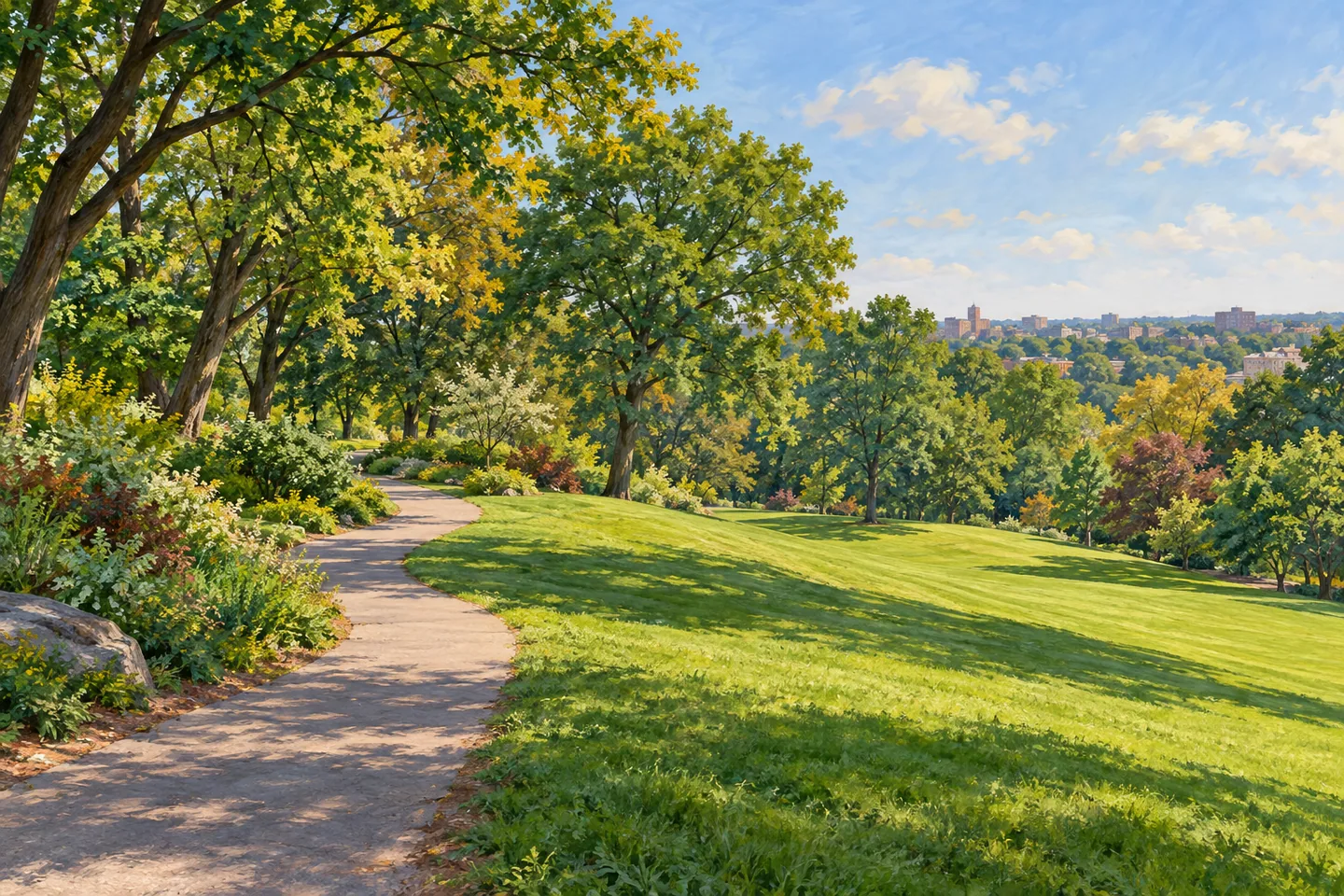
Highland Park stretches across Brooklyn and Queens, bringing recreation and planted landscapes to a distinctive piece of New York City's high ground. Its position helps explain the variety within it. Upper ground and sloping land create different settings for fields, trees, gardens and paths, while surrounding neighborhoods approach the park from more than one direction. A visit can focus on a game or on the quieter details between activity areas.
The park's history begins with the landscape around Ridgewood Reservoir. Brooklyn acquired land for the water supply in the nineteenth century, then purchased surrounding ground for park purposes in 1891. The reservoir provided the original reason for the public landscape, but the adjoining park developed its own recreation spaces. Reading that relationship gives the high ground a purpose beyond its views: water infrastructure helped shape a place for outdoor neighborhood life.
Substantial improvements followed between 1901 and 1905. The early park gained roads and footpaths, a shelter house, a combined music stand and tool house, rustic arbors and a bridge. Landscape work also created a lake and a flower garden. These historical elements describe the ambitions of the original design, when shade, strolling and organized activity were being brought together on the same site.
Further land acquisition between 1906 and 1908 extended the park westward. An aquatic garden was created in 1907, and children's farm gardens followed in 1915. The sequence shows how gardening belonged to the park from an early stage. It offered both something to look at and a way to learn through cultivation, alongside the playing fields and courts that supported a different kind of outdoor activity.
The landscape also contains natural areas. A NYC Parks survey conducted in 2012 distinguished forested patches and a swamp from the more deliberately landscaped ground. It recorded planting work intended to support native trees and the continuing care of natural habitat. Those observations describe a particular survey period, but they offer a useful way to approach the park: notice how vegetation and use change as the ground shifts from open recreation space toward wooded edges.
That change of scale can make a short walk interesting. A field presents a broad, regular surface; a woodland edge has a less predictable outline of trunks and branches. Paths connect those contrasting spaces and reveal the slope of the ground. Looking at where shade gathers or where an opening gives a longer view can be as rewarding as seeking a single landmark.
NYC Parks currently lists playgrounds, sports courts, fields, fitness equipment, hiking trails and natural areas among the park's facilities. Choose the section that suits your plans, and check the relevant facility information when a particular court or field matters. The park's terrain means that the nearest-looking point on a map may not provide the approach your group prefers.
For an unhurried visit, combine a recreation area with time to study the trees and changing landform. Follow designated paths and posted notices around work areas. The reservoir's specific routes and natural history deserve their own planning; within the wider park, the enduring interest is how gardens, woodland and everyday recreation share this landscape between two boroughs.
Fun facts
- Brooklyn purchased land around the reservoir for park purposes in 1891.
- Major early landscape improvements took place between 1901 and 1905.
- An aquatic garden was created in 1907.
- Children’s farm gardens were established in 1915.
Before you go
- Choose the Brooklyn or Queens approach that suits your intended section.
- Account for slopes when planning a route.
- Check current information for a particular sports facility.
Capture
- Show the change from open recreation ground to a wooded edge from a public path.
- Use the slope and tree canopy to suggest the park’s varied landform without claiming a specific distant view.
 Seward Park
 Canarsie Park
 Kissena Park
Social
Highland Park crosses Brooklyn and Queens in New York City. #Cre8Travel
Its public landscape grew around Ridgewood Reservoir.
Brooklyn purchased surrounding land for park purposes in 1891.
Early improvements combined paths, planting and recreation.
Aquatic and children’s farm gardens added to that landscape in the early twentieth century.
Wooded patches contrast with the regular outlines of playing fields.
Choose a section and approach that suit your group and check facility notices.
How does a change of level alter the way you experience a park?
Hashtags