 Cre8Travel
CRE8TRAVEL · NEW YORK PLACES
Monsignor McGolrick Park
McGolrick Park: London Planes, a Pavilion and Living Gardens
Discover
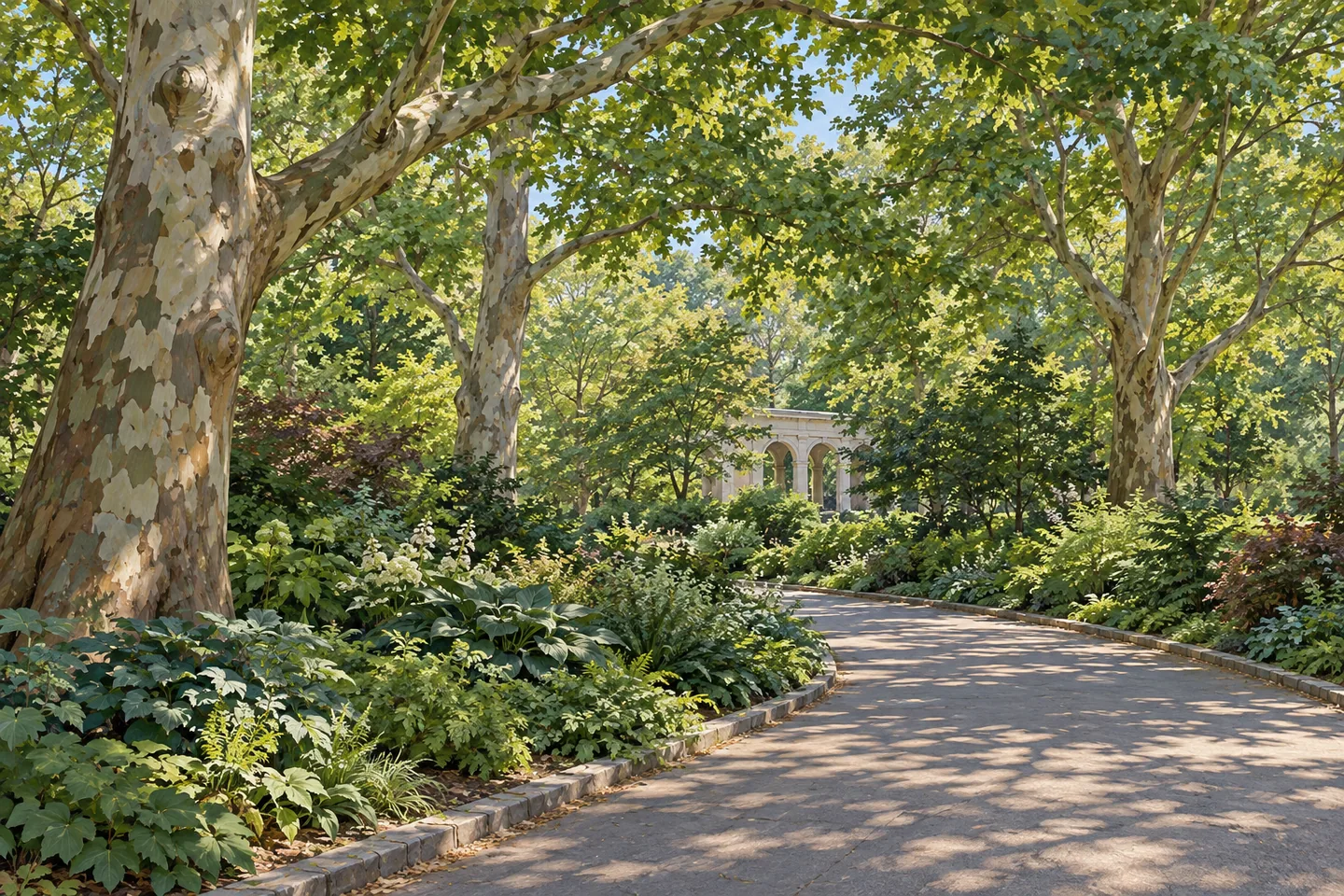
Monsignor McGolrick Park offers Greenpoint a landscape with a strong center and many small details. London plane trees line its walks, and a substantial pavilion gives the middle of the park an architectural anchor. Around them, garden beds and habitat planting bring attention closer to the ground. A visit can move easily between looking along a formal path and pausing over the changing texture of leaves.
The land was once a swampy part of Ambrose Kingsland's farm. Its purchase for a park in 1889 led to drainage work, lawns and decorative planting. Originally called Winthrop Park, it developed as a neighborhood green space within a growing part of Brooklyn. That transformation helps explain the importance of the ground beneath the trees: the park's present form came through deliberate work on water, soil and planting.
The pavilion followed in 1910. Designed by Helmle and Huberty, its limestone and brick structure included an open arcade, benches and practical services. The building gave the park a clear gathering place. Its contrast of solid masonry and open arches still provides a useful way to look at the landscape, bringing the more fluid shapes of branches and foliage into a composed architectural frame.
Today's gardening extends that relationship between structure and growth. North Brooklyn Parks Alliance works with NYC Parks to develop native shrubs and other planting beneath the mature London planes. The aim is to create layers of vegetation suited to shade while improving soil health and supporting biodiversity. Instead of treating the canopy and garden beds as separate subjects, look at how the lower planting occupies space beneath the tall trees.
That care also involves learning about the trees themselves. In 2025, the alliance's Urban Forest Fellowship carried out a tree census and canopy health assessment. The project brought participants into contact with arborists and horticultural work, producing an inventory intended to inform future care. For a visitor, the same idea can begin very simply: compare the shapes of two crowns, or notice how an opening in the canopy changes the plants below.
Friends of McGolrick Park adds another layer of stewardship. Its 2025 report describes new planting in the bird garden and a central area locally nicknamed the Magic Bushes, with fencing to protect the plants. Volunteers also planted daffodil bulbs and maintained garden beds. These projects give small areas of the park a purpose beyond decoration, providing food and shelter for wildlife while creating places for people to observe.
Education and creativity are part of that public life. The Friends has organized bird walks, garden tours, composting workshops and outdoor art sessions. These are different ways of paying attention to the same landscape, from a bird's movement to the outline of a branch on paper. Check the current calendar for an activity; the park also rewards an independent walk with no programme at all.
Begin with the pavilion and follow the public paths toward the planted areas that interest you. Keep protective garden fences and habitat spaces clear, and leave living plants undisturbed. A satisfying visit can combine a broad view beneath the canopy with a closer look at one garden bed, showing how historic design and continuing ecological care share this corner of Greenpoint.
Fun facts
- The land was purchased for a park in 1889.
- The central pavilion was added in 1910.
- Helmle and Huberty designed the limestone and brick pavilion.
- A 2025 fellowship studied the park’s trees and canopy health.
Before you go
- Compare the pavilion’s arches with the surrounding tree canopy.
- Look for understory planting beneath the mature trees.
- Respect garden fences and leave habitat planting undisturbed.
- Consult the Friends’ current calendar for walks and art activities.
Capture
- Use a public walkway to place the pavilion within the canopy rather than isolating it from the landscape.
- Study the contrast between low garden planting and taller tree trunks without entering fenced beds.
 McCarren Park
 Baisley Pond Park
 Ridge Conservation Area (Pine Barrens)
Social
McGolrick Park gives Greenpoint tree-lined walks and a strong architectural center. #Cre8Travel
The park grew from land purchased in 1889.
Its limestone and brick pavilion dates to 1910.
Native understory planting adds layers beneath mature London plane trees.
A 2025 tree census and canopy assessment helped inform continuing care.
Bird gardens and protected planting connect neighborhood stewardship with habitat.
Check the Friends’ calendar for garden walks, birding and outdoor art.
Which would you sketch first: an archway, a tree crown or a garden detail?
Hashtags