 Cre8Travel
CRE8TRAVEL · NEW YORK PLACES
Lehigh Valley Trail
Lehigh Valley Trail: A Railway Corridor Finds a New Pace
Discover
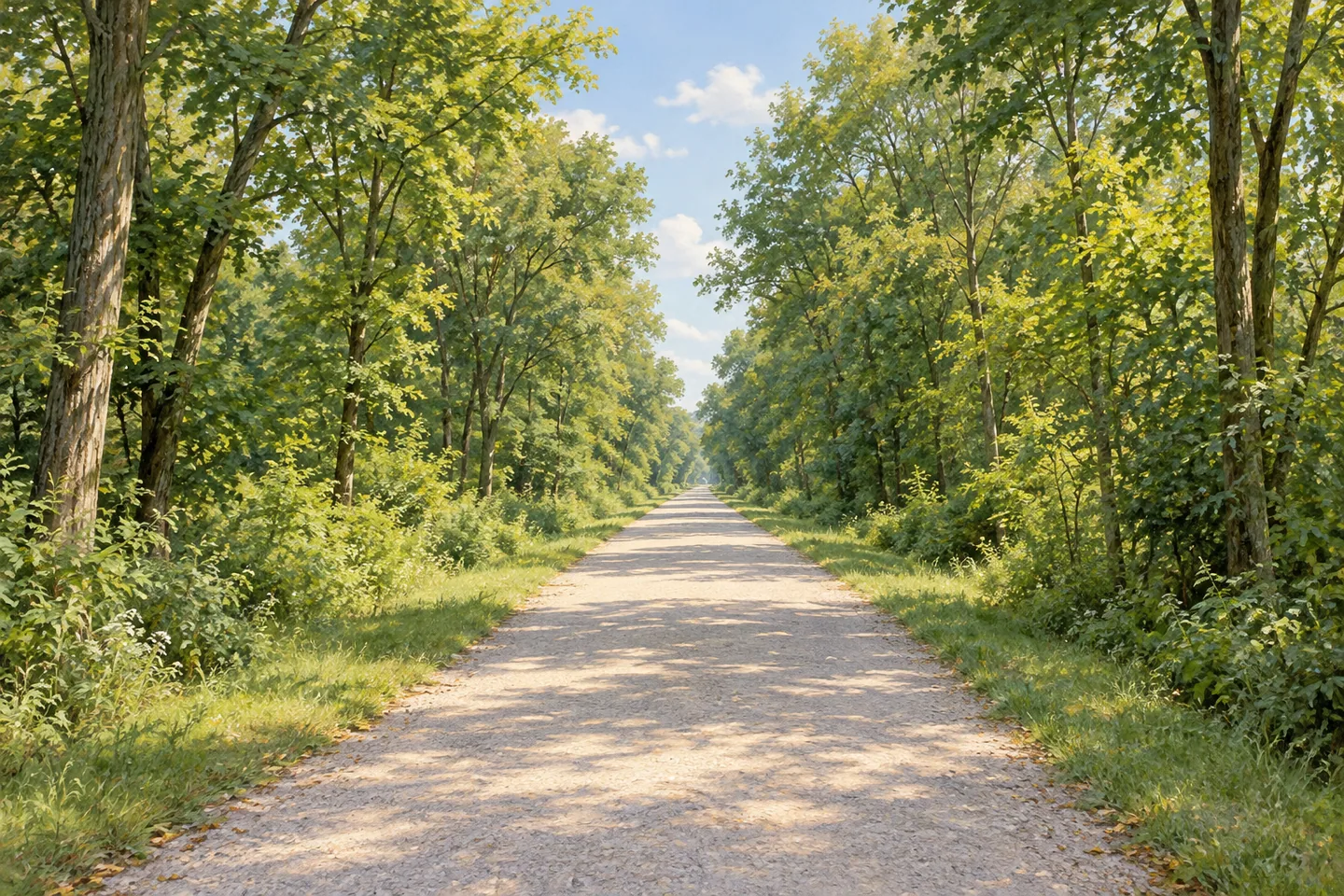
A railway corridor gives a walk a particular kind of direction. Along the Lehigh Valley Trail in southern Monroe County, the route's former transport role remains part of how the landscape makes sense. This is a linear park, approximately fifteen miles in the county's description, connecting the Genesee River area with Rush and Mendon and extending north toward Henrietta. The whole network is the destination; a short outing explores one chosen part of it.
Its railway story reaches back to the Lehigh Valley main line, which opened through Victor, Mendon and Rush on September 1, 1892. The company's larger Buffalo-to-New York route ran for 435 miles. That railway distance should not be confused with the length of today's trail. Here, a small part of a much wider transport system has acquired a new purpose, allowing the old right-of-way to be experienced at walking or cycling pace.
Rochester Junction helps explain why the corridor mattered. Rochester itself was outside the main Buffalo-to-New York alignment, so branches connected the city and other communities with the line. The junction grew into a railway place with a depot, freight facilities and other services. Its name survived the railway's disappearance. The Victorian depot described in the county's history was destroyed by fire in 1972, so the story is not an invitation to find that building standing beside the trail.
The most famous passenger name associated with the line was the Black Diamond Express. Introduced in 1896, it made its final runs in 1959. Passenger service and freight operations followed different timelines, and the corridor's railway use did not end all at once. The county's brochure dates abandonment of the main line to 1976, while local branch operations continued into 1981. Those changing uses make the trail more than a single before-and-after picture.
Public preservation gave the corridor another future. Monroe County acquired the former right-of-way, and the Mendon Foundation proposed a trail partnership in late 1993. A formal agreement followed in February 1995, with substantial trail completion in autumn 2004. The brochure describes a dual arrangement: a broad stone-dust multi-use trail with a parallel equestrian route. That design lets the railway corridor serve several kinds of recreation without pretending its past has been erased.
Remnants and place names can give a chosen section focus. The county's history records preservation of the Genesee River span from a once much longer railway bridge, providing a link toward the Genesee Valley Greenway. Rush, Mendon and Rochester Junction each contribute different chapters of the route's story. Do not expect every historic facility mentioned in the brochure to survive. An absent depot can still explain a settlement pattern or the reason a junction developed where it did.
Choose an access point and return plan from the current county information before setting out; a linear trail does not bring every outing back in a circle. The county lists approaches in Rush and Mendon and at several road crossings, and requires rubbish to be taken away and pets kept leashed. A useful theme is the corridor itself: how it holds a line through different surroundings, and how a place built for trains can become a setting for slower observation. The route has changed its pace while keeping much of its geographical logic.
Fun facts
- The county describes approximately fifteen miles of linear trail park.
- The Lehigh main line through Victor, Mendon and Rush opened in 1892.
- A county–Mendon Foundation agreement was signed in February 1995; substantial trail completion followed in autumn 2004.
Before you go
- Choose a section, access point and return plan rather than assuming a circular route.
- Use the current county map for access and conditions.
- Keep historical railway mileage distinct from today’s trail length.
- Take rubbish away and keep pets leashed.
Capture
- Use the receding trail line to show the corridor’s direction through the landscape.
- Frame surface texture against vegetation rather than requiring a historic building.
- Photograph from designated trail areas and keep clear of road crossings.
 Seneca Park
 Greece Canal Park
 Huyck Preserve
Social
The Lehigh Valley Trail gives a former railway corridor a different pace. #Cre8Travel
Monroe County describes approximately fifteen miles of linear trail park.
The railway main line opened through Victor, Mendon and Rush in 1892.
Rochester Junction connected the main line with branches serving nearby communities.
The Victorian junction depot burned in 1972; its history survives in the place name.
The Black Diamond Express began in 1896 and made its final runs in 1959.
County and community partnership helped bring the trail to substantial completion in 2004.
Which part of an old railway landscape interests you most: its line, its names or its surviving structures?
Hashtags