 Cre8Travel
CRE8TRAVEL · NEW YORK PLACES
Hunts Point Riverside Park
Hunts Point Riverside Park: A Small Garden at the River’s Edge
Discover
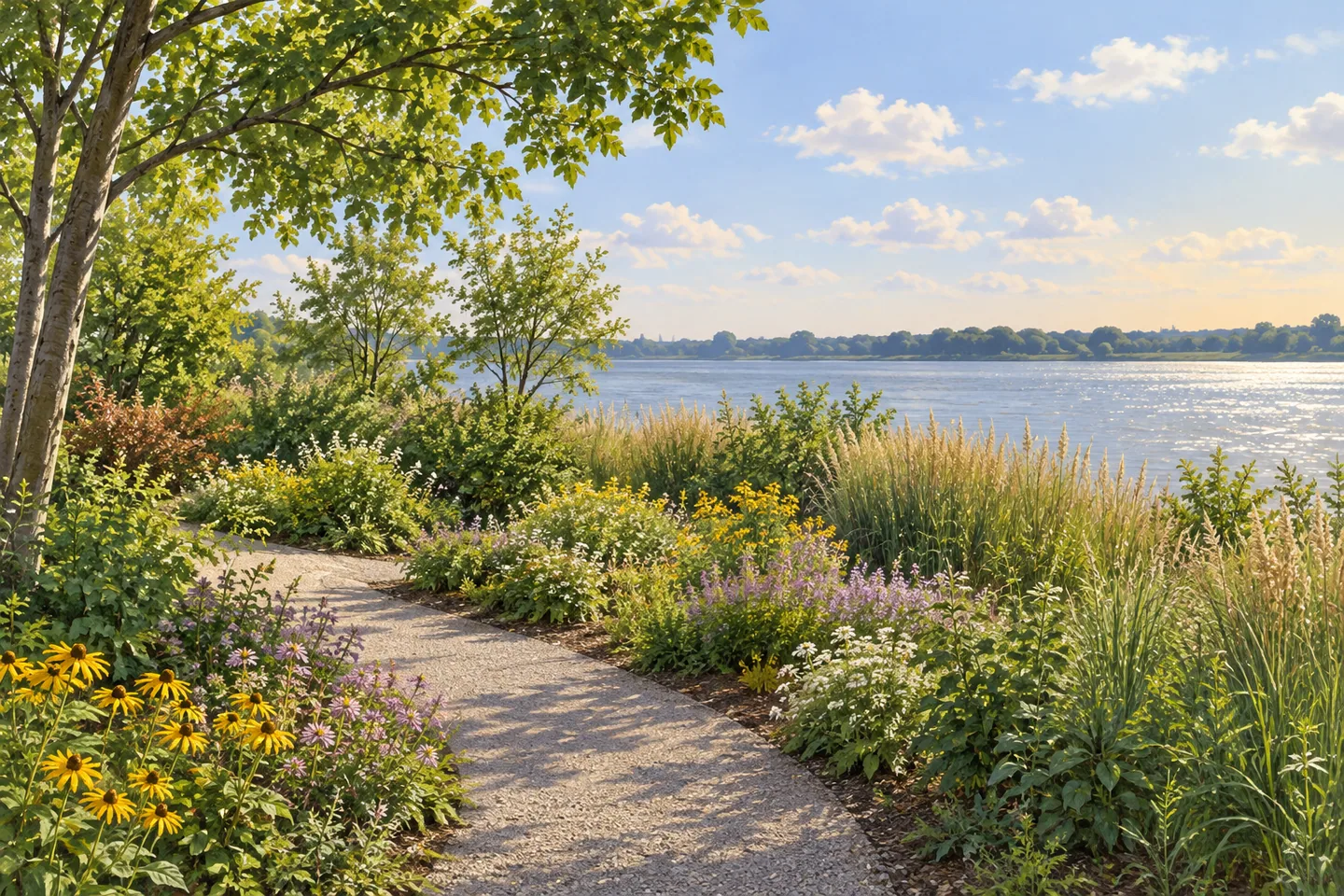
Hunts Point Riverside Park occupies a small waterfront space where Lafayette Avenue meets Edgewater Road in the Bronx. Paths, planted beds and places for recreation bring the neighborhood to the Bronx River. Its scale encourages a close look. The garden and shoreline are near enough to be read together, while the water gives the compact park a wider horizon.
The site’s transformation began with local efforts to reclaim an overlooked street end. The Bronx River Alliance describes how community work and a NYC Parks capital project turned the space into a public park. That history explains why the place has a significance beyond its size: a small piece of accessible waterfront became a focus for outdoor learning and neighborhood activity.
One early moment came in April 1999, when Rocking the Boat launched its first boat at a celebration of the makeshift park. The organization’s June 2026 account looks back on that occasion and the relationship that followed. Groundbreaking for the permanent park took place in 2004. The evolving landscape became closely connected with the neighboring organization’s education work, giving successive groups of young people a place to observe the river and learn about its surroundings.
That relationship also includes practical garden care. Rocking the Boat describes planting native salt marsh grass along a section of the shoreline from 2019 onward. More recently, its environmental apprentices converted the park’s central beds to native planting intended to support pollinators. The work gives the park two related landscapes to notice: the lower planting beside the water and the more concentrated garden spaces in the interior.
Look at their different forms from the public paths. Shoreline grass makes a different pattern from the shrubs, leaves and flowers of a garden bed. The contrast can open a useful conversation with children about how planting responds to its setting. Light, moisture and the shape of the ground influence what grows, while the work of people determines which spaces are planted and how they are maintained.
The park also accommodates ordinary neighborhood recreation. The Alliance lists a spray-play area, barbecue stands, an amphitheater and waterfront facilities. These features make clear that ecological care and shared outdoor use occupy the same small site. A family visit can combine a look at the planting with a pause in the recreation areas, choosing activities according to the season and the facilities available that day.
Education here extends beyond a single garden lesson. Rocking the Boat’s accounts describe young people learning to identify birds and study small aquatic organisms through organized programmes. The park provides the setting for those activities, while specialist staff supply the equipment and instruction. For an independent walk, the simple act of noticing leaf shapes, changes in vegetation and the movement of water offers its own starting point.
Check the park’s current information and the organizers’ calendars if you want a scheduled activity. The adjacent Rocking the Boat campus and THE POINT’s arts facilities have their own programmes and access arrangements. Within the public park, stay on established paths and leave shoreline planting undisturbed. For photographs, frame planted beds against the water or study the transition between the garden and its surroundings. The strongest impression may be how much care and learning a small riverside landscape can hold.
Fun facts
- The park is at Lafayette Avenue and Edgewater Road beside the Bronx River.
- Rocking the Boat launched its first boat here in April 1999.
- Groundbreaking for the permanent park took place in 2004.
- Shoreline salt marsh planting has been part of stewardship work since 2019.
Before you go
- Look at the different planting forms along public paths.
- Use current organizer calendars for scheduled garden or environmental activities.
- Check access separately for neighboring educational and arts facilities.
Capture
- Frame central garden planting with the river beyond, staying on public paths.
- Compare the textures of shoreline grasses and garden foliage without stepping into planted beds.
 Concrete Plant Park
 Stuyvesant Cove Park
 Sherman Creek Park
Social
Hunts Point Riverside Park makes a small Bronx River waterfront space a place for learning. #Cre8Travel
The public park is at Lafayette Avenue and Edgewater Road.
A first boat launch in April 1999 is part of its education history.
Shoreline grass planting has supported stewardship work since 2019.
Native pollinator beds add another layer to the park’s garden story.
Look at the difference between shoreline planting and interior beds.
Check current calendars for organized environmental activities.
How much can you notice in a small riverside garden?
Hashtags