 Cre8Travel
CRE8TRAVEL · NEW YORK PLACES
Sherman Creek Park
Sherman Creek Park: A Garden and Living Shoreline in Inwood
Discover
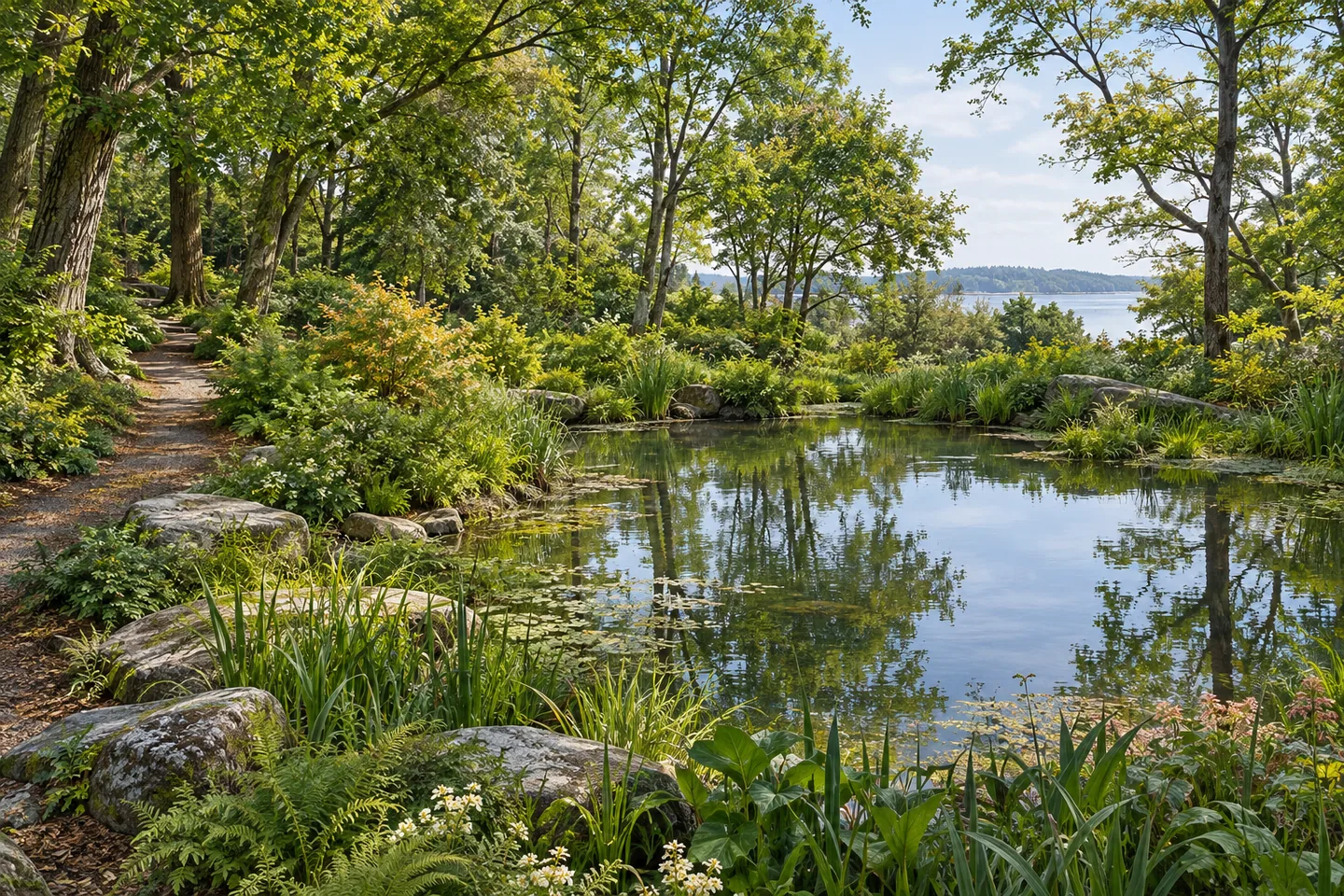
Sherman Creek Park brings gardens, a freshwater pond and a tidal shoreline into one Northern Manhattan landscape. Along the Harlem River in Inwood, the park includes Swindler Cove and the Riley-Levin Children’s Garden. It is a place to notice transitions: from a neighborhood street to a planted path, from woodland shade to lower vegetation near the water, and from a garden’s cultivated detail to the wider river setting.
The landscape grew from work to reclaim neglected waterfront ground. New York Restoration Project describes a process that began with shore cleanups and developed into a managed public park. Working with the state transportation agency and landscape designer Billie Cohen, the organization transformed Swindler Cove with native planting, restored woodland and wetland areas, a freshwater pond and a path through the landscape. The cove opened to the public in August 2003.
Those different elements give a walk a varied rhythm. Woodland planting creates enclosure, while the pond offers another focal point within the park. The children’s garden adds a cultivated setting associated with learning and growing. Give each area a little attention rather than treating the path only as a way to reach the river. Changes in leaf shape, the height of vegetation and the amount of light reaching the ground can make a short stretch of path rewarding.
The tidal edge has its own more recent story. In 2020, NYRP and NYC Parks installed a living shoreline intended to support marsh habitat and respond to erosion. The project combined expanded marsh-grass planting with an artificial oyster reef. NYRP’s 2024 annual report describes a 500-foot reef and continuing monitoring of the restored area, placing the installation within an ongoing programme of care and observation.
The reef’s construction helps explain the term living shoreline. Specialized concrete blocks provide a physical structure, while planting and the development of habitat form the living part of the project. Its purpose includes reducing the force of waves reaching the bank and supporting the wetland. Viewed from established public ground, the shoreline is an opportunity to think about landscape design at the water’s edge, where planting and built elements can work together.
That work also gives the park an educational role. NYRP uses Sherman Creek to demonstrate garden care, public-land stewardship and ecological restoration. A visit can begin with a simple question: what changes between the woodland, pond and tidal planting? Compare their textures and the spaces they occupy. Notice the difference between the still focus of a pond and the broader river outlook, without disturbing the vegetation between them.
The organization describes the neighboring Harlem River Greenway as another part of the setting, with an esplanade, cycling space and cherry planting. Choose the park’s current public entrances and use posted maps to understand the relationship between those spaces. Swindler Cove belongs to this wider Sherman Creek landscape, while nearby Highbridge Park is a separate destination with its own routes and features.
For a visit, check NYRP’s current information if a garden activity or organized programme is part of your plans. Keep to established paths and view the restored shoreline without stepping into it. Photographs can show a sequence of foliage, water and distant river space, or concentrate on the contrast between woodland planting and the more open marsh edge. The park’s most interesting subject is the relationship among those different landscapes and the continuing work that sustains them.
Fun facts
- Swindler Cove opened to the public in August 2003.
- The park includes a freshwater pond and the Riley-Levin Children’s Garden.
- A living shoreline was installed in 2020.
- NYRP’s 2024 report describes a 500-foot artificial oyster reef.
Before you go
- Use posted maps to distinguish park paths from neighboring Greenway routes.
- View the restored shoreline from established public ground.
- Check NYRP’s current calendar for organized garden and learning activities.
Capture
- Compare the textures of woodland foliage and lower shoreline planting from a public path.
- Use the pond or river as a backdrop for a garden composition without entering planted edges.
 Stuyvesant Cove Park
 Newtown Creek Nature Walk
 Bushwick Inlet Park
Social
Sherman Creek Park brings woodland, garden and tidal planting to Inwood. #Cre8Travel
Swindler Cove opened to the public in August 2003.
A freshwater pond adds another focus to the park’s landscape.
The living shoreline combines marsh planting and an artificial oyster reef.
NYRP records the shoreline installation in 2020 and continued monitoring afterward.
Compare the vegetation between woodland shade and the tidal edge.
Use established paths and current maps for your park visit.
Which landscape transition would you look at first?
Hashtags