 Cre8Travel
CRE8TRAVEL · NEW YORK PLACES
Highland Park
Highland Park: A Designed Landscape that Looks Effortless
Discover
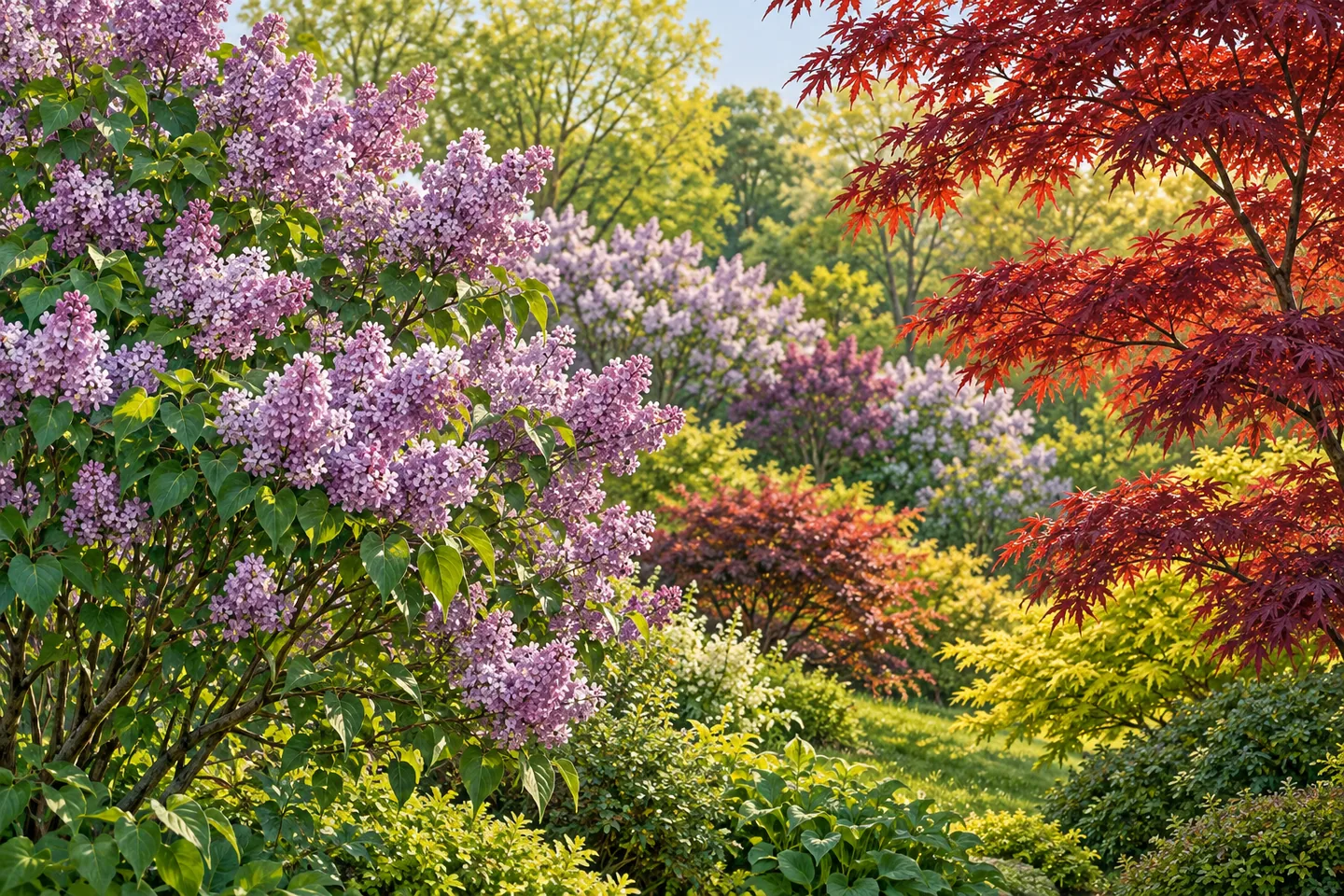
Highland Park can look like an especially fortunate arrangement of trees and flowers. Its deeper appeal is that the arrangement was planned. Frederick Law Olmsted designed this Rochester landscape as an arboretum, or tree garden, with planting intended to seem natural. Across its 150 acres, collections, paths, a conservatory and older estate gardens offer different ways to see how horticulture and design can shape an outing.
The lilacs are the best-known introduction. The county describes more than 1,200 lilac shrubs and a festival each May, but the plant collections give the park a story beyond one flowering season. Japanese maples, magnolias, dwarf evergreens in the rock garden, rhododendrons and azaleas provide contrasting forms. The pansy bed offers a different kind of design: thousands of plants form an oval floral carpet whose pattern changes from year to year. A collection can be both a study of plants and a carefully composed scene.
Lamberton Conservatory carries that interest indoors. Originally constructed in 1911, it was named for Alexander B. Lamberton, a former Parks Board president. Specialized plant exhibits gave visitors another way to encounter the botanical world beyond the outdoor arboretum. The structure's later history is equally interesting. By 2006, the building had deteriorated badly; in 2007, the county pursued a detailed historical reconstruction rather than allowing the original design to disappear.
The reconstructed section follows the historic form while using renewed materials. The old steel framework served as a pattern for galvanized replacements. Original elements, including the interior cypress gutter system and operable ridge vent, were salvaged and reused. Nearly a thousand specially formed new glass panes became part of the restored section. These details turn a greenhouse visit into more than a look at plants: glass, framing and ventilation are also part of the conditions that make those collections possible.
Warner Castle and its Sunken Garden introduce a separate design history within the park. The residence was built in 1854 for Horatio Gates Warner. Frank and Merry Dennis purchased it in 1912 and later commissioned landscape architect Alling Stephen DeForest to develop the gardens. The Sunken Garden was completed in 1930. Its enclosed form offers a very different spatial experience from an open arboretum landscape, showing how changes in level and stonework can direct attention as strongly as planting.
That garden also required renewal. After deterioration led to closure in 1988, infrastructure restoration was completed in 1991, followed by historically appropriate planting work in 1993. The work included repointing walls, replacing missing stones and renewing paving. It is another reminder that a historic garden is maintained through decisions and labor, rather than preserved simply by leaving it alone. Today's scene carries both the earlier design and later efforts to recover it.
Build a visit around the aspects that most interest you. Outdoor plant collections, the conservatory and the Sunken Garden can each reward a different pace. The conservatory has its own admission and opening arrangements; consult the county before including it. For photography, shift between a specimen's shape and the space around it. Highland Park becomes richer when the flowers remain beautiful while the planning, construction and care behind their setting also come into view.
Fun facts
- Highland Park is a 150-acre planned arboretum designed by Frederick Law Olmsted.
- Lamberton Conservatory was originally constructed in 1911.
- The Sunken Garden at Warner Castle was completed in 1930 to a design by Alling Stephen DeForest.
- Garden infrastructure was restored in 1991, followed by historically appropriate planting in 1993.
Before you go
- Plan the conservatory separately around its current admission and opening arrangements.
- Look beyond lilacs to contrasting tree and shrub collections.
- Choose a theme such as plant form, glasshouse structure or garden levels.
Capture
- Compare one plant’s form with the wider collection around it.
- Study the rhythm of glass and framing at the conservatory from a permitted visitor position.
- Use the Sunken Garden’s changes in level as a composition idea without blocking paths.
 Domino Park
 Ellison Park
 Durand Eastman Park
Social
Highland Park’s natural-looking arrangement is a designed arboretum landscape. #Cre8Travel
Olmsted’s Rochester park contains plant collections that reward attention beyond lilac season.
Lamberton Conservatory dates to 1911, with a later detailed historic reconstruction.
Salvaged cypress gutters and a reused ridge vent connect the glasshouse with its earlier structure.
Warner Castle was built in 1854; its Sunken Garden was completed in 1930.
The Sunken Garden’s restoration included walls, paving and historically appropriate planting.
A botanical outing can also be a study of glass, stone and changing levels.
Which would you explore first: the outdoor collections, the conservatory or the Sunken Garden?
Hashtags