 Cre8Travel
CRE8TRAVEL · NEW YORK PLACES
Hermon A MacNeil Park
MacNeil Park: Trees and Open Water in College Point
Discover
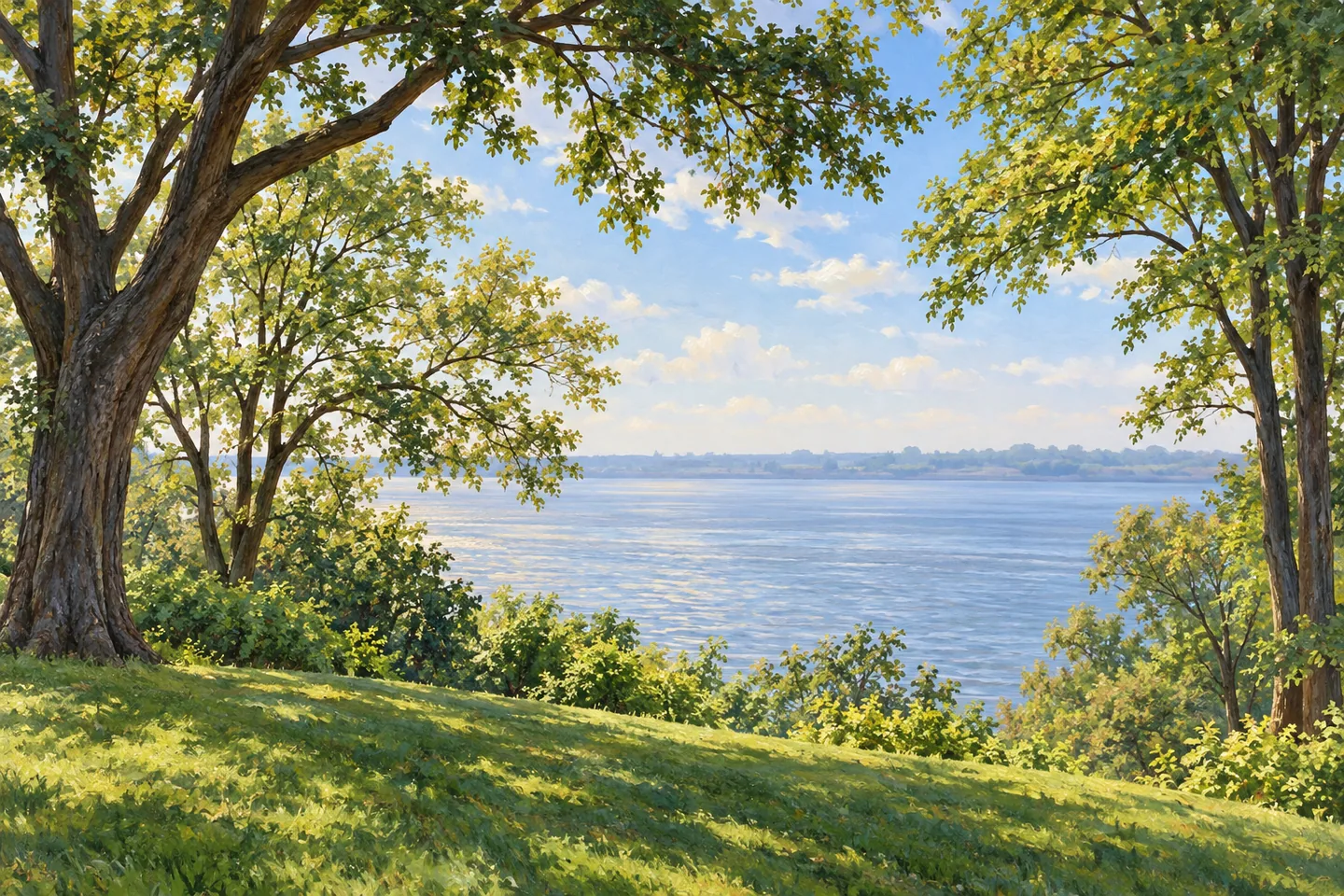
Hermon A. MacNeil Park gives College Point a broad waterfront horizon. The East River, the Bronx and the Whitestone Bridge form part of the outlook, while mature trees and a rise in the ground add closer points of interest. This Queens park combines the remains of an estate landscape with neighborhood recreation, making a visit about more than reaching the water's edge.
The land's history is closely tied to the name College Point. A college was planned here in the 1830s, but a financial crisis changed the proposed stone building into a more modest wooden structure. The school opened in 1839 and closed a decade later. Its building served other educational uses before being demolished in 1900. That early project left a name in the neighborhood and materials that took on a different purpose.
In 1848, Mary Rogers used the unused blue-gray stone to build a mansion as a wedding gift for her daughter Mary and William Chisolm. The house stood on the high ground, giving the estate a strong relationship to the surrounding water. Longtime residents also knew the property as Chisholm's Park, a name preserved in the local stewardship group's account of its history.
The city bought the mansion and surrounding land in 1930 to establish a public park. For part of the summer of 1937, the house served as Mayor Fiorello LaGuardia's summer City Hall. It was demolished in 1941; a flagpole on the hill marks its former site. The change from private estate to public recreation can still be understood through the ground itself, even though the building has gone.
The present name dates to 1966 and honors sculptor Hermon Atkins MacNeil. His home and studio stood beside the park, on land later developed for housing. Within the public landscape, the hill, trees and open outlook offer a way to consider that artistic connection without needing an indoor collection. Look at how trunks and branches frame the distant bridge, or how the slope changes the shape of the view.
The trees provide their own reason to slow down. Coastal Preservation Network lists linden, pine, sassafras, sycamore, horse chestnut, ginkgo and maple among the park's planting. Differences in bark, leaf form and canopy create a varied setting for a short circuit. Sports and play add another rhythm, with a baseball field, courts and a playground serving people who use the park regularly.
Waterfront improvements have renewed part of this landscape. A seawall and esplanade project completed in 2019 added fencing, a kayak launch and a designated fishing area. Later work has been proposed for another stretch of seawall and waterfront stairs. Choose public paths according to current notices, since those proposals do not establish that the whole waterfront route is available.
For a relaxed visit, combine an outlook with time beneath the trees and a look toward the old mansion site. Keep shoreline habitat undisturbed and use designated public routes. The park's interest lies in the relationship between these elements: an estate hill, a working neighborhood's recreation spaces and water that gives the landscape room to open out.
Fun facts
- The city purchased the estate for a public park in 1930.
- The former mansion briefly served as a summer City Hall in 1937.
- The park received its MacNeil name in 1966.
- A seawall and esplanade renewal was completed in 2019.
Before you go
- Combine a waterfront outlook with the tree-lined interior.
- Look toward the hill to understand the former estate setting.
- Follow current notices around waterfront works.
Capture
- Frame distant water or bridge views through the trees from a public path.
- Compare bark and canopy textures without entering planted or closed areas.
 Rocky Point Pine Barrens State Forest
 Washington Market Park
 Seward Park
Social
MacNeil Park opens College Point toward the East River. #Cre8Travel
Its hill once held a stone estate mansion.
The city bought the property for a public park in 1930.
A flagpole marks the former mansion site.
The park’s name honors sculptor Hermon Atkins MacNeil.
Linden, pine, sassafras and other trees add variety to a walk.
Check current notices before following a waterfront route.
Would you start with the river view or the tree canopy?
Hashtags