 Cre8Travel
CRE8TRAVEL · NEW YORK PLACES
Duane Park
Duane Park: A Small Garden With a Long Tribeca Story
Discover
Duane Park occupies a small triangle where Duane Street meets Hudson Street in Tribeca. Its trees, benches and planted borders make a compact place to pause amid the surrounding streets. The shape is central to its appeal. A remnant created by intersecting street grids became a garden, and successive generations have found different ways to fit greenery and everyday neighborhood use into that limited space.
The Friends of Duane Park traces the triangle’s early planting to 1804, when formal beds, trees and an iron fence organized the site. More trees followed in 1825. As the neighborhood grew into a commercial district, warehouses and transport routes changed the setting around the garden. The little green space remained, although its condition and the expectations placed upon it shifted with the streets outside.
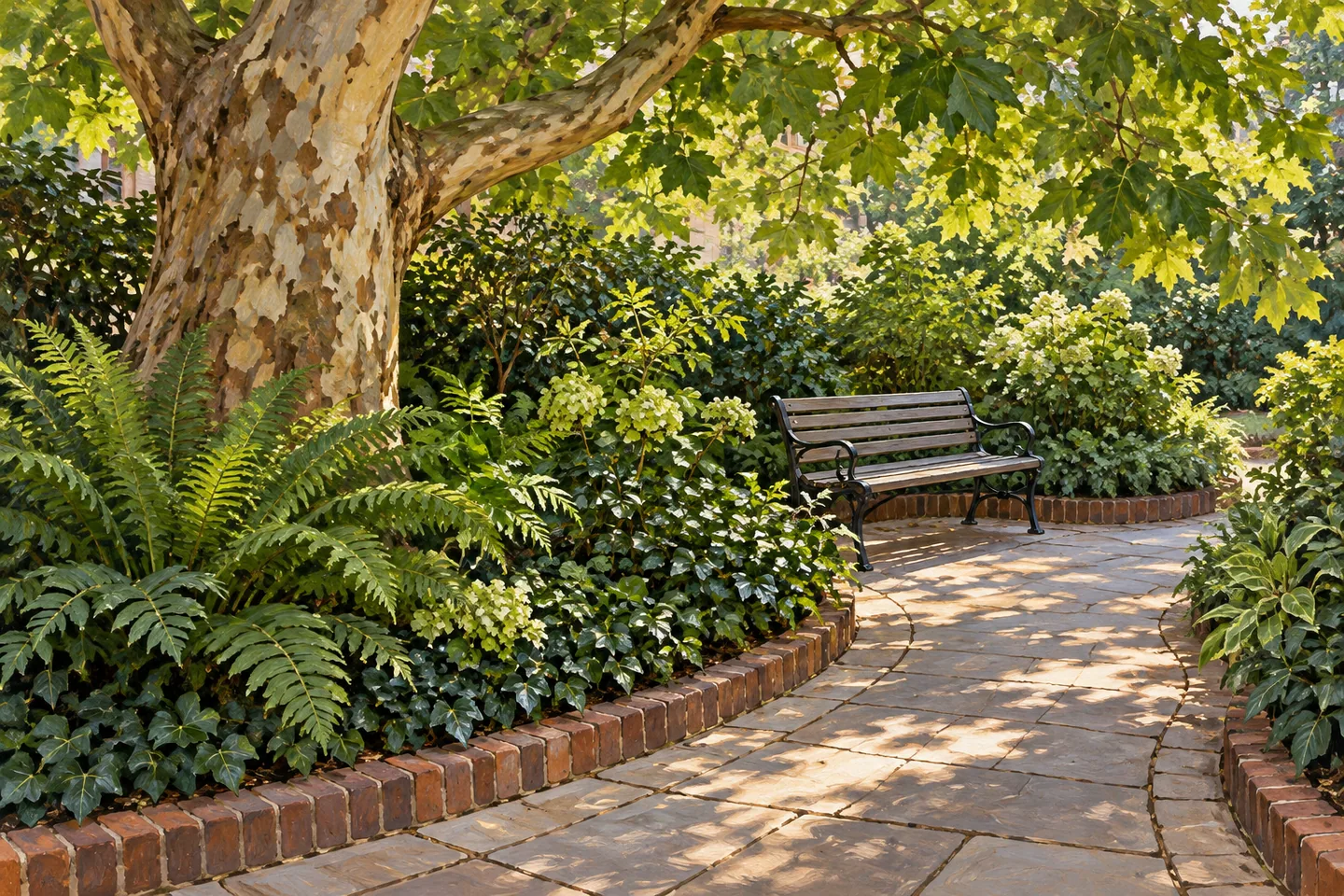
In the late nineteenth century, Calvert Vaux brought another approach to the park. His design made paths part of the garden experience, with grass, shrubs and a small flower bed arranged around them. The intention was to create quiet and a feeling of enclosure even within a very small urban plot. That idea still provides a useful way to look at Duane Park: the important experience is the relationship between a seat, a path and the planting beside it.
The twentieth century changed that balance. A 1940 redesign replaced much of the planted ground with paving and provided benches for workers in the surrounding warehouse district. Street alterations in 1954 further reduced the triangle. These changes explain why the park’s history involves its edges as much as its interior. A few feet of planting or pavement can make a substantial difference in such a compact space.
Neighbors formed the Friends of Duane Park in 1994 and began improving the garden through fundraising, planting and regular care. A more extensive redesign followed in the late 1990s, recovering the greener, quieter character associated with the Vaux approach. The result is a neighborhood landscape maintained through many small acts as well as larger projects. A bench or planted border can be read as part of that continuing effort.
The organization’s gardening account describes a layered landscape beneath London plane trees. Shrubs, ferns, perennials, evergreen groundcover and seasonal planting give the small beds more variety than a quick glance suggests. Care includes irrigation, pruning, seasonal adjustments and work on the park’s furnishings. Look at how foliage occupies the ground beneath the trees and how the borders define places to sit. Changes in leaf shape and texture can be as rewarding as flowers.
There is also a new chapter under discussion. A restoration project launched in 2021 aims to recover parts of the park’s historic footprint. Updates through September 2026 describe continuing agency review and community activity, including temporary grass laid for an event. Those plans offer context for the park’s future; the garden visible today remains the starting point for a visit.
Treat Duane Park as a short, attentive stop during a walk through Tribeca. Sit for a while, look from the tree canopy down to the planted ground and notice how the triangle meets the surrounding street pattern. Check current signs if works affect access, and use the Friends’ updates for project news. Its strongest attraction is the everyday pleasure of a carefully tended green corner in a dense neighborhood.
Fun facts
- The Friends’ history records formal garden planting in 1804.
- Calvert Vaux redesigned the park’s paths and planting in the late nineteenth century.
- Street alterations reduced the park in 1954.
- The Friends of Duane Park formed in 1994.
Before you go
- Plan a short garden pause as part of a Tribeca walk.
- Look closely at groundcover and foliage beneath the London plane trees.
- Read current restoration updates before assuming the proposed expansion is complete.
Visitor perspectives
Thomas V described the small, triangular park as a welcome, well-maintained green space during a June 2026 visit to Tribeca.
Capture
- Use the converging edges of the triangle to frame the garden within its streetscape.
- Photograph foliage textures and benches from the public path, allowing people their space.
 Carl Schurz Park
 Barretto Point Park
 John Jay Park (Manhattan)
Social
Duane Park turns a small Tribeca triangle into a neighborhood garden. #Cre8Travel
Its shape follows the meeting of street grids.
Formal planting was recorded here in 1804.
Vaux’s nineteenth-century approach brought paths into the garden.
Look beneath the trees for ferns, perennials and evergreen groundcover.
The Friends of Duane Park has supported its care since 1994.
The historic-footprint restoration remains a developing project.
A small green corner can hold a surprisingly long neighborhood story.
Hashtags