 Cre8Travel
CRE8TRAVEL · NEW YORK PLACES
Carl Schurz Park
Carl Schurz Park: Garden Layers Beside the East River
Discover
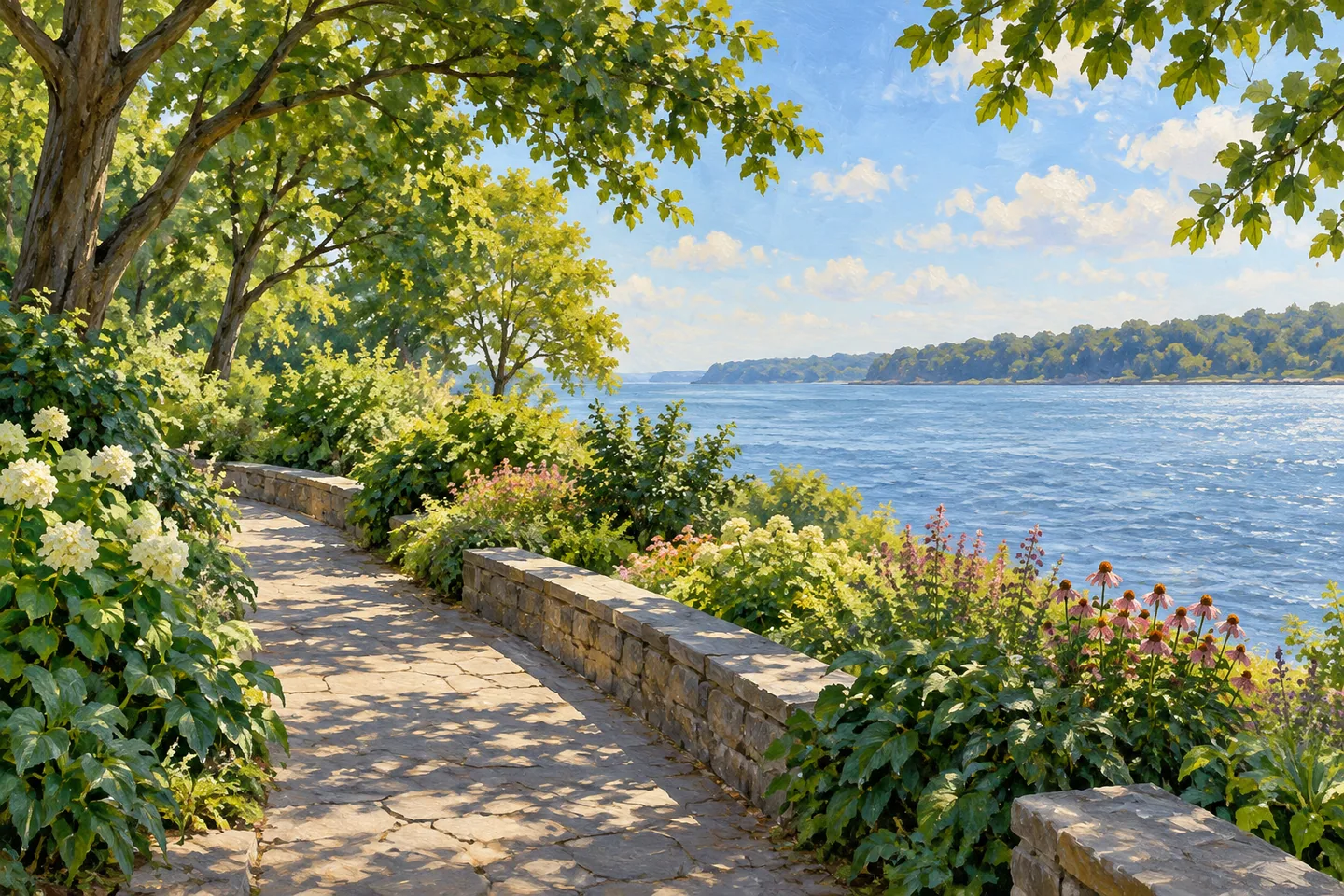
Carl Schurz Park brings a long river outlook and closely tended gardens together on Manhattan’s Upper East Side. Between East End Avenue and the East River, its paths connect planted corners, lawns and the raised waterfront promenade. The river gives the visit a broad horizon; the gardens offer another scale, where a few steps reveal changes in shade, foliage and seasonal flowers.
The park’s present landscape owes much to a major reworking during the construction of the riverside drive. The Conservancy’s history describes relandscaping under Maud Sargent beginning in 1939, with a new esplanade above the roadway. The foot of East 86th Street was closed to traffic to create the Cherry Allée, and broad stairs linked the interior to the promenade. In 1942, the waterfront walk was dedicated as John Finley Walk. These changes help explain the park’s shifts in level and the relationship between its inward gardens and outward views.
Neighborhood care has added a more intimate layer. The volunteer park organization incorporated in 1974 and adopted the Conservancy name in 2006. Its horticultural work includes the Peter Pan Garden, the South Woodland Garden and the paired gardens at the East 86th Street esplanade entrance. Each gives a different setting for looking at plants: a sheltered garden corner, woodland shade or a more exposed arrival beside the river. The contrast is part of the pleasure of walking slowly through the park.
Look beyond the brightest flowers to the quieter structure of the planting. Trees, shrubs and ground-level vegetation create layers, while open lawns provide visual breathing space. The Conservancy records restoration of two passive lawns in 2006–07 and continuing work on planting, pruning and seasonal bulbs. A garden here is a maintained landscape, with its appearance shaped by successive decisions about light, soil, growth and the uses of neighboring paths.
The smallest visitors have also been studied. A Conservancy project with the American Museum of Natural History sampled bees during 2019 and 2021. Combining that work with additional observation records produced a total of 47 recorded species. The study describes flowers providing food across the growing season and explains why retained leaves, stems and varied soil can support nesting habitat. Those findings offer a useful way to read a garden: an apparently untidy patch may have a purpose beyond its appearance.
That ecological view changes what deserves attention on a visit. Notice the different shapes of flowers, where sunlight reaches the ground and how beds connect with shrubs and trees. Observe insects from the path without handling them or disturbing vegetation. The study is a historical record of research, while the experience on any particular day will follow the weather and season.
For a practical starting point, use the Conservancy’s current map and check posted directions for the entrances that suit your group. Its Hoop Stairs restoration appeal describes an ongoing project, so follow current signs when moving between levels. Gracie Mansion has its own visiting arrangements; the gardens and public promenade offer a complete park walk in themselves. Leave time both for the open river view and for the quieter planting that rewards a closer look.
Fun facts
- Relandscaping under Maud Sargent began in 1939.
- The river promenade was dedicated as John Finley Walk in 1942.
- The volunteer organization incorporated in 1974.
- A 2019 and 2021 bee study, combined with additional records, documented 47 species.
Before you go
- Check the current park map and entrance signs when choosing a route between levels.
- Look at shaded garden planting as well as the river outlook.
- Observe insects and plants from public paths without disturbing them.
Visitor perspectives
Thomas V, visiting in June 2026, appreciated the river and skyline views while noting traffic noise from the nearby highway.
Capture
- Place a foreground of foliage against the open river view from a public path.
- Use changing light across shrubs and flowers for detail photographs; keep stairs and entrances clear.
 Hammond Pond Wild Forest
 Duane Park
 Barretto Point Park
Social
Carl Schurz Park pairs riverside views with intimate Yorkville gardens. #Cre8Travel
The park’s changing levels reflect its twentieth-century landscape redesign.
John Finley Walk received its name in 1942.
Look for the contrast between woodland planting and the East River horizon.
Volunteer garden care has shaped this neighborhood landscape for decades.
A historical bee study offers another way to notice the planting.
Follow current entrance signs, especially around restoration work.
Would you begin with the river outlook or a quiet garden corner?
Hashtags