 Cre8Travel
CRE8TRAVEL · NEW YORK PLACES
Clove Lakes Park
Clove Lakes Park: Water, Stone and a Staten Island Valley
Discover
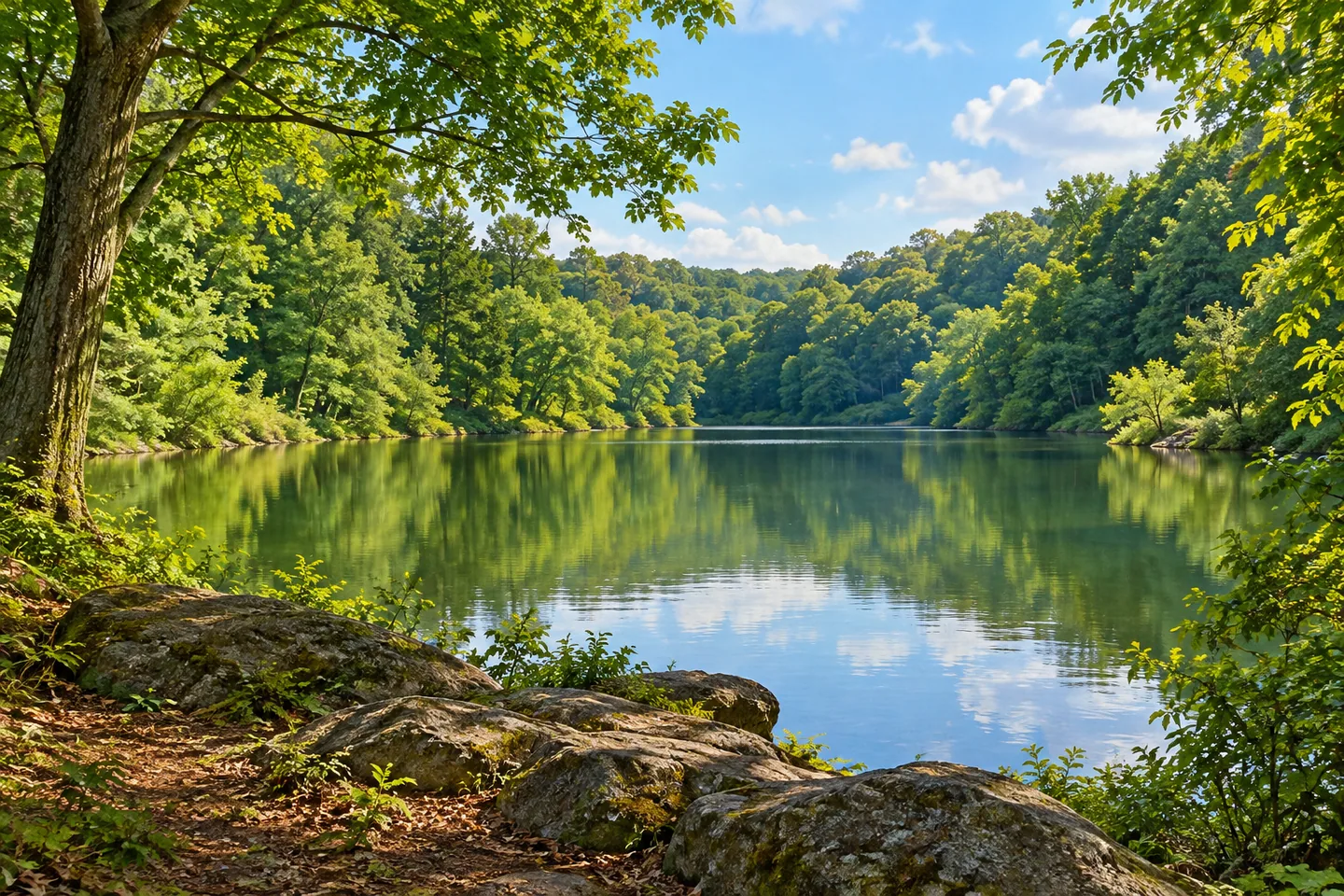
Clove Lakes Park gives Staten Island a landscape of water, wooded paths and open recreation areas within a green valley. The lakes provide a natural focus for a walk, but stone bridges, exposed rock and a fieldstone building invite attention along the way. The park’s interest comes from those layers: a landform shaped over a long period, water changed by human work, and public spaces developed around both.
Its name comes from the Dutch word for a cleft, referring to the valley between Emerson and Grymes Hills. NYC Parks links the valley and brook to the area’s glacial past. That broader landform is useful to keep in mind when looking at the lakes. They belong to a connected landscape rather than a single isolated pool, with changes in level and vegetation influencing the views along the paths.
The water also carries a history of mills and storage. Abraham Britton built a dam and grist mill in 1825, creating the body of water known as Clove Lake. A further dam associated with the Brooks estate created Brooks Lake in the nineteenth century. Martling Lake had an icehouse nearby. These earlier uses help explain why a park walk encounters several linked bodies of water, each with its own place in the valley’s history.
The move toward a public park developed over time. Preservation advocates argued for the area’s landscape value, and the city acquired land around Brooks Dam in 1921 and 1923. Further additions expanded the park in later decades. During the early 1930s, work crews developed paths, stone bridges and facilities that gave the water and wooded ground a more organized public setting.
The surviving stonework is especially rewarding to notice. Bridges give short crossings a sense of occasion, while the fieldstone building adds a different scale beside the landscape. NYC Parks records its original design by O. A. Madsen and later renovation by Aymar Embury II. Now used for borough Parks offices, its exterior can be appreciated as part of the park’s material character without assuming access to the interior.
Natural features offer another set of details. The Parks Department identifies serpentine outcrops and an old tulip tree among the landscape’s notable elements. Compare rock texture with bark and leaf shapes as you move through the public paths. The Leeseberg Perennial Garden, completed in 2001, adds a more deliberately planted space to that wider setting, giving a visit another contrast between woodland and garden care.
The park also has an active side, with playgrounds, courts and playing fields. City guidance places much of that recreation near the southeastern part of the park, around Victory Boulevard and Clove Road. A group can choose a visit focused on play or allow time for a quieter walk, using current maps to select suitable paths and facilities rather than trying to cover everything at once.
Check the latest Parks information before planning specific activities. Its current notice suspends fishing in Clove, Brooks and Martling Lakes. For a walking visit, keep to established paths, protect planting and tree roots, and enjoy the water from public ground. Photographs can frame a bridge with foliage or place reflections beside the texture of stone. A little time spent looking closely reveals how water, working history and public landscape design meet within this Staten Island valley.
Fun facts
- An 1825 dam and grist mill created Clove Lake.
- The city acquired land around Brooks Dam in 1921 and 1923.
- Several stone bridges date to the early 1930s.
- The Leeseberg Perennial Garden was completed in 2001.
Before you go
- Choose current mapped paths and facilities that suit your group.
- Check current activity notices, including the fishing suspension.
- View notable trees and planting without leaving paths or disturbing roots.
Capture
- Frame a stone bridge with foliage from a public path.
- Look for reflections beside rock and bark textures, keeping clear of planted edges.
 WNYC Transmitter Park
 Willowbrook Park
 Pugsley Creek Park
Social
Clove Lakes Park brings water, woodland and stonework together in a Staten Island valley. #Cre8Travel
An 1825 dam helped create Clove Lake.
Several lakes reflect different chapters of the valley’s working history.
Stone bridges from the early 1930s add detail to a walk.
Look closely at exposed rock as well as trees and water.
The Leeseberg Perennial Garden adds a cultivated landscape within the park.
Check current Parks notices before planning a specific activity.
Would you begin with a lakeside view or the texture of a stone bridge?
Hashtags