 Cre8Travel
CRE8TRAVEL · NEW YORK PLACES
WNYC Transmitter Park
WNYC Transmitter Park: A Broadcast Site Becomes a Greenpoint Waterfront Garden
Discover
WNYC Transmitter Park brings Greenpoint Avenue to the East River through a small landscape of lawn, planting and waterfront paths. The Manhattan outlook is an immediate attraction, but the park’s shape and history offer more to notice. A former radio-transmission site became a public space where a restored waterside slip, a pier and garden care connect the neighborhood with the river.
The name recalls the WNYC AM broadcasting towers that occupied the site from 1936 to 1990, according to Friends of WNYC Transmitter Park. The landscape also has an earlier association with a Greenpoint ferry landing. Those two uses help explain the site’s connection with both the city beyond the water and the movement of people through the neighborhood. Its present public role adds another chapter to that long waterfront history.
The park opened in 2012 after redevelopment. WXY and landscape architect Donna Walcavage worked on its design and the wider open-space planning context. The project transformed a decommissioned transmission site into a place for walking, play and passive recreation, retaining a sense of the earlier shoreline while creating new ways to approach it.
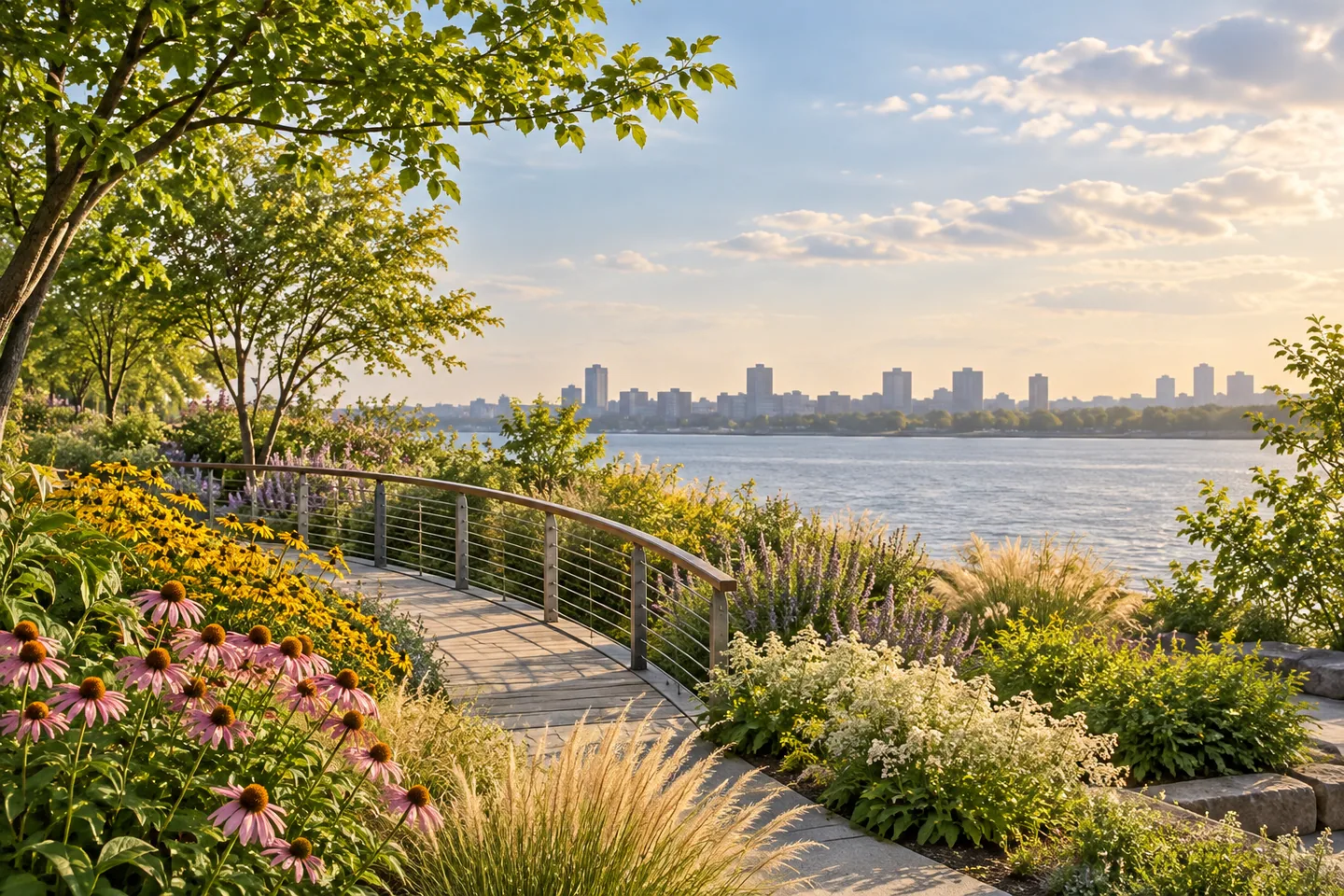
One of the most distinctive design elements is a curved bridge over a restored historic slip. The designers describe how that arrangement makes room for wetland habitat and a terraced edge beside the water. Look at the relationship between the crossing and the planted space below it. The bridge is more than a connection from one part of the park to another: its curve gives a different view of the small inlet and the wider river beyond.
The pier introduces another change in perspective. WXY describes a branching arrangement of pods and connecting bridges, rising gradually along its length. Those forms create several places from which to look across the water. Moving along a public route can change the angle of the Manhattan skyline, the amount of river in the view and the relationship between the park behind and the city ahead.
The gardens provide a closer scale. The Friends’ current account describes pollinator planting, cleanup work and nature-based workshops, supported by volunteers. Its steering group formed in 2016 and works with NYC Parks. That care helps make the park a neighborhood landscape as well as a destination for a skyline photograph. Look for changes in flower shape and foliage texture, observing insects from the paths without disturbing their habitat.
Recreation adds another layer to the visit. The Friends lists a lawn and benches, plant gardens and a nautical-themed children’s play area with seasonal water play. Different parts of the park can therefore suit different members of a group. A visit might begin with the playground and end at a bench, or simply follow the waterfront paths with time to pause beside the planting.
Use the Friends’ current visiting information and posted directions when planning activities or access. Any programme or interior use of the old transmitter building has its own arrangements; the outdoor park offers a complete visit without them. For photographs, compare the wider river horizon with a garden detail, or use the curved bridge to organize the lines of a composition. Leave circulation space for other visitors. The park is most rewarding when the well-known skyline view becomes a starting point for noticing the smaller landscape in front of it.
Fun facts
- WNYC AM broadcasting towers occupied the site from 1936 to 1990.
- The park opened in 2012.
- A curved bridge crosses a restored historic slip.
- The Friends’ volunteer steering group formed in 2016.
Before you go
- Look at the restored slip and garden planting as well as the skyline.
- Use the current Friends information for events and public visiting details.
- Keep bridges and paths clear while taking photographs.
Visitor perspectives
During an August 2024 visit, carpediem2019 found the small park welcoming to families but felt additional care and design investment could improve its waterfront potential.
Capture
- Use the curved bridge’s lines to frame the river from a public route.
- Pair a wide waterfront view with a close study of garden foliage, keeping planted beds undisturbed.
 Bushwick Inlet Park
 Clove Lakes Park
 Willowbrook Park
Social
WNYC Transmitter Park gives a former broadcast site a new public role in Greenpoint. #Cre8Travel
Its radio towers operated from 1936 to 1990.
The park opened in 2012.
A curved bridge crosses a restored historic waterfront slip.
The pier’s branching forms create changing views across the river.
Volunteer garden care adds a close-up subject beside the skyline.
Keep to public routes and check current information for organized activities.
What would you photograph after taking in the Manhattan view?
Hashtags