 Cre8Travel
CRE8TRAVEL · NEW YORK PLACES
Cass Park
Cass Park: Ithaca Recreation on a Landscape with a Past
Discover
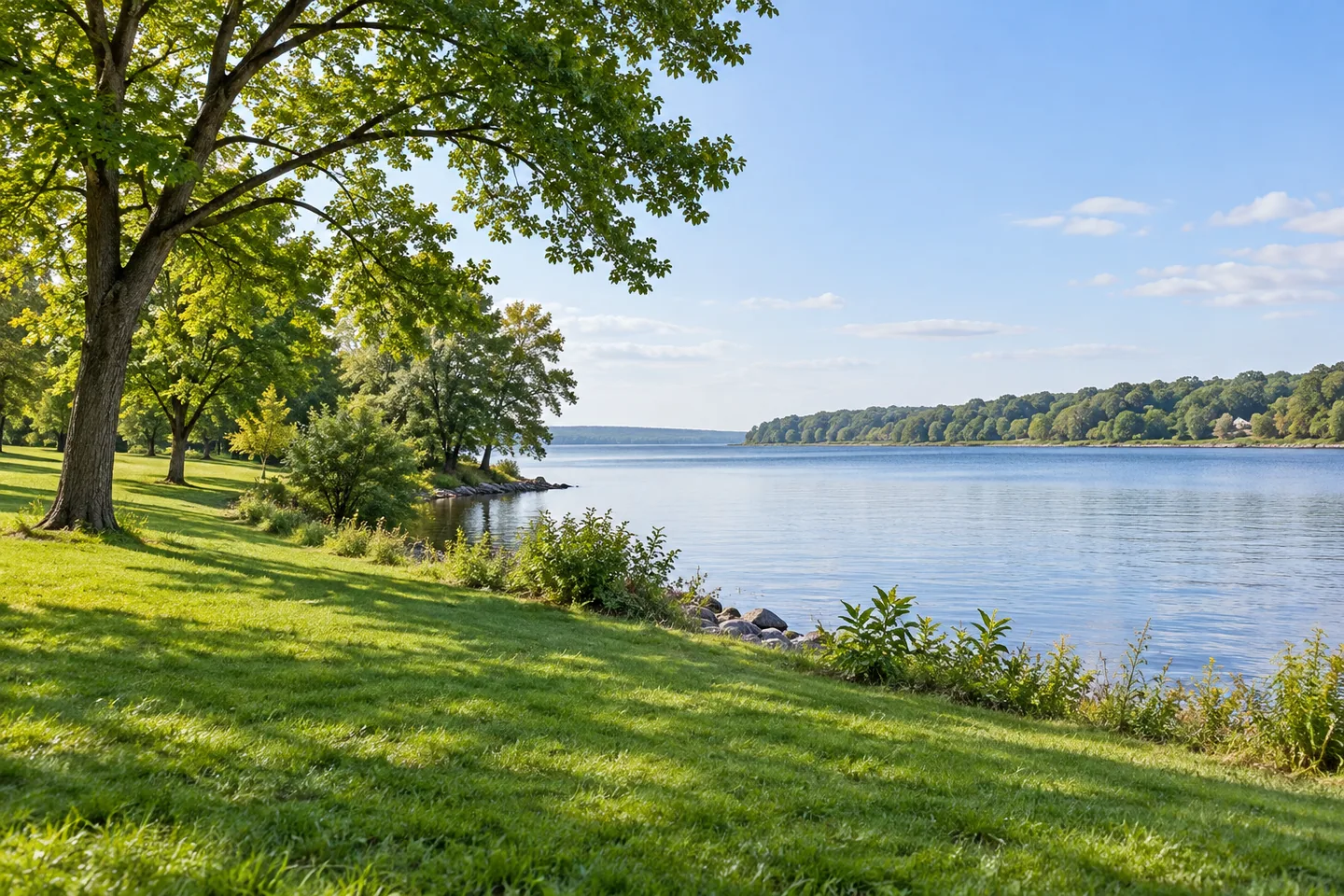
Cass Park is a recreation landscape with an unusually varied past. Its rink, pool, playing fields and waterfront paths occupy land assembled by the City of Ithaca over several decades. Before the park's development, parts of the area had been considered for a lakefront park, planted as an orchard and used for aviation. That history makes an ordinary choice between a walk, a game or a skating session feel connected to a much longer story about the city's changing use of its waterfront.
One early acquisition came in 1908, when the city bought land between the Inlet and the lakefront. Another parcel arrived in 1925 through land put in trust for Ithaca by former mayor Newman and others. The park history describes these transactions separately, a useful reminder that today's open recreation ground did not begin as a single finished site. Its shape emerged through several decisions, each made in the context of a different moment in the city's development.
The area's aviation chapter followed work associated with the Barge Canal. Dredging material filled marshland west of the Inlet, and peach trees were planted there. The orchard was unsuccessful, and the ground became a flying field. Thomas-Morse Aviation Company leased the area for aircraft testing and an aviation school around the First World War. A municipal airport later occupied approximately 122 acres. Those earlier uses belong to the land's history, rather than to facilities visitors should expect to find operating in the park.
Further acquisitions continued in 1929 and 1966, including land associated with the Lehigh Valley Railroad's old loop. A flood-control channel provided more dredged material for the area that became the southern portion of Cass Park. Nearby marina development took place around the same period as the park's transformation. The sequence reveals a landscape shaped by transport, water management and recreation, with different projects contributing to its eventual public use.
Development continued through 1971 and 1972. The covered ice rink opened in November 1972, followed the next summer by an Olympic-sized swimming pool and ball fields. Today the park, rink and pool are programs of the Ithaca Youth Bureau, a city department. Keeping that relationship in mind helps explain the emphasis on community recreation: this is a place organized around different activities and facilities, rather than a single attraction with one prescribed way to experience it.
The outdoor park includes playing fields, two playgrounds, tennis and pickleball courts, a picnic pavilion, and waterfront and fitness trails. The rink supports both ice skating and an off-season roller-skating program, while the pool has a separate pattern of use. An outing can therefore concentrate on one facility or simply on the outdoor setting. The presence of several options does not imply that every activity is available at the same time; choose the part of the park that fits the visit.
Walking offers a way to hold the recreational present and the land's earlier chapters together. Think about the successive changes from filled marshland to orchard, airfield and public park, without searching for surviving structures that the history does not identify. Cass Park's character comes from that continuing reuse. It serves today's Ithaca while preserving a documented story of how this particular ground became available for play, exercise and time beside the waterfront.
Fun facts
- The city acquired an early parcel between the Inlet and lakefront in 1908.
- An unsuccessful peach orchard preceded the area’s use as a flying field.
- Thomas-Morse Aviation Company used the area for aircraft testing and an aviation school around the First World War.
- Cass Park’s covered ice rink opened in November 1972.
Before you go
- Choose the outdoor park, rink or pool deliberately; their uses and availability differ.
- Use the waterfront and fitness trails for an outing centered on the park’s landscape.
- Treat the former orchard and airfield as historical context, not as operating attractions or confirmed surviving structures.
Capture
- Compose a view that relates open recreation space to the waterfront setting without inventing a historic building.
- Study the contrast between structured playing areas and the wider park landscape from public routes.
- For a conceptual illustration, focus on ordinary green space and water rather than reconstructing the former airfield.
 Carolin's Grove
 Cat & Thomas Mountains Forest Preserve
 Catherineville State Forest
Social
Cass Park’s playing fields and waterfront paths occupy ground with earlier lives as orchard and airfield. #Cre8Travel
Ithaca began acquiring some of this land in 1908, with further parcels assembled over later decades.
A peach orchard on filled marshland failed; aviation became another chapter in the area’s story.
Thomas-Morse Aviation Company leased land here for aircraft testing and an aviation school around the First World War.
A 1966 acquisition included land associated with the Lehigh Valley Railroad’s old loop.
The covered rink opened in November 1972. The pool and ball fields followed the next summer.
Cass Park, rink and pool are programs of Ithaca Youth Bureau. Outdoor walking and facility-based recreation offer different ways to use the site.
An everyday recreation park can also be a record of a city’s changing relationship with its waterfront. Which earlier chapter would you want to learn more about?
Hashtags