 Cre8Travel
CRE8TRAVEL · NEW YORK PLACES
Black Rock Forest
Black Rock Forest: A Walk into a Living Research Landscape
Discover
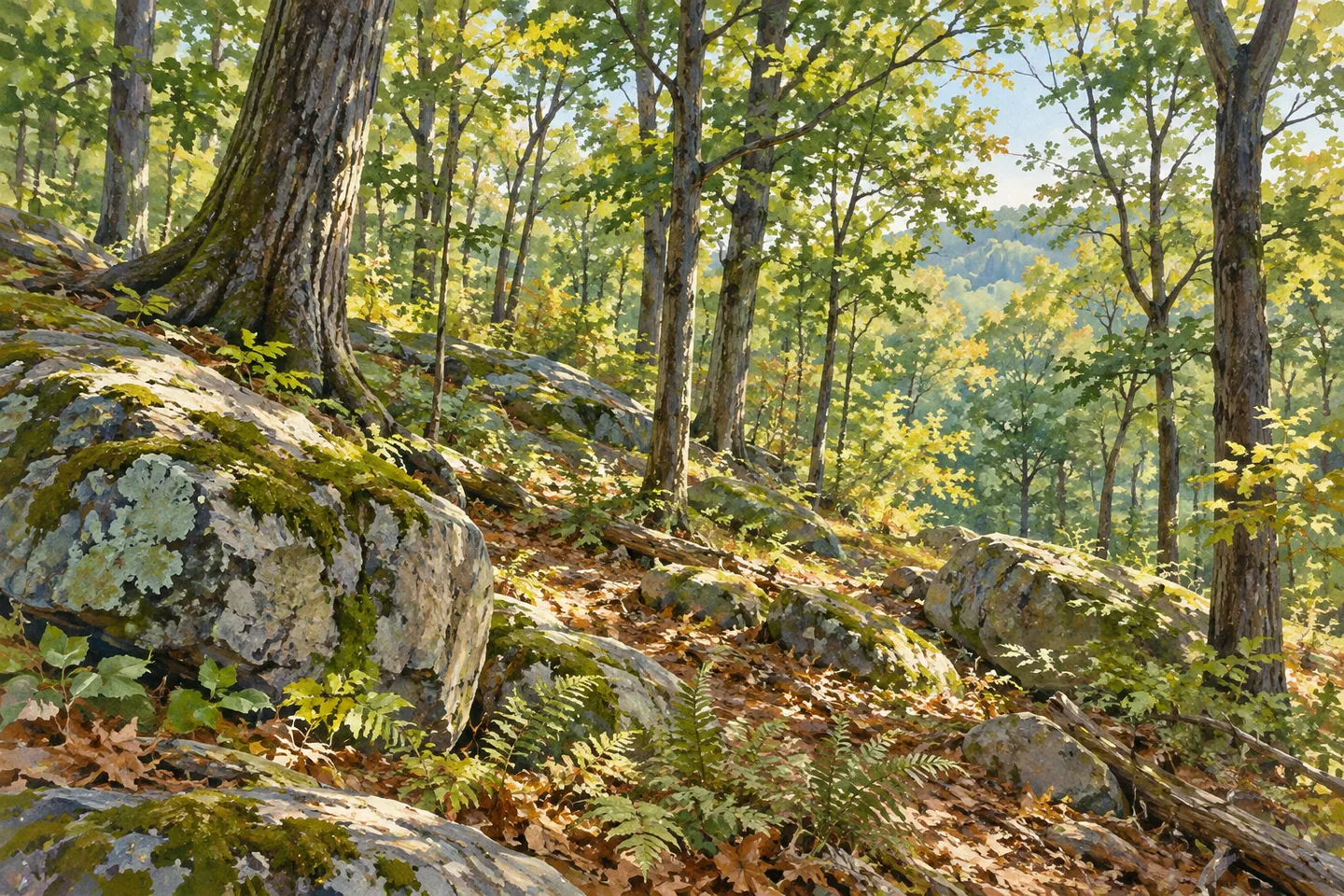
Black Rock Forest has a second life beyond the view from a walking route: it is a place where scientists and students ask questions about how forests work. The nonprofit organization maintains a 3,920-acre forest and scientific field station in the Hudson Highlands, about 60 miles north of New York City. Lakes, streams and more than 1,000 feet of topographic relief make the landscape varied enough to reward both a broad view and a close look at smaller details.
The research connection goes back to 1927, when Dr. Ernest G. Stillman established Black Rock as a research forest. He later left it to Harvard University by bequest in 1949. That chronology matters: the forest's scientific use began decades before the present organization. By 1989,75 scientific publications had been produced here, giving its history a substantial body of work rather than only an institutional name.
The current organization took shape in 1989. William T. Golden purchased the forest from Harvard, and the consortium was formed with 15 founding institutional members. Universities, schools and scientific and cultural institutions became collaborators in research and education. For a visitor, that background changes the way the woodland can be read: a stand of trees may be interesting both as a scene and as the subject of a long-running scientific question.
The operator describes research into carbon storage, water filtration and the influence of dominant species such as oaks. It also discusses changing temperatures, drought and conditions affecting tree regeneration and vulnerability to pathogens. Those topics are reasons to look carefully at tree cover and water in the landscape, not proof that a casual walk reveals the results of a particular experiment. Observe without disturbing research equipment or treating every visible feature as an exhibit.
Education is another part of the forest's identity. The Science and Education Center and Forest Lodge were developed after fundraising in the 1990s, and the organization works with students, teachers and the public. Their existence does not mean that research buildings or residential facilities are automatically open for an independent visit. Use current visitor guidance to distinguish public exploration from programs, reservations and scientific activity.
For a walking day, begin with the operator's current trail map and visiting information, choosing a route appropriate to your experience and conditions. Historical visitor accounts describe different experiences of trail markings, so a favorable review should not replace a map. On Tripadvisor, one 2019 visitor found the routes fairly well marked but still recommended one, while another reported difficulty finding markings during a separate outing. Those are individual experiences from that period, not a description of present conditions.
Photography can follow the same spirit of attention. Try pairing a wider woodland-and-water frame with a smaller study of bark, leaves or the relationship between tree forms. Let the subject you actually encounter determine the composition. The forest's role as a research landscape is a reason for care and curiosity, without needing a guaranteed wildlife sighting or access to a particular building.
Black Rock Forest's distinctive story joins a 1927 research beginning, later university ownership and a nonprofit consortium devoted to field science. Carry that history into a visit: take time to look, use the current guidance and leave the woodland available for the next observer's questions.
Fun facts
- Black Rock Forest maintains a 3,920-acre forest and scientific field station in the Hudson Highlands.
- Ernest G. Stillman established the research forest in 1927.
- Stillman left the forest to Harvard University by bequest in 1949.
- The current consortium was formed in 1989 with 15 founding institutional members.
- The forest includes lakes, streams and more than 1,000 feet of topographic relief.
Before you go
- Consult current operator visiting guidance and the trail map before choosing a route.
- Keep independent recreation separate from access to research buildings, lodges or organized programs.
- Observe research activity and equipment without disturbing them.
- Treat older visitor reviews as individual experiences, and check current trail conditions independently.
- Choose a route suited to your experience and the day’s conditions.
Visitor perspectives
On Tripadvisor, Scott F P described a choice of easier walks and uphill hikes, found the routes fairly well marked, and still recommended bringing a map (June 2019 visit).
On Tripadvisor, Lynn W appreciated some views but reported difficult-to-find markings and insects during a July 2019 outing with friends. This differs from another visitor’s more favorable account of the markings.
Capture
- Pair a wider woodland-and-water composition with a closer leaf or bark study where encountered through permitted access.
- Compare tree shapes and canopy structure without presenting an unidentified research plot as a public exhibit.
- Use actual light and conditions to guide the image; do not disturb research equipment or vegetation for a composition.
 Black Creek Park
 Kabob Wildlife Management Area
 Mount Pleasant State Forest
Social
Black Rock Forest combines woodland exploration with a long history of field science. Its 3,920 acres lie in New York’s Hudson Highlands. #Cre8Travel
Ernest G. Stillman established Black Rock as a research forest in 1927, well before the present consortium was formed. #Cre8Travel
Stillman left Black Rock Forest to Harvard by bequest in 1949. The forest’s scientific identity spans several chapters of ownership and organization. #Cre8Travel
The Black Rock Forest consortium was formed in 1989 with 15 founding institutional members after William T. Golden’s purchase from Harvard. #Cre8Travel
Lakes, streams and more than 1,000 feet of relief give Black Rock Forest a varied landscape. Begin a visit with the current trail map. #Cre8Travel
Research at Black Rock explores questions including carbon storage, water filtration and the role of dominant trees such as oaks. Observe without disturbing scientific work. #Cre8Travel
The Science and Education Center and Forest Lodge belong to Black Rock’s education story. Check current visitor guidance rather than assuming building access. #Cre8Travel
At Black Rock Forest, which detail would start your questions: tree cover, water or the shape of the land? Let patient observation guide the visit. #Cre8Travel
Hashtags