 Cre8Travel
CRE8TRAVEL · NEW YORK PLACES
Amagansett National Wildlife Refuge
Amagansett National Wildlife Refuge: A Beach with a Double-Dune Story
Discover
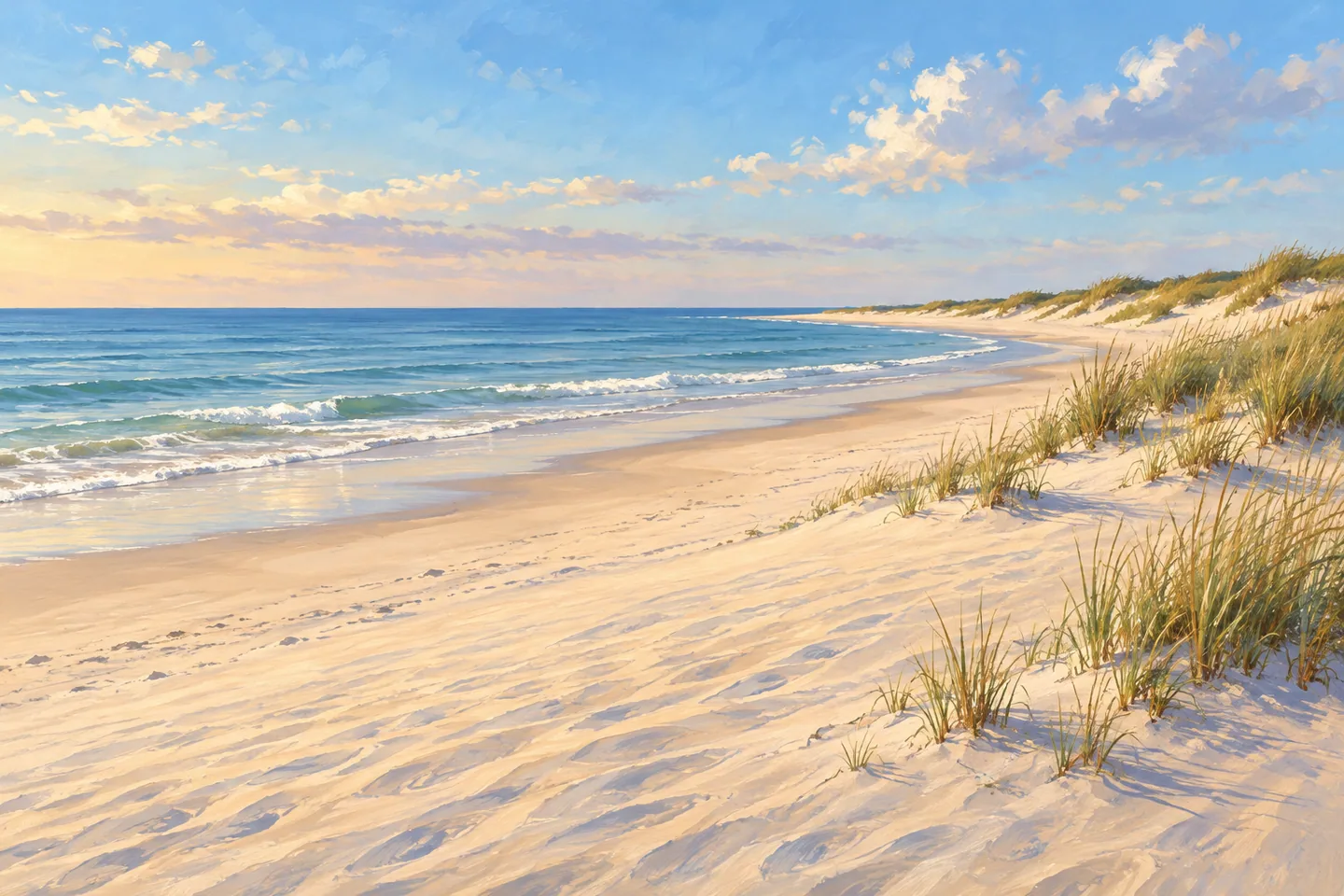
At Amagansett National Wildlife Refuge, the beach is the public introduction to a landscape whose significance extends behind it. This 36-acre refuge lies on the Atlantic shore of Long Island's South Fork, in East Hampton. Its double-dune system, intervening swale and seasonal shorebird habitat make it more than a strip of sand beside the ocean. The distinction between the accessible beach and protected back dunes is central to understanding the place.
The site has an earlier coastal history. A new Amagansett Lifesaving Station was built here in 1902 and remained in service until its decommissioning in 1944. In 1968, the building was moved inland and the land became a national wildlife refuge. Those dates connect the same shore with two different purposes: a former lifesaving-station setting and the later protection of coastal habitat. The refuge is not a promise that the station building remains on the beach as a visitor facility.
The double dunes are the defining natural feature described by the U.S. Fish and Wildlife Service. The agency notes that this habitat type has disappeared from much of Long Island through development. Secondary dunes and the swale support orchids, wildflowers and grasses, with a particular display in spring and summer. This ecological story can be appreciated without entering those areas. The back dunes are closed to all entry; they are protected habitat rather than an extension of the public walking area.
On the beach, the relationship between open sand, vegetation and water gives a visit its visual rhythm. Look at the change from a broad ocean view to the small patterns left in sand, or the way light changes the color of water and shoreline. These are observation ideas, not a route through fenced habitat. They make room for an unhurried coastal walk while leaving the protected landscape to function beyond the visitor's path.
Piping plovers provide a more detailed example of the refuge's work. The agency describes birds arriving in spring, protective fencing around nesting habitat, and wire exclosures placed around nests after a full clutch is laid. Those structures allow the birds to move while reducing access by predators. Staff and interns monitor hatching and fledging. The result is a place where an apparent boundary on the beach carries a specific conservation purpose, rather than simply interrupting a walk.
Terns contribute another seasonal pattern. The refuge describes common, least and roseate terns using the area, with the beach providing a place to rest and nearby waters supporting foraging. Some birds gather before the breeding season, while plover use becomes especially substantial later in summer. These patterns explain why access can change during nesting periods. They do not establish a guaranteed sighting, and a useful visit can focus on the habitat even when individual birds remain distant.
Only the beach section is open to public use, and the refuge lists no visitor amenities on site. Consult current Fish and Wildlife Service notices before visiting, because nesting protection can affect access. An undated reopening alert should not replace a current condition check. With those arrangements understood, the attraction is straightforward: an Atlantic shore where the visible beach, the protected dunes and carefully managed nesting habitat reveal different parts of one coastal landscape.
Fun facts
- The 36-acre refuge occupies a former lifesaving-station site acquired in 1968.
- The operator describes a distinctive double-dune system with a secondary dune and swale.
- A lifesaving station built in 1902 was decommissioned in 1944; its building moved inland in 1968.
- Only the beach is public; the back dunes are closed to all entry.
Before you go
- Consult current refuge access notices before travelling.
- Keep to the public beach section and respect nesting boundaries.
- Plan without expecting visitor amenities on site.
Capture
- Use sand, water and distant dune vegetation as separate visual layers.
- Study small sand patterns without entering closed habitat.
- Choose a broad shoreline composition without needing close wildlife access.
 Durand Eastman Park
 Albany Hive
 Fairfield State Forest
Social
Amagansett’s beach introduces a protected double-dune coastal landscape. #Cre8Travel
The refuge covers 36 acres on Long Island’s Atlantic shore.
A lifesaving station once occupied the site; the land became a refuge in 1968.
The secondary dunes and swale form important habitat beyond the public walking area.
Back dunes are closed to entry, even when the beach is accessible.
Plover fencing and nest exclosures have specific habitat-protection roles.
Terns use the area for resting and seasonal activity, without a sighting guarantee.
What draws your attention at a beach: the wide horizon, sand patterns or the landscape behind the shore?
Hashtags